Situation Summary
Ukraine faces sustained and intensifying Russian air and ground operations across multiple regions, with mixed-drone and ballistic-missile strikes occurring nightly and causing civilian casualties and infrastructure damage nationwide. Kyiv remains the primary target for air strikes, while Kharkiv and Kherson oblasts are experiencing the heaviest combined air and ground pressure. The conflict shows no signs of de-escalation; Russian forces are simultaneously conducting offensive ground operations in northern Kharkiv Oblast and executing a coordinated campaign against civilian fuel infrastructure to degrade logistics and civilian services.
Key Developments
- Kyiv, night of 7–8 July 2026: Russian mixed-drone and ballistic-missile strike on the capital; five ballistic missiles evaded air defenses, resulting in at least one civilian death, two wounded, and damage to residential areas.
- Kharkiv and Kherson oblasts, 7–8 July: Drone and missile attacks across both regions caused multiple civilian casualties and widespread damage to homes and civilian infrastructure; both regions identified as among the hardest-hit nationwide.
- Multi-oblast fuel-infrastructure campaign, 6–7 July: Ukrainian energy officials reported coordinated Russian strikes on gas stations across Zaporizhia, Dnipropetrovsk, Sumy, Kherson, Odesa, Kharkiv, and Mykolaiv oblasts, indicating a systematic effort to disrupt national fuel supply and civilian logistics.
- Nationwide air operations, 6–7 July night: Russian Air Force launched 123 strike drones (Shahed, Gerbera, Italmas variants) plus decoy drones from Kursk, Oryol, Bryansk, Krasnodar, Smolensk, Rostov, Crimea, and occupied Donetsk; demonstrates sustained capacity for wide-area strikes.
- Northern Kharkiv Oblast, 6–7 July: Russian ground forces continued offensive operations toward Velykyi Burluk and in the Borova direction; no confirmed territorial advances reported by conflict monitors over this two-day window.
- Occupied Donetsk Oblast, 6–7 July night: Ukrainian forces conducted intermediate-range strikes against Russian air defenses and ground lines of communication, continuing an active campaign on Russian-held military assets.
Highest-Risk Areas
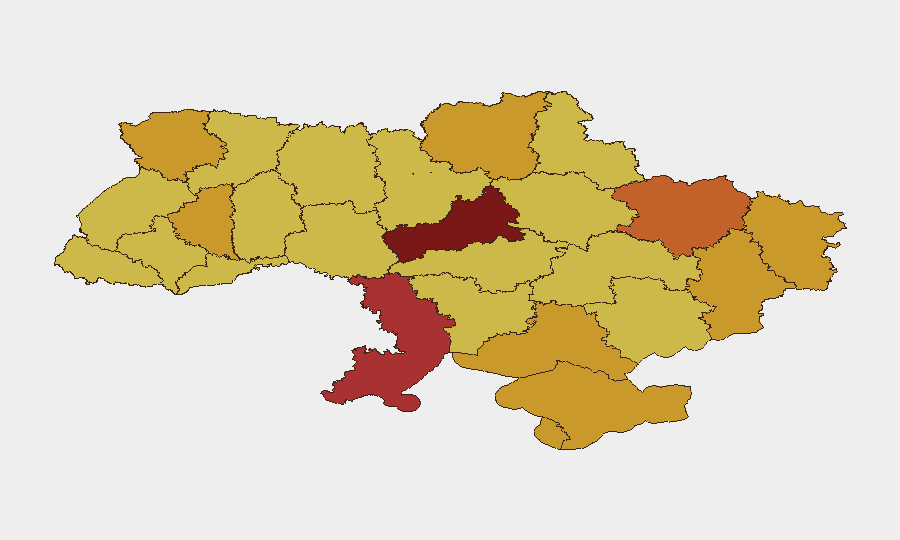
Kyiv (risk score 100) remains the clear focal point for Russian strike operations and the single highest-risk location; Cherkasy Oblast (89.6) shows elevated risk likely linked to proximity to Kyiv and critical infrastructure. Kharkiv (74.7) and Kherson (71.8) oblasts face compounded threats from both sustained air strikes and active ground-combat operations, while Donetsk (72.4), Luhansk (72.2), and the Crimean Peninsula (72.2) remain active conflict zones or forward-staging areas. The concentration of high-risk scores in eastern and central Ukraine reflects the current geographic distribution of military operations and Russia's dual strategy of air interdiction and ground pressure.
How GeoBit Would Assist
Security and duty-of-care teams should employ AOI Monitoring & Early Warning on Kyiv, Kharkiv, and Kherson to detect strike patterns and generate alerts ahead of overnight operations; complement this with Battle Mapping and Force Structure tracking to anticipate shifts in ground operations in northern Kharkiv and occupied Donetsk. Routing & Network Analysis can identify safer alternative routes around fuel-infrastructure nodes currently under strike and generate real-time travel advisories for personnel in high-risk oblasts. OSINT Fusion & Corroboration (X/Twitter, Telegram, open Ukrainian military updates) will provide sub-6-hour confirmation of attacks and casualty reports to inform evacuation or shelter-in-place decisions.
7-Day Outlook
Russian strike tempo is likely to remain elevated through mid-July; overnight drone-and-missile attacks on Kyiv and eastern regions should be expected as baseline threat. Ground operations in Kharkiv Oblast may see localized advances or consolidation but no major territorial shifts in the near term. Infrastructure targeting—particularly fuel and power—will likely continue as Russia seeks to degrade civilian and military logistics; supply-chain and travel disruptions will persist for organizations operating across Ukraine.
Highest-Risk Areas — Ranked
| # | State / Region | Risk |
|---|---|---|
| 1 | Kyiv | 100 |
| 2 | Cherkasy Oblast | 89.6 |
| 3 | Odesa Oblast | 76.8 |
| 4 | Kharkiv Oblast | 74.7 |
| 5 | Donetsk Oblast | 72.4 |
| 6 | Volyn Oblast | 72.4 |
| 7 | Luhansk Oblast | 72.2 |
| 8 | Autonomous Republic of Crimea | 72.2 |
| 9 | Chernihiv Oblast | 72.2 |
| 10 | Kherson Oblast | 71.8 |
| 11 | Sevastopol | 71.5 |
| 12 | Ternopil Oblast | 71.4 |
Previous Daily Briefs
A new Ukraine brief is written every day — each with its own risk map and downloadable CSV. Here's the last week; use the calendar to go further back.
📅 Browse every day by calendar →
Highlighted days have a brief. Tap a day for that day's map & analysis, or “csv” for that day's dataset ($5).
Atlas — our AI intelligence desk — emails them this snapshot personally. Nothing else, no list.