Situation Summary
Uzbekistan remains a low-threat operating environment (composite threat score 7/100; #null globally), with no indicators of civil unrest, terrorism, or destabilizing political events as of 28 July 2026. However, recent 24–48-hour activity reveals elevated localized crime (extortion, sexual assault), infrastructure vulnerabilities (power cuts, sewer infrastructure failure), and petty corruption within law enforcement—concentrated almost entirely in Tashkent. The threat trajectory is stable but operationally disruptive for businesses and residents in the capital.
Key Developments
- Tashkent (Chilanzar district, 27 July): State Security Service and city police detained an extortion suspect caught receiving USD 30,000 from an entrepreneur as part of an alleged USD 360,000 extortion scheme targeting a private school construction project. A criminal case has been opened.
- Tashkent (unspecified district, 27 July): A young man was apprehended for blackmailing an 18-year-old girl and demanding USD 300, reflecting ongoing low-level extortion risks in the capital.
- Tashkent (27 July): Authorities established a special commission to investigate recurring electricity supply disruptions in the capital, with outages attributed to demand exceeding transmission capacity during a regional heatwave.
- Tashkent (construction site, 27 July): A ground collapse at an unspecified construction site ruptured a main sewer pipeline (magistral kanalizatsiya), damaging urban infrastructure and requiring emergency repairs; no mass casualties reported.
- Kashkadarya region (27 July): Four individuals were detained on suspicion of raping a 14-year-old girl; investigation ongoing with no reported community unrest.
- Jizzakh region (27 July): A public-order inspector was fined 20.6 million soums following prosecution for accepting a 100,000-soum bribe, indicating active anti-corruption enforcement.
- Nationwide (27 July): Temporary electricity cuts (up to approximately two hours) were imposed in some areas due to heatwave-driven demand surge, compounding operational disruption risks.
Highest-Risk Areas
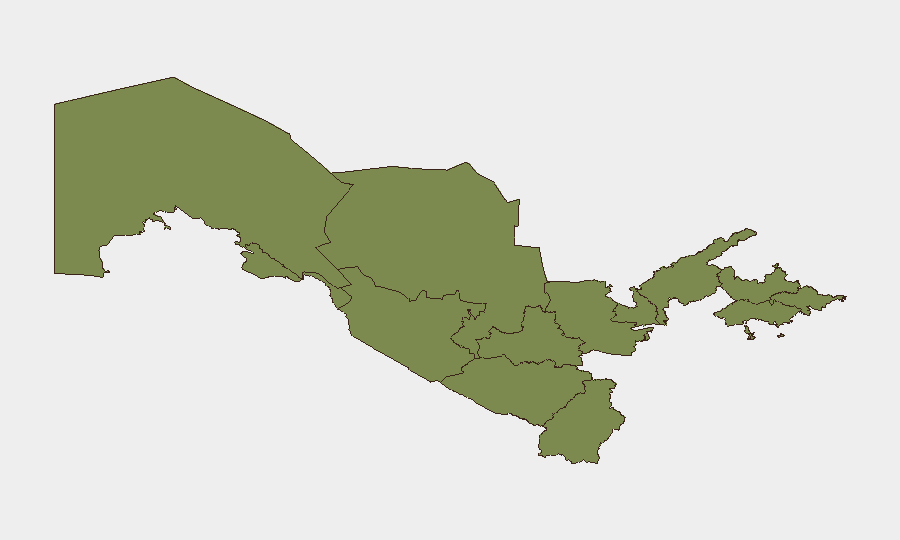
Tashkent dominates the risk profile (score 31.3), driven by concentrated criminal activity, infrastructure vulnerabilities, and power-supply instability. Bukhara Region ranks second (16.3) but with minimal recent event data; all other 10 regions cluster at baseline (1.3), indicating risk is sharply concentrated in the capital. For corporate operations, duty-of-care implications center on Tashkent—specifically extortion targeting investors, power continuity planning, and localized criminal activity—rather than territorial instability or regional volatility.
How GeoBit Would Assist
A security team operating in Uzbekistan would deploy Intel Sweep and multi-language OSINT (including Telegram and local news monitoring) to detect emerging extortion networks and corruption patterns before they escalate to asset or personnel risk. AOI Monitoring & Early Warning on Tashkent's construction sector and infrastructure assets would provide real-time alerts on sewer/power incidents and their operational impact, enabling rapid contingency activation. Risk & Threat Assessment combined with entity extraction would map extortion-target profiles (foreign investors, construction projects) and help tailor anti-extortion protocols for high-risk business sectors.
7-Day Outlook
Near-term risk remains low to moderate, with infrastructure disruptions (power cuts, sewer failures) likely to persist through the heatwave but without indicating systemic collapse. Low-level extortion and petty corruption enforcement will continue as routine criminal and regulatory activity. No indicators of escalating civil unrest, political instability, or security sector breakdown are present; Tashkent remains operationally open but requires standard duty-of-care attention to criminal extortion, power backup, and infrastructure resilience.
Highest-Risk Areas — Ranked
| # | State / Region | Risk |
|---|---|---|
| 1 | Tashkent | 31.3 |
| 2 | Bukhara Region | 16.3 |
| 3 | Qashqadaryo Region | 1.3 |
| 4 | Surxondaryo Region | 1.3 |
| 5 | Fergana Region | 1.3 |
| 6 | Republic of Karakalpakstan | 1.3 |
| 7 | Xorazm Region | 1.3 |
| 8 | Navoiy Region | 1.3 |
| 9 | Jizzakh Region | 1.3 |
| 10 | Tashkent Region | 1.3 |
| 11 | Namangan Region | 1.3 |
| 12 | Sirdaryo Region | 1.3 |
Sources
Previous Daily Briefs
A new Uzbekistan brief is written every day — each with its own risk map and downloadable CSV. Here's the last week; use the calendar to go further back.
📅 Browse every day by calendar →
Highlighted days have a brief. Tap a day for that day's map & analysis, or “csv” for that day's dataset ($5).
Atlas — our AI intelligence desk — emails them this snapshot personally. Nothing else, no list.