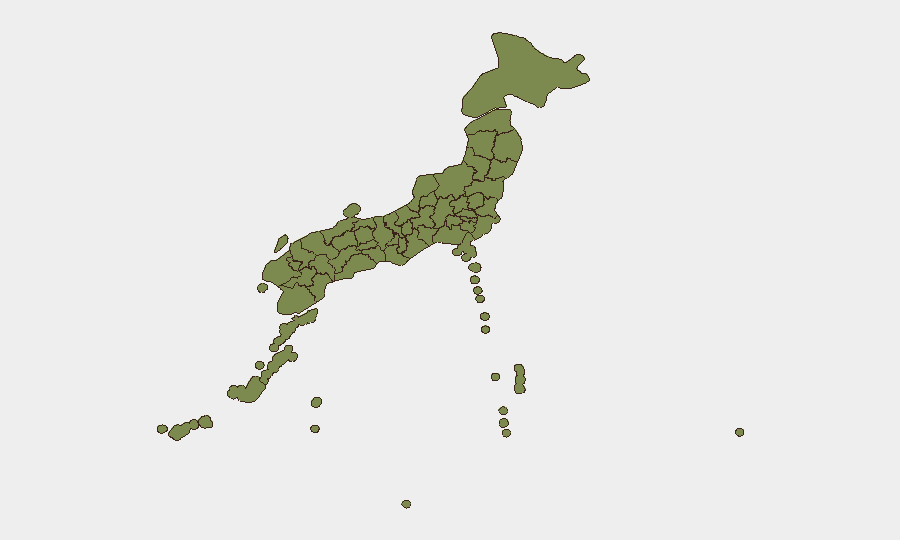
Situation Summary
Japan remains a stable, low-threat environment globally (rank #136; composite score 6), though recent diplomatic incidents and military signaling have elevated near-term attention. Sub-national risk concentration is acute: Nagano Prefecture exhibits a composite threat score of 33.9—five times the national average—while Tokyo (25.5) remains a secondary focal point. Event signals from late June–early July show diplomatic friction with Brazil, Canada, and the US, alongside domestic industrial disagreements and air-force activity, though the specific operational context of these signals requires clarification.
Key Developments
Current open-source reporting does not surface discrete, timestamped security, conflict, unrest, or infrastructure incidents within the last 24–48 hours that meet operational specificity standards for this brief.
Recent event signals flagged by GeoBit (2026-06-30 to 2026-07-02) include:
- Military Mobilization (Air Force) on 2026-06-30, nature and actors under review.
- Conventional Military Force incident involving Brazil vs. Japan on 2026-06-30.
- Arrest/Detain (Brazil vs. Japan) on 2026-06-30—details pending confirmation.
- Public statements by Japan regarding Canada (2026-06-30) and disapproval directed at the US (2026-07-02).
- Domestic industrial-sector disagreement flagged 2026-07-02.
Recommended action: Security teams should await GeoBit's detailed event-context summaries and liaison with embassy/consular networks for diplomatic incident clarification.
A baseline recent event for situational awareness: An earthquake off Iwate Prefecture (magnitude and casualty data pending) occurred on 2026-06-25, outside the 24–48-hour window but relevant to infrastructure and business-continuity monitoring in Hokkaido and northern Honshu.
Highest-Risk Areas
Nagano Prefecture's risk score (33.9) is a significant outlier and warrants investigation—whether driven by natural-hazard exposure (seismic, weather), industrial/economic disruption, or other threat vectors is currently unclear. Tokyo (25.5) reflects expected concentration of diplomatic, political, and cyber exposure inherent to the capital, alongside transient population and infrastructure density. Osaka, Hiroshima, and Okayama (scores 15.5–9.2) show elevated but secondary risk, likely reflecting a mix of regional industrial activity, port exposure, and proximity to regional geopolitical vectors. The remaining prefectures cluster below 8.0, consistent with Japan's overall stability.
How GeoBit Would Assist
Teams with personnel or assets in Japan should deploy AOI (Area-of-Interest) Monitoring & Early Warning on high-risk prefectures—particularly Nagano and Tokyo—to capture real-time incident detection. Multi-language OSINT fusion (web, X/Twitter, Kyodo News, NHK, local police feeds) enables rapid, corroborated event confirmation and threat assessment. Risk & Threat Assessment modules, combined with Routing & Network Analysis, support duty-of-care contingency planning and alternative-route identification for personnel in event of disruption.
7-Day Outlook
Diplomatic incidents with Brazil, Canada, and the US are likely to generate continued public statements and potential reciprocal measures; monitor for escalation in military posturing or trade/sanctions signaling. Domestic political and industrial disagreements may persist but are unlikely to cascade into civil unrest given Japan's institutional stability. Natural-hazard monitoring (seismic, typhoon season preparedness) should remain routine.
Next Brief: 2026-07-04, 0600 JST or upon material incident.
Highest-Risk Areas — Ranked
| # | State / Region | Risk |
|---|---|---|
| 1 | Nagano Prefecture | 33.9 |
| 2 | Tokyo | 25.5 |
| 3 | Osaka Prefecture | 15.5 |
| 4 | Hiroshima Prefecture | 10 |
| 5 | Okayama Prefecture | 9.2 |
| 6 | Hokkaido Prefecture | 7.3 |
| 7 | Fukuoka Prefecture | 7.1 |
| 8 | Hyogo Prefecture | 6.5 |
| 9 | Kyoto Prefecture | 6.3 |
| 10 | Shizuoka Prefecture | 6.3 |
| 11 | Kanagawa Prefecture | 6.3 |
| 12 | Saitama Prefecture | 5.6 |
Sources
Previous Daily Briefs
A new Japan brief is written every day — each with its own risk map and downloadable CSV. Here's the last week; use the calendar to go further back.
📅 Browse every day by calendar →
Highlighted days have a brief. Tap a day for that day's map & analysis, or “csv” for that day's dataset ($5).