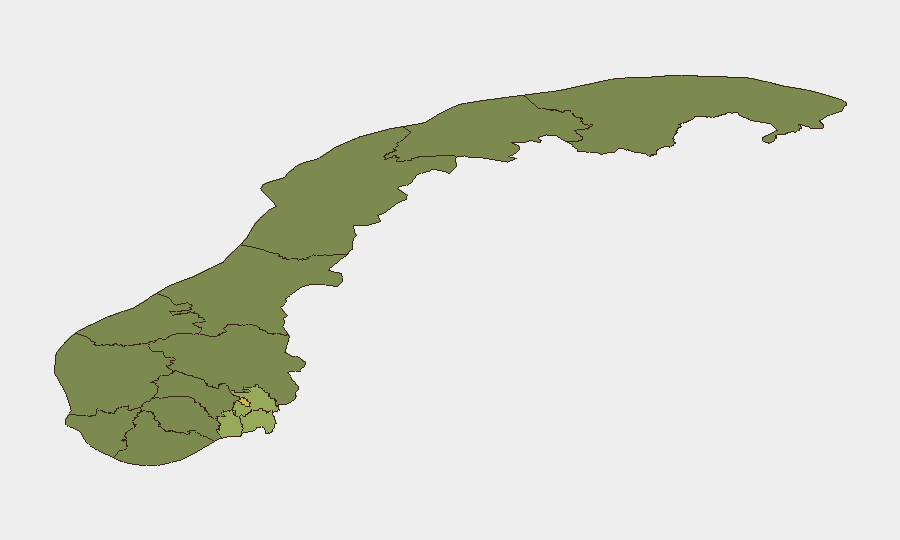
Situation Summary
Norway remains a low-threat environment (rank #49 globally, composite score 35) with no tracked major security events in the past 24–48 hours. However, a cluster of cyberattacks, infrastructure disruptions, and border-security incidents in mid-August has elevated risk perception in the Oslo metropolitan area and Akershus region. King Harald V's hospitalization for haemolytic anaemia on 2026-08-17 introduces potential political-stability considerations, though no constitutional crisis is indicated. The security posture remains stable but requires active monitoring in the capital and surrounding regions.
Key Developments
- Russian serviceman apprehended at border (2026-08-14, Grens). A Ukrainian-war veteran reportedly crossed illegally into Norway near the Russian frontier; detained and remanded. Signals potential espionage or intelligence-collection activity, consistent with broader Russian reconnaissance in the Nordic region (Tu-142 surveillance event, 2026-08-17).
- Unlawful deprivation of liberty arrests (2026-08-14, Lindeberg, Oslo). Two men in their 30s remanded for four weeks following kidnapping/hostage incident in eastern Oslo district; indicative of ongoing violence-cluster activity in the capital's periphery.
- Cyberattack on Lørenskog municipality (2026-08-14). Data breach exposed thousands of residents' records including patient files; source attributed to municipal employee credential compromise. Reflects vulnerability in local-government cybersecurity posture.
- Oslo University Hospital data breach (2026-08-12). Child welfare case attachment containing minor's full name transmitted to unauthorized recipient; potential exposure of sensitive welfare/protection information.
- Ryde mobility-platform breach (2026-08-11, multi-national). 4.5 million accounts compromised across Nordic region plus Germany; Norwegian users' phone numbers and personal identifiers exposed. Affects commuter safety and privacy across Oslo–Akershus corridor.
- Natural-gas infrastructure disruptions (2026-08-16 and 2026-08-17). Unplanned shutdown at Kollsnes plant (12 million m³ reduction) and planned suspension at Kårstø (5 million m³); no sabotage suspected, but cumulative output loss signals supply-chain vulnerability and potential economic/energy-security implications.
Highest-Risk Areas
Oslo (risk score 68) and Akershus (52) dominate the national risk profile, driven by concentrated cyberattack activity, violent crime in suburban areas, and critical infrastructure located in or near the capital region. Østfold (48), bordering Russia and Sweden, shows elevated risk tied to cross-border incidents and espionage concerns. The concentration of data breaches in health and municipal systems, combined with violence incidents in the Oslo periphery, creates compounded risk for resident safety and institutional integrity. Southern and western regions (Rogaland, Vestland, Agder) remain materially lower-risk, though the Lillesand armed robbery (2026-08-16, Agder) indicates opportunistic violent crime is not geographically confined.
How GeoBit Would Assist
Corporate and duty-of-care teams should deploy AOI Monitoring & Early Warning on Oslo, Akershus, and Østfold to track cyberattack indicators, border crossings, and crime-cluster patterns in near real-time. Multi-language search and OSINT fusion across Norwegian police feeds, municipal alerts, and regional news outlets will provide earlier signal of data breaches, infrastructure incidents, and cross-border security events affecting employee safety and supply-chain continuity. Network & Actor analysis on identified threat vectors (e.g., municipal credential compromise, Ryde platform vulnerability) helps assess downstream risk to corporate networks and employee personal data.
7-Day Outlook
Cyberattack activity is likely to remain elevated in the public sector and critical infrastructure; municipal and health authorities will implement remediation and access controls over the next 7–10 days. Border and espionage risk will persist given Russian military reconnaissance activity and proximity to the conflict zone. Violent crime in the Oslo–Akershus region is expected to remain at current levels, with police containment of the Lesja fugitive and follow-up on the Lindeberg incident reducing immediate threat.
Highest-Risk Areas — Ranked
| # | State / Region | Risk |
|---|---|---|
| 1 | Oslo | 68 |
| 2 | Akershus | 52 |
| 3 | Østfold | 48 |
| 4 | Vestfold | 42 |
| 5 | Rogaland | 38 |
| 6 | Buskerud | 35 |
| 7 | Trøndelag | 32 |
| 8 | Telemark | 28 |
| 9 | Vestland | 27 |
| 10 | Agder | 26 |
| 11 | Møre og Romsdal | 22 |
| 12 | Innlandet | 20 |
Sources
Previous Daily Briefs
A new Norway brief is written every day — each with its own risk map and downloadable CSV. Here's the last week; use the calendar to go further back.
- August 17, 2026
- August 16, 2026
- August 15, 2026
- August 14, 2026
- August 13, 2026
- August 12, 2026
- August 11, 2026
📅 Browse every day by calendar →
Highlighted days have a brief. Tap a day for that day's map & analysis, or “csv” for that day's dataset ($5).
Atlas — our AI intelligence desk — emails them this snapshot personally. Nothing else, no list.