Situation Summary
Tajikistan presents a stable near-term security environment at the national level, with no confirmed incidents in the last 24–48 hours across major population centres or critical infrastructure. Structural risk remains concentrated in Afghan-border regions, particularly Gorno-Badakhshan, where persistent cross-border trafficking, sporadic armed clashes, and mine contamination pose ongoing hazards. The political situation is characterised as calm, with no reported civil unrest or protest activity in the current reporting window.
Key Developments
No discrete security, conflict, civil-unrest, or infrastructure incidents meeting recency and corroboration criteria have been confirmed in Tajikistan for 16–18 July 2026. Open-source reporting indicates an incident-free 24–48-hour window across all monitored regions, including Dushanbe, Sughd, Khatlon, and the Districts of Republican Subordination. Standing advisories remain in effect for Afghan-border areas due to endemic trafficking violence and landmine risk, but no fresh trigger events are documented in the current period.
Highest-Risk Areas
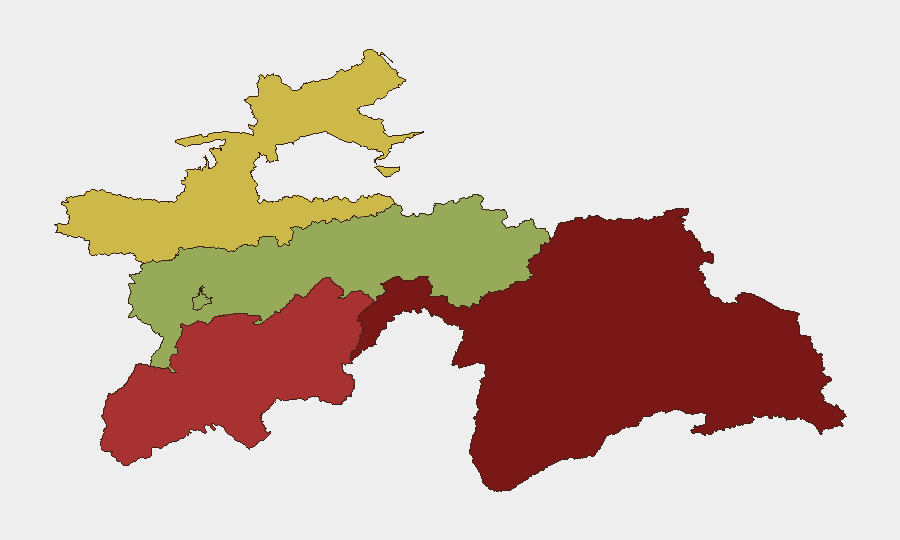
Gorno-Badakhshan Autonomous Region (risk score 92) remains the primary driver of national threat elevation, reflecting its position as Tajikistan's primary interface with Afghan instability, drug-trafficking networks, and historical border friction. Khatlon Region (78) follows as a secondary concern, reflecting cross-border spillover and trafficking corridor activity. Sughd Region (65) and the Districts of Republican Subordination (58) carry moderate structural risk; Dushanbe (42) is the lowest-risk major population centre. The geographic concentration of threat in border zones means that personnel and assets in Dushanbe and major urban centres face substantially lower acute risk than those in or transiting remote eastern and southern border districts.
How GeoBit Would Assist
Corporate security teams with assets in Tajikistan should employ AOI Monitoring & Early Warning to maintain persistent watch over Gorno-Badakhshan and Khatlon, with automated alerting for clashes, trafficking interdictions, or route disruptions that could affect supply chains or personnel movement. Routing & Network Analysis capabilities enable real-time alternative-route planning and crossing-condition assessment, critical for operations dependent on Afghan-border or inter-regional transit. OSINT fusion across local media, Telegram, and radio-signal intelligence provides early visibility into localised incidents and administrative changes before they escalate to national-level reporting.
7-Day Outlook
No acute escalation drivers are visible in the near term. Baseline border volatility and trafficking activity should be expected to continue at endemic levels, particularly in Gorno-Badakhshan; however, the absence of major political, sectarian, or military triggers suggests low probability of sudden nationwide disruption through end-July. Duty-of-care teams should maintain standard border-zone protocols and monitor GeoBit feeds for any deviation from current calm.
Highest-Risk Areas — Ranked
| # | State / Region | Risk |
|---|---|---|
| 1 | Gorno-Badakhshan Autonomous Region | 92 |
| 2 | Khatlon Region | 78 |
| 3 | Sughd Region | 65 |
| 4 | Districts of Republican Subordination | 58 |
| 5 | Dushanbe | 42 |
Previous Daily Briefs
A new Tajikistan brief is written every day — each with its own risk map and downloadable CSV. Here's the last week; use the calendar to go further back.
📅 Browse every day by calendar →
Highlighted days have a brief. Tap a day for that day's map & analysis, or “csv” for that day's dataset ($5).
Atlas — our AI intelligence desk — emails them this snapshot personally. Nothing else, no list.