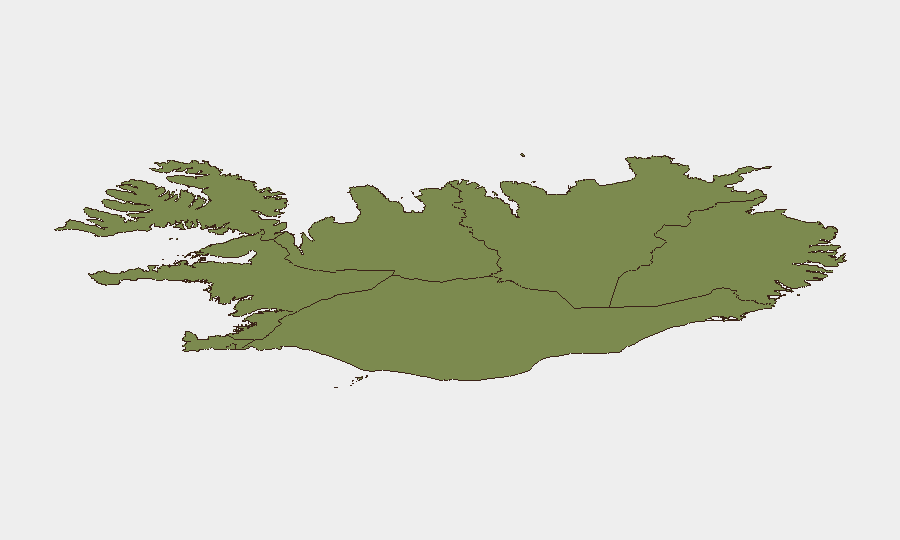
Situation Summary
Iceland remains a low-threat environment globally (rank #63, composite score 28) with no tracked major security events. Recent incidents—anti-whaling activist deportations, localized street violence in Reykjavík, and a bus accident—are isolated and non-systemic. The Capital Region drives nearly all tracked risk (score 24 of 63 total); peripheral regions show minimal activity. Trajectory remains stable with no indicators of escalation.
Key Developments
- Reykjavík harbour – 2026-08-05 to 2026-08-06: Icelandic police issued expulsion orders and re-entry bans for 21 crew members of the anti-whaling vessel *Bandero* following Coast Guard escort into port and allegations of obstruction of whaling operations. Crew members remain in legal proceedings but are now permitted to depart the vessel.
- Downtown Reykjavík – Night of 2026-08-03 to 2026-08-04: Group altercation erupted around 05:00; police detained two individuals. Incident classified as street violence; no mass casualties reported.
- Breiðholt police district, Reykjavík – Night of 2026-08-03 to 2026-08-04: One individual held in custody on suspicion of bodily assault (*líkamsárás*); incident confined to police district.
- Suðursveit (Southern Region) – 2026-08-03: Bus carrying ten people involved in traffic accident; six injured. Coast Guard helicopter dispatched to scene. Classified as transport incident, not security-related.
Highest-Risk Areas
The Capital Region (Reykjavík and environs) accounts for 38% of Iceland's tracked composite risk score, driven primarily by the current anti-whaling activist case, routine street incidents, and operational police activity. The Southern Peninsula and Southern Region combined represent an additional 23 points of risk, though this is largely baseline; the bus accident on 2026-08-03 contributed to Southern Region scoring. All remaining regions (Eastern, Western, Westfjords, Northwestern, Northeastern) score below 10 and reflect minimal active threat signals. Risk concentration in the capital is typical for a small, urbanized island nation and does not indicate systemic instability.
How GeoBit Would Assist
Teams with personnel or assets in Iceland should use GeoBit's Area-of-Interest (AOI) Monitoring & Early Warning capability to maintain persistent watch on high-footfall zones in Reykjavík (harbour, commercial districts) and flag emerging protest or activist activity in near-real time. OSINT Fusion & Corroboration (X/Twitter, Telegram, local news feeds) will distinguish routine incidents from systemic threats and monitor the *Bandero* case and any related follow-on activism. Risk & Threat Assessment products, refreshed weekly, will track any shift in Capital Region scoring to alert duty-of-care teams to material changes in the security posture.
7-Day Outlook
No escalation expected. The anti-whaling case is likely to resolve through standard immigration and legal channels over the coming weeks; crew expulsion is typically final. Street crime and transport incidents in Iceland remain sporadic and non-political. Reykjavík should remain safe for routine commercial, tourism, and diplomatic operations. GeoBit will continue to monitor for any new protest mobilization or activist vessel activity, which remains the primary wildcard for near-term disruption.
Highest-Risk Areas — Ranked
| # | State / Region | Risk |
|---|---|---|
| 1 | Capital Region | 24 |
| 2 | Southern Peninsula | 12 |
| 3 | Southern Region | 11 |
| 4 | Eastern Region | 10 |
| 5 | Western Region | 9 |
| 6 | Westfjords Region | 8 |
| 7 | Northwestern Region | 7 |
| 8 | Northeastern Region | 6 |
Sources
Previous Daily Briefs
A new Iceland brief is written every day — each with its own risk map and downloadable CSV. Here's the last week; use the calendar to go further back.
📅 Browse every day by calendar →
Highlighted days have a brief. Tap a day for that day's map & analysis, or “csv” for that day's dataset ($5).
Atlas — our AI intelligence desk — emails them this snapshot personally. Nothing else, no list.