Situation Summary
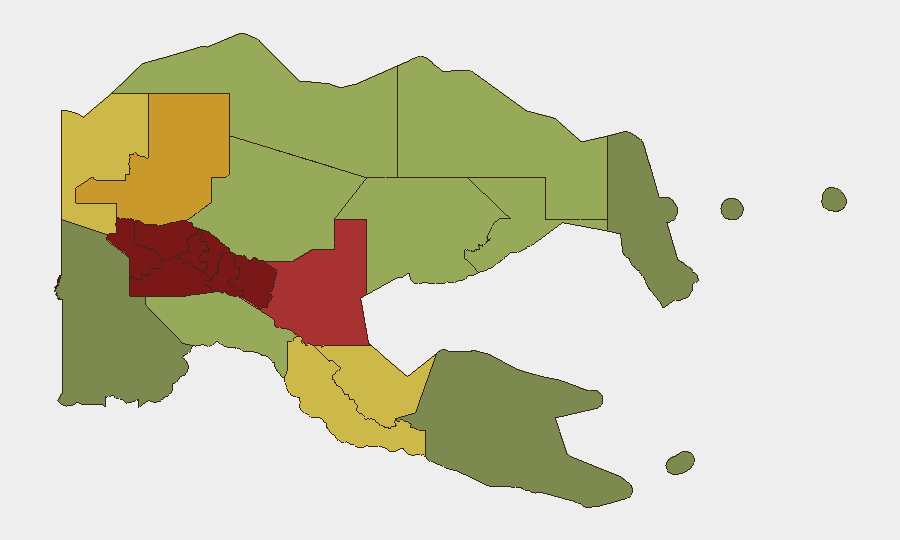
Papua New Guinea remains classified as a moderate global security risk (#84 globally, composite threat score 21) with no discrete security events recorded in the current 24–48-hour window. The country faces persistent underlying instability concentrated in the Highlands provinces (Southern Highlands, Enga, Hela, and Eastern Highlands), where tribal conflict, gang violence, and limited state presence drive elevated risk. The formal parliamentary receipt of the 2019 Bougainville independence referendum result on 28 August represents a political milestone with potential long-term implications for regional stability, though it does not constitute an immediate security incident. Overall trajectory remains steady with localized volatility in high-risk provinces.
Key Developments
- Bougainville referendum formally received by Parliament – Port Moresby, 28 August 2026: PNG Parliament formally received the 97.7% independence referendum result from Bougainville, advancing the autonomy/independence negotiation process. While a political process rather than a security incident, this development carries indirect implications for inter-regional stability and resource-access arrangements over the medium term.
- No verified security incidents reported in last 24–48 hours: Live web research and X/Twitter monitoring as of 29 August yielded no confirmed conflict, crime, or civil-unrest events in PNG meeting strict recency criteria. The most recent verifiable incidents (vessel boarding off Wewak on 20 August, unauthorized-mining enforcement on 24 August) fall outside the current reporting window.
- Madang Provincial Police denial of Operation Brukim Tulait spillover – Madang Province, 26 August 2026: Provincial authorities stated no confirmed reports of OBT militant presence had migrated from Lae into Madang, suggesting inter-provincial gang/militia movement remains contained to prior affected zones, though reporting remains limited.
- Seismic activity recorded offshore – Kimbe and Vanimo, 28 August 2026: Earthquakes/seaquakes (magnitude 4.6–4.9) were recorded near Kimbe and Vanimo on 28 August; no damage or disruption reports received. Natural-hazard monitoring remains relevant for infrastructure and maritime-transit risk assessment.
Highest-Risk Areas
The Highlands cluster—Southern Highlands, Enga, Hela, Eastern Highlands, and Western Highlands—dominates PNG's sub-national risk profile, with composite scores ranging 90–98. These provinces suffer from chronic tribal conflict, limited government enforcement capacity, gang-driven extortion and armed robbery, and poor road/communications infrastructure that hampers response and intelligence gathering. The National Capital District (risk 85) follows as a secondary concern driven by urban crime and political volatility. Coastal and interior lowland provinces (Morobe, East Sepik, Sandaun, Oro) present moderate risk (68–78), primarily from maritime crime, localized gang activity, and resource-competition violence.
How GeoBit Would Assist
Security teams operating in or supporting PNG operations should deploy AOI Monitoring & Early Warning services on Highlands provinces and the National Capital District to enable real-time alerting on emerging conflict, crime, or unrest. Multi-language OSINT (Intel Sweep, X/Twitter & Telegram monitoring, and entity extraction) applied to PNG police, provincial authorities, and regional media feeds provides faster incident detection than global news cycles. Routing & Network Analysis and GIS & Spatial Analysis tools allow duty-of-care teams to model alternative travel corridors, avoid high-risk zones, and pre-plan evacuation or contingency routes in provinces ranked 90+.
7-Day Outlook
No immediate security escalation is anticipated in the next 7 days; the parliamentary Bougainville action is administrative and unlikely to trigger immediate violence. Tribal and gang-driven violence in the Highlands will likely persist at baseline levels, with seasonal and localized triggers (compensation disputes, resource access, inter-clan tensions) driving periodic incidents. Monitoring of Bougainville-related political communication and any public reaction in regional media is warranted to detect early signals of destabilization.
Highest-Risk Areas — Ranked
| # | State / Region | Risk |
|---|---|---|
| 1 | Southern Highlands | 98 |
| 2 | Enga | 96 |
| 3 | Hela | 94 |
| 4 | Eastern Highlands | 92 |
| 5 | Western Highlands | 90 |
| 6 | Jiwaka | 88 |
| 7 | National Capital District | 85 |
| 8 | Simbu | 82 |
| 9 | Morobe | 78 |
| 10 | East Sepik | 72 |
| 11 | Sandaun | 68 |
| 12 | Oro | 66 |
Sources
Previous Daily Briefs
A new Papua New Guinea brief is written every day — each with its own risk map and downloadable CSV. Here's the last week; use the calendar to go further back.
- August 27, 2026
- August 25, 2026
- August 23, 2026
- August 21, 2026
- August 19, 2026
- August 17, 2026
- August 15, 2026
📅 Browse every day by calendar →
Highlighted days have a brief. Tap a day for that day's map & analysis, or “csv” for that day's dataset ($5).
Atlas — our AI intelligence desk — emails them this snapshot personally. Nothing else, no list.