Situation Summary
Ukraine remains the fifth-highest-threat country globally, driven by active conventional warfare across multiple fronts and sustained Russian air campaigns targeting civilian and military infrastructure. Over the past 24–48 hours, Russian forces have conducted a large-scale overnight drone and missile strike wave, while Ukrainian forces have escalated strikes on Russian logistics, port facilities, and forward UAV positions. The threat environment remains dynamic and high-impact, with civilian infrastructure—particularly fuel and energy systems—under sustained pressure in major urban centers.
Key Developments
- Kharkiv City, July 14: Russian drone strike destroyed a gas station, causing fire and damage; part of an ongoing campaign targeting fuel infrastructure in urban areas across Ukraine.
- Zaporizhzhia City, July 14: Russian drones struck a gas station, killing one person and injuring at least three; further evidence of systematic targeting of civilian fuel supply.
- Ukraine-wide, Night of July 13–14: Russian forces launched a mass air strike wave comprising ballistic missiles and over 90 strike and decoy drones, targeting cities and energy infrastructure with widespread civilian and infrastructure damage.
- Sea of Azov, Night of July 13–14: Ukrainian forces continued drone strikes against Russian "shadow fleet" tankers, hitting multiple fuel tankers and disrupting Russian maritime logistics in the area.
- Occupied Crimea, July 13–14: Ukrainian long-range strikes hit Russian port and energy infrastructure near Dzhankoi and Kerch, plus ammunition and fuel depots, causing power outages and logistical disruption.
- Western Zaporizhzhia Oblast (front line), July 14: Ukrainian intermediate-range strikes targeted Russian drone deployment points near Kamianka and Komysh‑Zorya (40–45 km from front), degrading Russian UAV operations.
- Sumy Oblast (border), July 13–14: Ukrainian Defense Ministry reported 12,000+ Russian strikes in 2026 to date, with heavy damage to residential, school, hospital, and energy infrastructure.
- Lviv City, July 13: Criminal investigation opened into a recruitment-related brawl between military recruiters and residents; authorities cite alleged Russian propaganda efforts to incite civil tension around mobilization enforcement.
Highest-Risk Areas
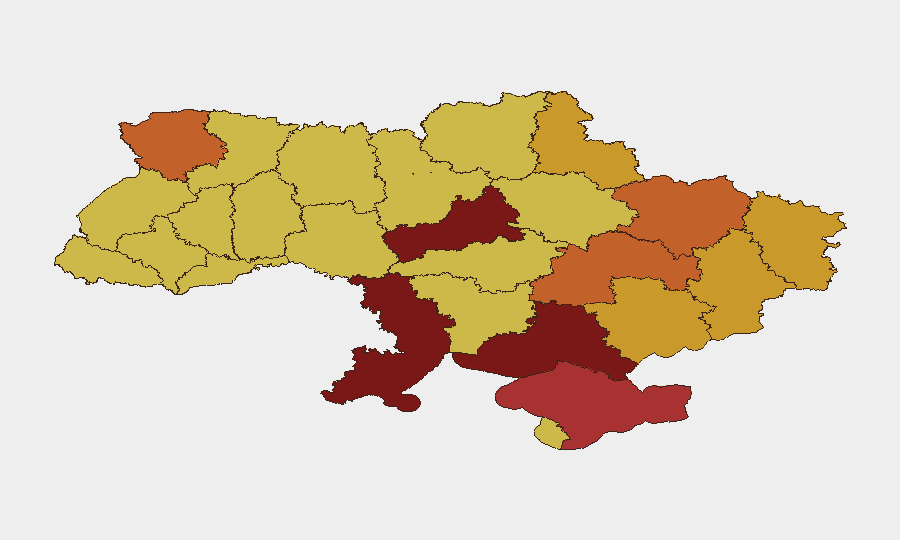
Kyiv (risk 100) and Cherkasy Oblast (93.4) represent the highest-risk zones, driven by proximity to active Russian strike capabilities and sustained targeting of political, energy, and civilian infrastructure. Kherson, Odesa, and Crimea (risk scores 80–77) face significant risk from combined conventional military operations, maritime strike activity, and Russian logistics concentration. Northeastern and eastern oblasts—Kharkiv, Sumy, Luhansk, Donetsk, and Zaporizhzhia—remain under sustained direct fire and drone attack, with elevated risk to civilians, critical infrastructure, and operational continuity due to high-frequency strike density and front-line proximity.
How GeoBit Would Assist
Security teams protecting personnel or assets in Ukraine should deploy AOI Monitoring & Early Warning on high-risk sub-national zones (Kyiv, Kharkiv, Zaporizhzhia, Sumy) to detect strike patterns and generate advance alerts. Conflict & Military capabilities—including battle mapping and force structure tracking—enable real-time assessment of front-line volatility and drone deployment patterns. Routing & Network Analysis supports alternative route planning for personnel movement, while Intel Sweep and multi-language OSINT fusion track emerging civil tensions (e.g., recruitment unrest) that may compound security risks in localized areas.
7-Day Outlook
Russian air strike frequency and intensity are expected to remain elevated, with continued focus on fuel, energy, and logistical targets in major urban centers and border regions. Ukrainian counteroffensive strikes on Russian logistics and forward positions will likely persist, maintaining pressure on Russian supply lines and UAV operations. Civilian infrastructure degradation will continue to drive displacement, service disruption, and indirect operational risk to organizations with personnel or assets in affected regions.
Highest-Risk Areas — Ranked
| # | State / Region | Risk |
|---|---|---|
| 1 | Kyiv | 100 |
| 2 | Cherkasy Oblast | 93.4 |
| 3 | Kherson Oblast | 80.9 |
| 4 | Odesa Oblast | 80 |
| 5 | Autonomous Republic of Crimea | 77.2 |
| 6 | Dnipropetrovsk Oblast | 74.5 |
| 7 | Kharkiv Oblast | 74.4 |
| 8 | Volyn Oblast | 73.1 |
| 9 | Luhansk Oblast | 72.9 |
| 10 | Zaporizhia Oblast | 72.7 |
| 11 | Sumy Oblast | 71.6 |
| 12 | Donetsk Oblast | 71.4 |
Sources
Previous Daily Briefs
A new Ukraine brief is written every day — each with its own risk map and downloadable CSV. Here's the last week; use the calendar to go further back.
📅 Browse every day by calendar →
Highlighted days have a brief. Tap a day for that day's map & analysis, or “csv” for that day's dataset ($5).
Atlas — our AI intelligence desk — emails them this snapshot personally. Nothing else, no list.