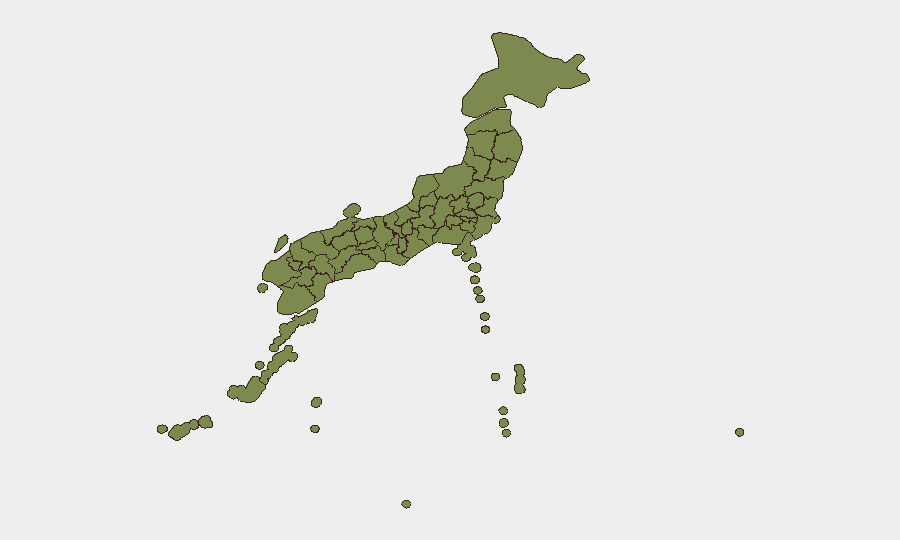
Situation Summary
Japan remains a low-threat environment with a global composite threat score of 6 (rank #134). No confirmed physical security incidents, civil unrest, terrorism, or major infrastructure disruptions have been reported in the last 24–48 hours. The most recent significant security event is the disclosure of a large-scale data breach affecting Aflac Japan's subsidiary operations, detected in late June and formally reported on 2026-07-01; the operational compromise window closed approximately one week ago. Current reporting indicates a stable operational picture with no active acute threats to corporate personnel or assets.
Key Developments
- Nationwide (Aflac Japan Ltd.): On 2026-07-01, Aflac disclosed unauthorized third-party access to Japan subsidiary systems between 2026-06-15 and 2026-06-25, compromising personal and bank account information for approximately 4.38 million customers. The Japan Financial Services Agency and other authorities have been notified; external cybersecurity investigation is underway. (Operational compromise window closed ~7 days prior to current brief date.)
- No new physical security, unrest, crime, or infrastructure incidents confirmed within the last 24–48 hours across Japan based on open-source news, social media monitoring, and multi-source corroboration standards.
Highest-Risk Areas
Nagano Prefecture significantly elevates Japan's composite risk profile with a score of 32.9—substantially higher than all other prefectures and warranting focused monitoring. Osaka Prefecture (16.5) and Hokkaido Prefecture (10.3) represent secondary risk concentrations. Tokyo (5.5), despite its large population and economic centrality, ranks lower in the current assessment, suggesting that Nagano-specific factors—potentially including industrial, environmental, or regional political dynamics—are the primary drivers of the national ranking. Security teams with personnel or assets in Nagano should prioritize localized intelligence gathering and area-of-interest monitoring to clarify the underlying risk drivers.
How GeoBit Would Assist
Security teams should deploy AOI Monitoring & Early Warning capabilities on Nagano Prefecture and secondary risk zones (Osaka, Hokkaido) to establish persistent watch for emerging incidents with automated alerting. Intel Sweep and multi-language OSINT fusion—including X/Twitter, Telegram, and local Japanese-language sources—will provide continuous situational awareness and early detection of unrest, infrastructure disruption, or crime developments. Risk & Threat Assessment workflows can correlate the sub-national risk ranking with specific threat categories (cyber, physical, supply-chain, reputational) to refine duty-of-care protocols and resource allocation for corporate presence in high-risk prefectures.
7-Day Outlook
No acute escalation in physical security threats is anticipated over the next seven days based on current event signals and open-source reporting. The Aflac breach investigation will likely proceed without immediate operational impact on broader business continuity; affected customers and institutions are being notified through established channels. Continued low-level political and industrial disapproval signals warrant routine monitoring but do not indicate imminent unrest or infrastructure-level disruption. Standard corporate security postures remain appropriate; heightened vigilance in Nagano Prefecture is recommended pending clarification of underlying risk factors.
Highest-Risk Areas — Ranked
| # | State / Region | Risk |
|---|---|---|
| 1 | Nagano Prefecture | 32.9 |
| 2 | Osaka Prefecture | 16.5 |
| 3 | Hokkaido Prefecture | 10.3 |
| 4 | Fukuoka Prefecture | 5.9 |
| 5 | Tokyo | 5.5 |
| 6 | Hyogo Prefecture | 5.4 |
| 7 | Kanagawa Prefecture | 5.2 |
| 8 | Kyoto Prefecture | 5 |
| 9 | Shizuoka Prefecture | 3.8 |
| 10 | Iwate Prefecture | 3.6 |
| 11 | Hiroshima Prefecture | 3.4 |
| 12 | Okayama Prefecture | 3.4 |
Sources
Previous Daily Briefs
A new Japan brief is written every day — each with its own risk map and downloadable CSV. Here's the last week; use the calendar to go further back.
📅 Browse every day by calendar →
Highlighted days have a brief. Tap a day for that day's map & analysis, or “csv” for that day's dataset ($5).
Atlas — our AI intelligence desk — emails them this snapshot personally. Nothing else, no list.