Situation Summary
Tajikistan's overall security environment remains stable with no confirmed major incidents in the last 24–48 hours. Routine law-enforcement activity (youth crime prevention, building-code enforcement) and a fatal vehicle accident in Hisor constitute the primary reported events. The underlying threat landscape—particularly along the Afghan border and in Gorno-Badakhshan—remains elevated due to sustained cross-border armed-group activity and seismic risk, but no acute escalation has been detected since 19 July.
Key Developments
- Hisor, Rudaki district (19 July): A vehicle crashed into a bridge safety barrier over the Gissar canal, killing two occupants (driver and 37-year-old Dushanbe resident). Emergency response and brief traffic disruption occurred; fatality attributed to accident, not security incident.
- Dushanbe, Shohmansur district (20 July): Municipal and police intervention addressed unauthorized basement use and illegal entrance blockage at a residential building on Valamatzade Street; framed as public-safety and code-enforcement action.
- Dushanbe (19–20 July): Prevention-of-youth-offenses police reported intervention in a knife-conflict incident; no fatalities or wider unrest documented.
- Dushanbe (20 July): President Emomali Rahmon departed for a state visit to Mongolia, temporarily affecting domestic high-level decision-making availability.
- Seismic activity (recent, dates unspecified but "recent" signals): Two earthquakes recorded—M 4.8, 109 km ENE of Khorugh (Gorno-Badakhshan), and M 4.7, 116 km ENE of Murghob (also Gorno-Badakhshan)—consistent with the region's high seismic hazard profile.
- Enforcement trend (H1 2026, reported 19–20 July): Dushanbe police documented 122 cases of illegal alcohol and tobacco sales to minors and seizure of 912 hookahs and e-cigarettes; reflects ongoing public-order enforcement, not unrest escalation.
Highest-Risk Areas
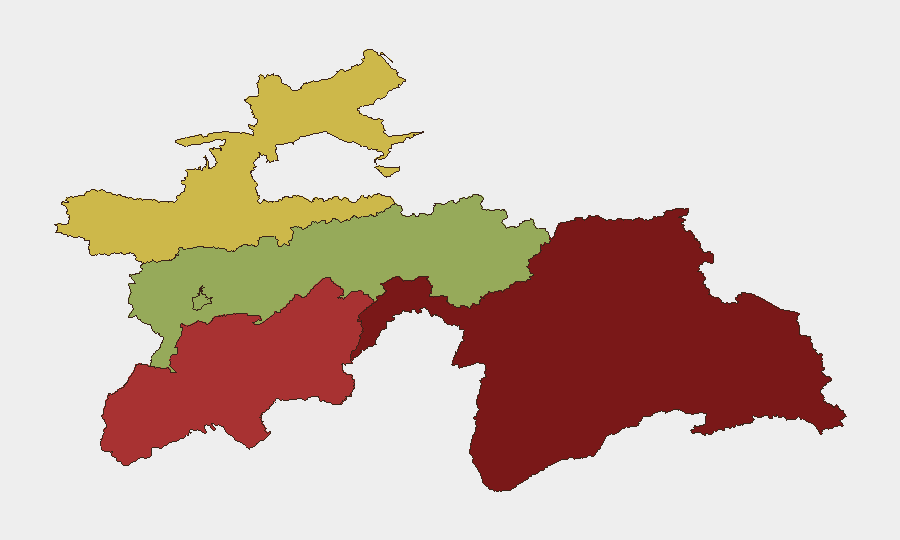
Gorno-Badakhshan Autonomous Region (risk 92) dominates the threat ranking, driven by seismic hazard, remote geography, and documented cross-border militant activity from Afghanistan. Khatlon Region (risk 78) follows, reflecting its proximity to the Afghan border and history of armed-group incursions; clashes along this frontier—most notably in January 2026—remain a persistent vector. Sughd Region (risk 65) and the Districts of Republican Subordination face moderate exposure to border-adjacent threats and criminal networks, while Dushanbe (risk 42) experiences lower but non-negligible urban crime and youth-violence dynamics. Border-security partnerships with CSTO allies indicate sustained concern but no current acute deterioration.
How GeoBit Would Assist
Corporate security and duty-of-care teams should employ AOI Monitoring & Early Warning to track Gorno-Badakhshan and Khatlon provinces for cross-border activity, armed clashes, and seismic events affecting operations or personnel movement. Conflict & Military force-structure and Network & Actor Analysis capabilities enable identification of active militant groups, supply-line changes, and indicators of coordinated escalation beyond routine border skirmishing. Intel Sweep and multi-language OSINT fusion (X, Telegram, Khovar, regional media) provide rapid corroboration of rumors and early detection of civil unrest, terrorism claims, or accident-driven disruptions (as in Hisor) that could affect asset accessibility or staff safety.
7-Day Outlook
No major deterioration is expected over the next seven days absent new cross-border incidents or seismic events in high-risk zones. Routine enforcement and political/diplomatic activity will likely continue. Monitoring should remain focused on Afghan border zones and Gorno-Badakhshan, where sustained low-level militant activity and seismic hazard pose the primary corporate-risk vectors.
Highest-Risk Areas — Ranked
| # | State / Region | Risk |
|---|---|---|
| 1 | Gorno-Badakhshan Autonomous Region | 92 |
| 2 | Khatlon Region | 78 |
| 3 | Sughd Region | 65 |
| 4 | Districts of Republican Subordination | 58 |
| 5 | Dushanbe | 42 |
Sources
Previous Daily Briefs
A new Tajikistan brief is written every day — each with its own risk map and downloadable CSV. Here's the last week; use the calendar to go further back.
📅 Browse every day by calendar →
Highlighted days have a brief. Tap a day for that day's map & analysis, or “csv” for that day's dataset ($5).
Atlas — our AI intelligence desk — emails them this snapshot personally. Nothing else, no list.