Situation Summary
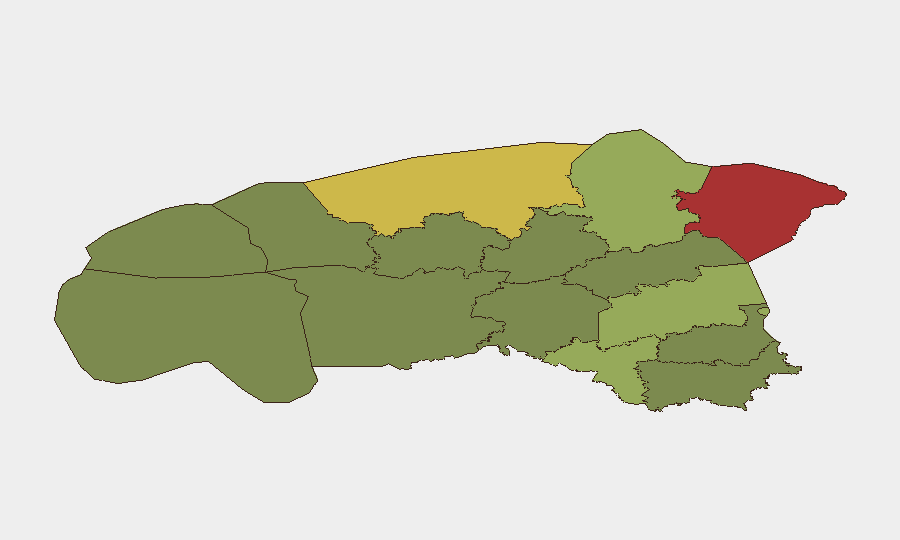
Estonia remains a low-threat environment globally (rank #112, composite score 13) with no confirmed security incidents in the past 24–48 hours. The underlying risk profile is shaped by persistent border-migration pressure, ongoing cyber-fraud activity, and regional military tension along the eastern boundary, rather than by acute domestic instability or civil unrest. The sub-national risk distribution is heavily skewed toward the northeastern region (Ida-Viru County, risk 78), reflecting proximity to Russian territory and historical industrial activity.
Key Developments
- No discrete security incidents confirmed in Estonia in the 24–48 hour window (15–17 August 2026). Mainstream and official sources (ERR, police, city government) contain no reports of protests, major crime, infrastructure failure, or emergency response activity meeting incident-level criteria with precise time and location.
- Tallinn: Defense League shooting range proposal (17 August 2026). Public broadcaster reports Tallinn has offered the former Linnahall ice rink as a temporary shooting range for the Estonian Defense League; cost estimates for repairs run into millions of euros. No active disruption or public opposition documented in the last 24 hours.
- Tallinn: Urban pest-control planning (16 August 2026). City authorities and district councils plan autumn rat-control operations following increased street sightings. This reflects public health and urban management priorities rather than a security event.
- Estonia–Belarus/Latvia border: Migrant detention trend (ongoing since 21 July, reported 14 August). Police have detained 109 foreigners suspected of illegal border crossing; more than 50 claimed to be minors. This extends beyond the 48-hour window but signals sustained border-security pressure.
- Estonia: Cyber-fraud and scam reports (statistical aggregate, reported 14 August). Police received 1,816 reports of telephone and online scams in H1 2026, with cumulative losses of €13.2 million. Reflects endemic cyber-crime risk rather than a specific incident.
- Lake Peipus / Russian eastern border: Military exercise (reported 15 August, occurred prior to reporting). ERR foreign affairs coverage notes Russia conducted live-fire exercises on Lake Peipus near Estonia's eastern border without prior notification to Estonian authorities. Exercise predates the current 24–48 hour window but illustrates ongoing regional military activity and signaling.
Highest-Risk Areas
Ida-Viru County (risk 78) and Harju County (risk 68) drive the national risk profile, with Ida-Viru's elevated score reflecting its location in the industrial northeast, proximity to the Russian border, and historical economic vulnerabilities. Harju County—encompassing Tallinn—faces compound risk from cyber-crime activity, border-adjacent migration flows, and higher urban crime density. Risk tapers significantly beyond the top three counties, with southern regions (Võru, Põlva, Viljandi) at substantially lower threat levels, indicating that security risk in Estonia is geographically concentrated rather than distributed.
How GeoBit Would Assist
Security teams operating in Estonia should employ Intel Sweep and X/Twitter & Telegram OSINT for same-day incident detection and early warning across law-enforcement, rescue-service, and defense channels. AOI Monitoring & Early Warning focused on Ida-Viru and Harju counties would provide persistent visibility into border-crossing activity, military exercises, and crime trends. Network & Actor Analysis can track cyber-fraud and scam-ring activity, correlating reported losses with infrastructure and financial-sector vulnerabilities.
7-Day Outlook
No acute escalation is anticipated in the near term; Estonia's threat environment remains characterized by chronic rather than acute risks. Continued elevated migration pressure at the Belarus–Latvia–Estonia border and routine Russian military exercises near Lake Peipus are likely to persist. Corporate security teams should maintain focus on cyber-fraud resilience and border-area situational awareness rather than prepare for civil unrest or major incident response.
Highest-Risk Areas — Ranked
| # | State / Region | Risk |
|---|---|---|
| 1 | Ida-Viru County | 78 |
| 2 | Harju County | 68 |
| 3 | Tartu County | 58 |
| 4 | Valga County | 55 |
| 5 | Lääne-Viru County | 52 |
| 6 | Pärnu County | 35 |
| 7 | Rapla County | 32 |
| 8 | Jõgeva County | 30 |
| 9 | Järva County | 28 |
| 10 | Viljandi County | 25 |
| 11 | Põlva County | 22 |
| 12 | Võru County | 18 |
Sources
Previous Daily Briefs
A new Estonia brief is written every day — each with its own risk map and downloadable CSV. Here's the last week; use the calendar to go further back.
- August 15, 2026
- August 13, 2026
- August 11, 2026
- August 9, 2026
- August 7, 2026
- August 6, 2026
- August 5, 2026
📅 Browse every day by calendar →
Highlighted days have a brief. Tap a day for that day's map & analysis, or “csv” for that day's dataset ($5).
Atlas — our AI intelligence desk — emails them this snapshot personally. Nothing else, no list.