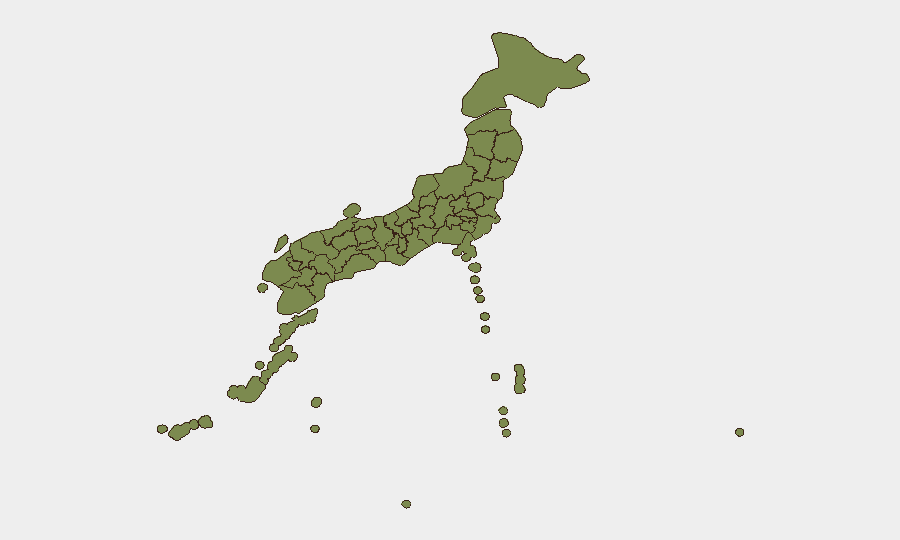
Situation Summary
Japan remains a low-threat environment (composite threat score 6; ranked #131 globally) with stable domestic security conditions over the past 24–48 hours. No major civil unrest, physical infrastructure disruption, or terrorism incidents have been confirmed. Current risk signals are concentrated in law-enforcement actions, cybercrime investigations, and low-level administrative friction between regional and central government, rather than active threats to personnel or assets.
Key Developments
- Tokorozawa City, Saitama Prefecture – 2026-07-04 (arrest disclosed within last 24–48 hours): Tokyo Metropolitan Police Cybercrime Countermeasures Division arrested a 15-year-old male student on suspicion of conducting a cyberattack on Bandai Channel (anime streaming service), resulting in cancellation of 46,812 subscription accounts. The suspect allegedly used ChatGPT-generated code to exploit a system vulnerability; police report admission of allegations.
- Tokyo – investigation involving U.S. actor – 2026-07-05: Japanese authorities initiated an investigation involving an American entity or actor; available open-source signals do not yet specify nature or location detail. Assessed as potential diplomatic or commercial issue with no current public safety or travel impact confirmed.
- Japan – commercial bank investigation – 2026-07-05: Domestic authorities are investigating a commercial bank (scope unspecified in open sources). Tracked as financial/governance risk signal rather than physical-security threat; no bank runs or related public disorder reported.
- Osaka Prefecture – administrative rejection – 2026-07-04: Osaka Prefecture formally rejected an unspecified proposal or directive, indicating potential friction between prefectural and central government positions. No protests or civil unrest linked to this decision as of latest briefing.
- Armed incident (unspecified location) – within last 72 hours: One small-arms combat signal registered in telecom sector within the past 72 hours; location and full context remain opaque in open sources. No mass-casualty or infrastructure-disrupting reports confirmed.
- Japan geopolitical posture – ongoing: Japan's Foreign Ministry disapproval of unspecified Chinese action (noted 2026-07-03) reflects regional tension but has not triggered military confrontation, border incidents, or travel advisories specific to Japan in the past 24–48 hours.
Highest-Risk Areas
Nagano Prefecture (risk 32.8) is a significant outlier and drives Japan's overall risk ranking; the cause and nature of this elevated score are not detailed in current open-source signals and warrant targeted inquiry. Tokyo (9.1) and Hokkaido (6.4) follow, likely reflecting higher investigative and event-reporting density in major metropolitan and northern population centers rather than acute physical threats. All other prefectures remain below 6.0 risk score; the concentration of signals in Nagano, Tokyo, and Hokkaido suggests geographic clustering of administrative, investigative, or cyber activity rather than widespread civil unrest or conflict.
How GeoBit Would Assist
Intel Sweep and multi-language OSINT fusion would clarify the scope and nature of the Nagano Prefecture risk spike and ongoing Tokyo/banking investigations, reducing ambiguity in open sources. Cyber threat & crime search capabilities would monitor emerging ChatGPT-enabled attack patterns and refine exposure assessment for corporate IT/streaming platforms. AOI Monitoring & Early Warning on Nagano, Tokyo, and Hokkaido prefectures would provide persistent alerting on administrative, law-enforcement, or civil-unrest escalation within 24 hours of onset.
7-Day Outlook
No material escalation of current risks is forecast over the next seven days. Law-enforcement investigations and administrative friction are expected to proceed at pace without broad public disruption. Continued monitoring of Nagano Prefecture risk drivers and any diplomatic developments linked to the U.S.-Japan and China-Japan signals is warranted to detect early shifts in trajectory.
Highest-Risk Areas — Ranked
| # | State / Region | Risk |
|---|---|---|
| 1 | Nagano Prefecture | 32.8 |
| 2 | Tokyo | 9.1 |
| 3 | Hokkaido Prefecture | 6.4 |
| 4 | Kyoto Prefecture | 5.5 |
| 5 | Yamaguchi Prefecture | 3.4 |
| 6 | Shizuoka Prefecture | 3.1 |
| 7 | Okinawa Prefecture | 2.8 |
| 8 | Nagasaki Prefecture | 2.8 |
| 9 | Kumamoto Prefecture | 2.8 |
| 10 | Miyazaki Prefecture | 2.8 |
| 11 | Kagoshima Prefecture | 2.8 |
| 12 | Aomori Prefecture | 2.8 |
Sources
Previous Daily Briefs
A new Japan brief is written every day — each with its own risk map and downloadable CSV. Here's the last week; use the calendar to go further back.
📅 Browse every day by calendar →
Highlighted days have a brief. Tap a day for that day's map & analysis, or “csv” for that day's dataset ($5).
Atlas — our AI intelligence desk — emails them this snapshot personally. Nothing else, no list.