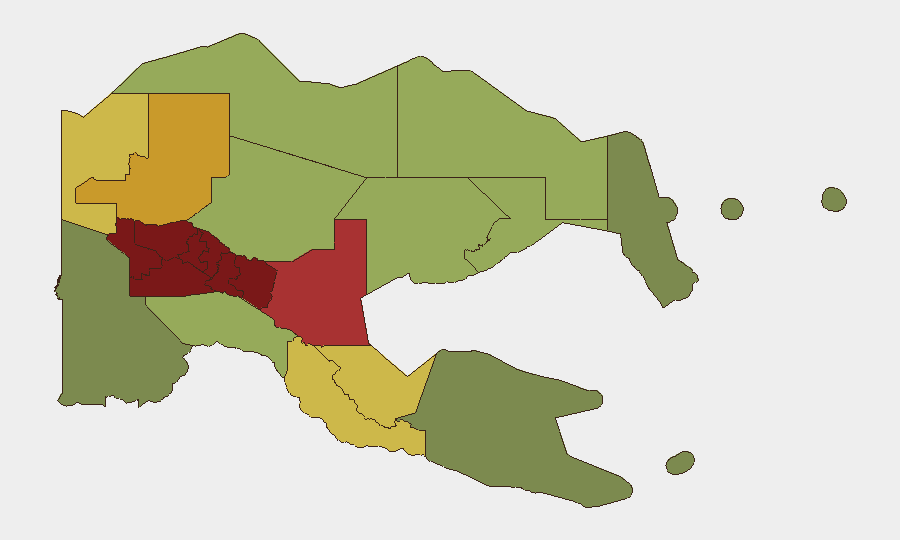
Situation Summary
Papua New Guinea remains a moderate regional security concern (global rank #49, composite threat score 39) with endemic crime, tribal conflict, and governance challenges concentrated in the Highlands provinces. The past week saw student violence, a fatal transport incident involving security personnel, a firearms amnesty, and isolated medical emergencies in remote areas—a pattern consistent with ongoing disorder rather than acute escalation. Law-enforcement leadership changes and financial-sector warnings underscore institutional effort to address crime and cybercrime, but operational capacity constraints persist.
Key Developments
- 29 September — Remote area (location unspecified): A premature childbirth resulted in the deaths of triplets before medical evacuation could be completed, highlighting severe emergency-access risk in areas distant from advanced healthcare facilities.
- 29 September — Approximately 185 km northeast of Merauke, PNG: Satellite detection confirmed 85 active fire hotspots across ~25 km with radiative power of ~1,320 MW; impact on populated areas not yet established.
- 1 October — Wabag, Enga Province: Superintendent Daniel Yangen took office as provincial police commander, publicly identifying crime, alcohol abuse, illegal firearms, gambling, and cybercrime as priority enforcement areas.
- 1 October — Hayapuga, Tari-Pori District, Hela Province: Local residents surrendered 38 high-powered firearms under provincial amnesty; authorities warned that enforcement operations would follow amnesty expiry.
- 2 October — University of Papua New Guinea, Port Moresby: A peace agreement was brokered between the Hagen Urban Association and Enga Students Union following violent weekend clashes; detailed casualty and damage figures not released.
- 4 October — Highlands Highway near Fio'noku Bridge, Eastern Highlands Province: A road crash killed three people, including a PNG Defence Force soldier providing security for two Chinese nationals, reinforcing transport and roadside security risks.
- 3 October — Goldie River Training Depot, Port Moresby vicinity: PNGDF and Australian Defence Force commenced Exercise Wantok Warrior 2026, a planned bilateral training activity that may restrict movement and access in the area.
- 2 October — Nationwide financial sector: Financial institutions reported increasing exposure to illegal gambling, cybercrime, online scams, and money-laundering via digital platforms—a developing threat trend.
Highest-Risk Areas
The Southern Highlands, Enga, Hela, Eastern Highlands, and Western Highlands provinces dominate the risk profile (composite scores 90–98), driven by tribal conflict, illegal firearms proliferation, gang violence, and weak state authority. The National Capital District (NCD, rank 7, score 85) remains a secondary concern due to urban crime, human trafficking, and cybercrime networks. This week's events—student clashes in Enga, a fatal crash in Eastern Highlands, and firearms surrender in Hela—are consistent with the ranking. Highlands-based security incidents typically involve transport, inter-group violence, and resource competition rather than organized terrorism.
How GeoBit Would Assist
Security teams managing personnel or assets in PNG should employ AOI Monitoring & Early Warning for high-risk provinces (particularly Southern Highlands, Enga, and Hela) to detect emerging violence or roadside incidents in near-real time. OSINT fusion across social media, local news, and open-source platforms can track emerging cybercrime and financial fraud targeting corporate entities. Alternative route and journey planning via Routing & Network Analysis helps corporate security advise staff on safer transit corridors, particularly along the Highlands Highway and in the NCD.
7-Day Outlook
Expect continued low-level tribal and student tensions in Enga and adjacent Highlands provinces following this week's UPNG clashes. The firearms amnesty expiry in Hela will likely trigger enforcement operations and potential localized conflict escalation. Routine crime in the NCD and transport incidents along major highways will persist; weather and seasonal fire risk in remote areas remain elevated.
Highest-Risk Areas — Ranked
| # | State / Region | Risk |
|---|---|---|
| 1 | Southern Highlands | 98 |
| 2 | Enga | 96 |
| 3 | Hela | 94 |
| 4 | Eastern Highlands | 92 |
| 5 | Western Highlands | 90 |
| 6 | Jiwaka | 88 |
| 7 | National Capital District | 85 |
| 8 | Simbu | 82 |
| 9 | Morobe | 78 |
| 10 | East Sepik | 72 |
| 11 | Sandaun | 68 |
| 12 | Oro | 66 |
Sources
Previous Weekly Briefs
A new Papua New Guinea brief is written every Monday, covering the week — each with its own risk map and downloadable CSV. Use the calendar to go further back.
- September 28, 2026
- September 21, 2026
- September 14, 2026
- September 8, 2026
- September 2, 2026
- August 31, 2026
- August 29, 2026
📅 Browse past briefs by calendar →
Highlighted days have a brief. Tap a day for that day's map & analysis, or “csv” for that day's dataset ($5).
Atlas — our AI intelligence desk — emails them this snapshot personally. Nothing else, no list.