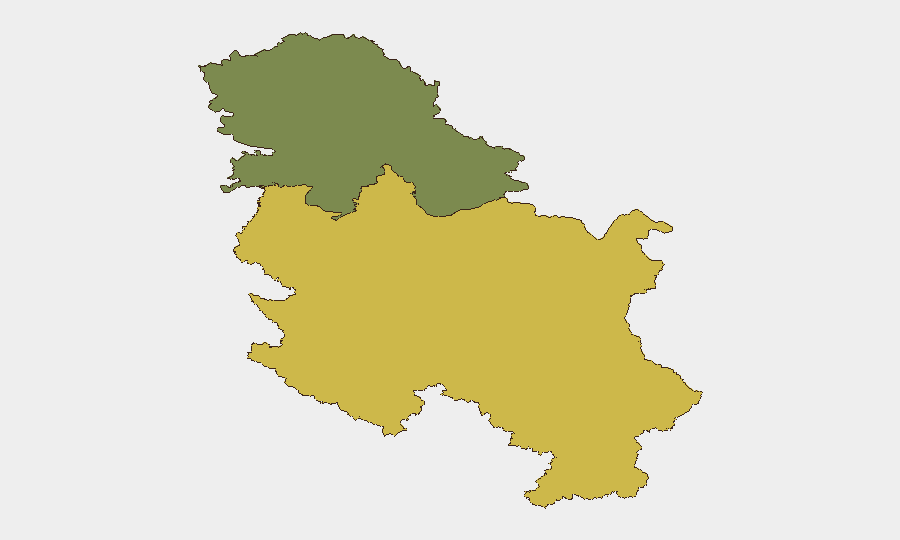
Situation Summary
Serbia remains a low-threat environment globally (rank #93; composite score 19) with no confirmed discrete security events recorded in the current tracking window. However, sub-national risk concentration in Central Serbia (score 65) reflects ongoing political tensions, judicial proceedings, and sporadic public order incidents that warrant selective monitoring. The security picture is stable but fragmented, with risks clustered in Belgrade rather than systemic across the country.
Key Developments
- Belgrade, Požeška Street (September 15–16): Police arrested a suspect in connection with an attempted homicide. Officers cordoned the residential area and controlled major road exits during the response, indicating a significant law-enforcement mobilization but no wider public-order disruption.
- Belgrade, Slavija/Kralja Milana Street (September 16): A loud blast or explosion-like sound triggered panic near the King's Circle Residence construction zone. Authorities have not publicly confirmed the device type, source, or classification; civilian reports suggest ordnance or industrial discharge, but the incident remains unclassified.
- Belgrade, Higher Court—Ustanička Street (September 16): Students announced a planned protest ahead of a hearing in the "General Staff" case. The demonstration was notified in advance; available reporting does not indicate large-scale disruption or confrontation, suggesting routine political engagement around a high-profile trial.
- Serbia-wide (September 18): Authorities rejected the temporary-residence application of Italian researcher Massimo Moratti and ordered departure or barred entry on alleged security grounds. The underlying decision was made September 4; this week's development is the official notification and enforcement action.
- Belgrade (September 16–17): Interior Minister Ivica Dačić publicly welcomed the Kosovo Specialist Chambers' conviction of former Kosovo Liberation Army leaders. This was a political statement rather than a domestic security incident; it underscores Serbia's close attention to war-crimes proceedings affecting national narratives but does not indicate internal instability.
Highest-Risk Areas
Central Serbia (Belgrade and surrounding areas) accounts for 65% of the sub-national risk composite, driven by proximity to judicial proceedings, student activism, and sporadic public-order incidents including attempted homicide and unexplained ordnance discharges. Vojvodina's lower score (35) reflects the region's comparatively stable business environment and lower frequency of reported incidents. Risk is concentrated in Belgrade's administrative and justice zones rather than distributed across the country, suggesting that corporate and NGO operations outside the capital face substantially lower operational exposure.
How GeoBit Would Assist
Security teams with staff or assets in Belgrade should employ AOI (Area-of-Interest) Monitoring & Early Warning around the Higher Court and Central Serbia administrative zones to detect advance notification of protests and court hearings. Intel Sweep and multi-language OSINT (X/Twitter, Telegram, local news feeds) would provide real-time detection of emerging public-order incidents and unidentified ordnance events. Routing & Network Analysis enables identification of alternative routes during cordoned police operations, reducing exposure to checkpoints and disruption.
7-Day Outlook
No escalation is forecast for the remainder of September. Student activism around the "General Staff" trial is expected to remain episodic and notified in advance. Low-frequency incidents (homicide, unexplained blasts) are unlikely to coalesce into systemic instability, but duty-of-care teams should maintain passive monitoring of Belgrade's central districts through routine OSINT feeds.
Highest-Risk Areas — Ranked
| # | State / Region | Risk |
|---|---|---|
| 1 | Central Serbia | 65 |
| 2 | Vojvodina | 35 |
Sources
Previous Weekly Briefs
A new Serbia brief is written every Monday, covering the week — each with its own risk map and downloadable CSV. Use the calendar to go further back.
- September 15, 2026
- September 8, 2026
- September 2, 2026
- August 31, 2026
- August 29, 2026
- August 27, 2026
- August 25, 2026
📅 Browse past briefs by calendar →
Highlighted days have a brief. Tap a day for that day's map & analysis, or “csv” for that day's dataset ($5).
Atlas — our AI intelligence desk — emails them this snapshot personally. Nothing else, no list.