Situation Summary
Estonia remains a low-threat environment globally (#115 composite score) with no discrete tracked security events in the current reporting window. However, recent developments—a suspected arson attack on a defense contractor, systematic cable theft disrupting critical rail infrastructure, and planned agricultural protests at government facilities—signal emerging hybrid-threat and civil-unrest risks concentrated in northeastern and central regions. The threat environment is manageable but warrants heightened situational awareness, particularly around energy infrastructure and government access points through late August.
Key Developments
- Tallinn, Betooni Street (15–16 August, reported 18–19 August): Suspected arson destroyed a building used by Milrem Robotics, a defense manufacturer supplying unmanned systems to Ukraine. Estonian prosecutors are investigating possible Russian sabotage or hybrid action; Prime Minister Kristen Michal stated on 18–19 August that suspects have been identified and arrest requests filed. No injuries reported, but classified as a serious attack on Estonia's defense sector.
- Kohtla-Nõmme–Püssi rail section, Ida-Viru County (18 August, reported 19 August): Overhead contact-line cables were stolen, halting Tallinn–Narva passenger rail traffic for several hours. Four passenger trains were cancelled; repair costs estimated at €100,000 with broader economic losses expected. Police confirmed at least two similar cable thefts in the same area within the past month, indicating a pattern.
- Tallinn, Toompea Hill and Stenbock House (announcement 17–18 August; event scheduled 25–27 August): The Estonian Chamber of Agriculture and Commerce announced a multi-day farmer protest against EU agricultural-subsidy cuts, with continuous presence planned 25–27 August. Russian-language media report threats to bring manure-laden vehicles to government buildings, signaling potential for high-visibility disruptive tactics affecting central-Tallinn security and access.
- Tartu Prison (18 August, reported 18–19 August): Four Swedish inmates arrived under a bilateral prison-capacity agreement. This represents a minor justice-sector development with potential longer-term implications for cross-border corrections cooperation and crime intelligence sharing.
Highest-Risk Areas
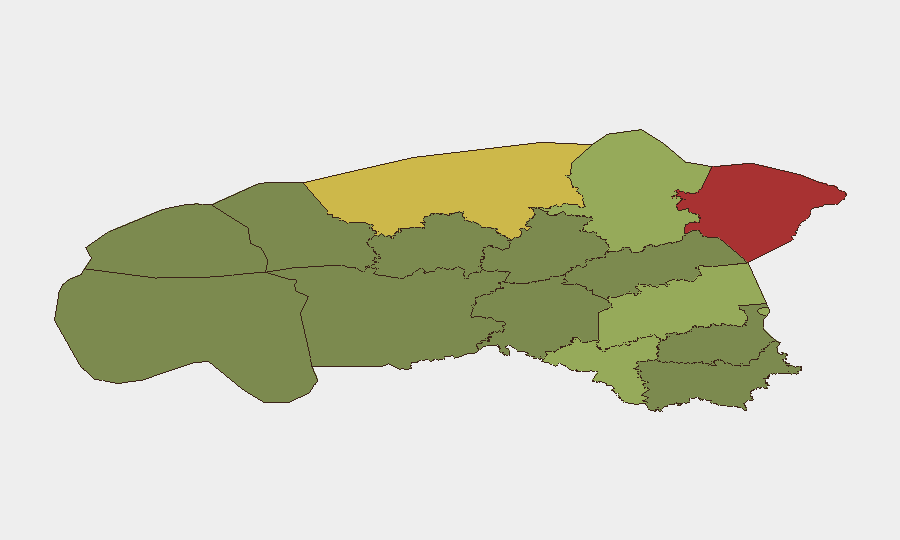
Ida-Viru County (risk 78) and Harju County (risk 68) drive the current threat landscape. Ida-Viru's elevated score reflects systematic infrastructure sabotage—cable theft targeting rail networks—clustered in the northeast corridor; this pattern suggests either organized crime or state-directed hybrid action targeting critical connectivity. Harju County, which encompasses Tallinn, now hosts the Milrem Robotics arson investigation and the imminent farmer protests at central government sites, elevating civil-unrest and targeting risk. Tartu County (58) remains moderately elevated but has not featured in recent incidents; southern counties present minimal acute risk.
How GeoBit Would Assist
Intel Sweep and OSINT fusion would track ongoing Milrem Robotics investigation reporting and Russian-language media narratives to assess hybrid-threat intent and attribution. AOI Monitoring and Early Warning on Tallinn government sites and Ida-Viru rail infrastructure would alert corporate teams to protest escalation and further cable-theft attempts before they disrupt operations or personnel travel. Routing and Network Analysis would enable real-time alternative-route planning for supply chains and personnel movement if rail or road infrastructure is targeted or congested during the 25–27 August protest window.
7-Day Outlook
The planned farmer protest on 25–27 August will be the dominant near-term civil-unrest vector; likelihood of disruptive tactics is moderate to high. Concurrent investigation into the Milrem Robotics arson and ongoing cable-theft patterns in Ida-Viru suggest a multi-vector threat environment rather than isolated incidents. Organizations with personnel or assets in Tallinn or northeast Estonia should anticipate access constraints and potential service interruptions through the end of August.
Highest-Risk Areas — Ranked
| # | State / Region | Risk |
|---|---|---|
| 1 | Ida-Viru County | 78 |
| 2 | Harju County | 68 |
| 3 | Tartu County | 58 |
| 4 | Valga County | 55 |
| 5 | Lääne-Viru County | 52 |
| 6 | Pärnu County | 35 |
| 7 | Rapla County | 32 |
| 8 | Jõgeva County | 30 |
| 9 | Järva County | 28 |
| 10 | Viljandi County | 25 |
| 11 | Põlva County | 22 |
| 12 | Võru County | 18 |
Sources
Previous Daily Briefs
A new Estonia brief is written every day — each with its own risk map and downloadable CSV. Here's the last week; use the calendar to go further back.
- August 17, 2026
- August 15, 2026
- August 13, 2026
- August 11, 2026
- August 9, 2026
- August 7, 2026
- August 6, 2026
📅 Browse every day by calendar →
Highlighted days have a brief. Tap a day for that day's map & analysis, or “csv” for that day's dataset ($5).
Atlas — our AI intelligence desk — emails them this snapshot personally. Nothing else, no list.