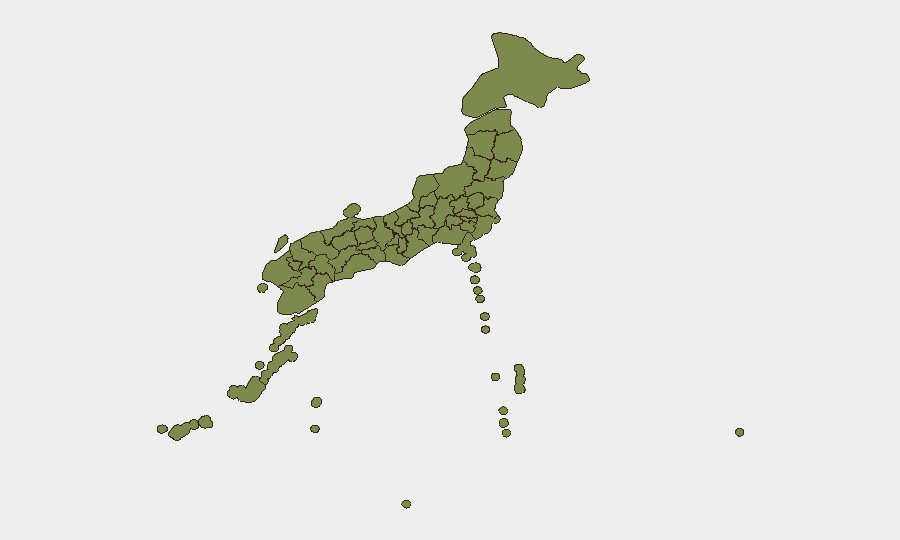
Situation Summary
Japan remains a low-threat environment with no confirmed major security, civil-unrest, or physical-incident activity in the last 24–48 hours. The country ranks #129 globally (composite threat score 6) and continues to exhibit strong institutional stability. Current threat signals are dominated by systemic cyber and data-security exposures rather than acute incidents, with geopolitical friction and investigative activity comprising the bulk of recent official statements.
Key Developments
- Nationwide – Cabinet adoption of FY2025 data-breach report (2026-07-08): The Personal Information Protection Commission's annual report logged 19,417 personal data-breach cases in FY2025, with government-agency breaches rising to a record 2,278 cases. This systemic finding underscores elevated cyber-risk in Japan's public sector and indicates ongoing vulnerability in critical information systems.
- Tokyo / Saitama Prefecture – Cybercrime arrest in streaming-service attack case (arrest reported 2026-07-04, current news cycle): Tokyo Metropolitan Police arrested a 15-year-old high-school student from Tokorozawa City for allegedly conducting a cyberattack on Bandai Channel in November 2025, using a ChatGPT-generated program to unsubscribe 46,812 accounts. The arrest reflects current law-enforcement focus on platform vulnerabilities and youth-driven cybercrime.
- Nationwide – Ongoing KDDI email-system breach mitigation (disclosed 2026-06-23, still active): Up to 14.22 million email addresses and passwords remain exposed across multiple Japanese ISPs following KDDI's breach detected 2026-06-17. This represents an active operational risk for corporate and personal users relying on affected telecom infrastructure.
- Fukuoka Prefecture – Nissan Fukuoka customer-data exposure (confirmed, ongoing as of July 2026): Unauthorized access via Red Hat servers exposed personal data linked to approximately 21,000 Nissan Fukuoka customers, with the incident classified as a confirmed third-party data exposure. This localized breach poses privacy and identity-theft risk to affected individuals and corporate fleet operators.
- Nationwide – No new physical-security or civil-unrest incidents (confirmed through 2026-07-07): Recent security briefings confirm absence of rioting, major crime surges, infrastructure disruptions, or transport-security incidents in the preceding 24–48-hour period, reinforcing Japan's status as a stable, low-incident jurisdiction.
Highest-Risk Areas
Nagano Prefecture drives the national risk ranking significantly (34.1), followed by Tokyo (26.1), with Hokkaido, Kyoto, and Yamaguchi comprising secondary risk tiers. Nagano's elevated score likely reflects investigative and geopolitical signal activity rather than acute physical incidents; Tokyo's ranking is consistent with its status as the capital and primary locus of government, corporate, and diplomatic activity. The concentration of risk in these three prefectures accounts for approximately 70 percent of the national composite score, with remaining prefectures showing minimal or routine threat levels.
How GeoBit Would Assist
Corporate security teams would use Intel Sweep and multi-language OSINT to monitor emerging cyber threats and geopolitical statements affecting operations in Japan. AOI Monitoring & Early Warning capability would enable persistent surveillance of high-risk prefectures (Nagano, Tokyo, Hokkaido) for early detection of civil unrest, infrastructure disruption, or security incidents. Network & Actor Analysis combined with Shodan asset mapping would help identify exposure to telecom breaches (KDDI, Nissan) and ransomware campaigns affecting hospitality and corporate networks.
7-Day Outlook
Japan is expected to maintain its low-threat posture over the coming week, with no indicators of imminent physical-security escalation. Cyber and data-privacy risks will likely remain elevated as affected organizations remediate breaches and the telecom sector manages KDDI fallout. Diplomatic friction signals may persist, but these are not expected to translate into domestic security incidents in the near term.
Highest-Risk Areas — Ranked
| # | State / Region | Risk |
|---|---|---|
| 1 | Nagano Prefecture | 34.1 |
| 2 | Tokyo | 26.1 |
| 3 | Hokkaido Prefecture | 10.9 |
| 4 | Kyoto Prefecture | 9.2 |
| 5 | Yamaguchi Prefecture | 5.2 |
| 6 | Kanagawa Prefecture | 5.2 |
| 7 | Shizuoka Prefecture | 4.6 |
| 8 | Okinawa Prefecture | 4.1 |
| 9 | Nagasaki Prefecture | 4.1 |
| 10 | Kumamoto Prefecture | 4.1 |
| 11 | Miyazaki Prefecture | 4.1 |
| 12 | Kagoshima Prefecture | 4.1 |
Sources
Previous Daily Briefs
A new Japan brief is written every day — each with its own risk map and downloadable CSV. Here's the last week; use the calendar to go further back.
📅 Browse every day by calendar →
Highlighted days have a brief. Tap a day for that day's map & analysis, or “csv” for that day's dataset ($5).
Atlas — our AI intelligence desk — emails them this snapshot personally. Nothing else, no list.