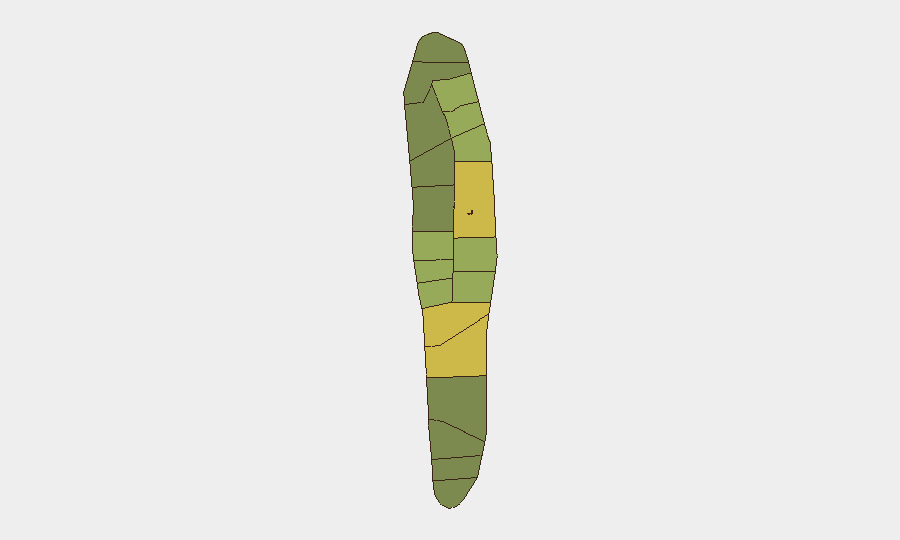
Situation Summary
Maldives remains a low-threat environment globally (rank #139, composite score 8/100) with no tracked security events in the current reporting window. The primary risk concentration is in Malé and surrounding atolls, where economic and political friction—particularly around cost-of-living grievances—continues to generate sporadic protest activity and police response. No civil unrest, crime escalation, infrastructure disruption, or terrorism indicators were confirmed in the last 24–48 hours.
Key Developments
- No discrete security events confirmed in the last 24–48 hours. Web and social-media research did not corroborate any new civil unrest, crime spikes, political instability, or infrastructure failures within the reporting window.
- Malé, 2026-08-14 (background context): Police blocked an opposition protest over rising prices; scuffles occurred when demonstrators attempted to push past barricades. This reflects ongoing economic-political tension since early-to-mid August, but is outside the last 24–48-hour reporting window.
- Malé, 2026-08-16 (safety incident, not security event): The National Disaster Management Authority provided temporary shelter and food assistance following an apartment fire affecting four residents. This is a safety/welfare matter rather than a security threat indicator.
- Malé, 2026-08-17 (non-security incident): A technical power outage suspended parliament proceedings briefly. Single-source reporting; no corroboration of security significance.
- Travel and water-safety context (not current events): UK government travel guidance (2026-08-12 to 2026-08-15) notes strong tidal currents and drowning risk as routine hazards; this is advisory rather than incident reporting.
Highest-Risk Areas
Malé (risk 85) and Malé Atoll (risk 68) dominate the risk profile, driven by population density, political activity, and economic grievances rather than active violence or organized crime. Hadhdhunmathi (65), Kolhumadulu (60), and Felidhu Atoll (58) show elevated but secondary risk, likely reflecting spillover economic stress and limited security infrastructure in smaller population centers. Northern atolls (Faadhippolhu, North/South Miladhunmadulu, Nilandhe Atolls) exhibit moderate risk scores (42–52), consistent with lower population concentration and reduced protest/police interaction. The risk gradient reflects political and economic friction in the capital and its immediate surroundings rather than widespread violence or instability.
How GeoBit Would Assist
Security teams with personnel or assets in Maldives should employ AOI (Area-of-Interest) Monitoring & Early Warning on Malé and surrounding atolls to detect protest mobilization, police action, or unrest in near-real time via news feeds, X/Telegram OSINT, and sentiment analysis. Intel Sweep and multi-language OSINT capabilities should track ongoing cost-of-living grievances and opposition rhetoric to anticipate demonstration timing and scale. For duty-of-care teams, Routing & Network Analysis can identify alternative movement corridors if Malé Atoll protest activity disrupts main thoroughfares; Environmental & Health monitoring should flag water-safety and natural-hazard advisories (tidal currents, fire/disaster risk) that affect expatriate communities.
7-Day Outlook
No imminent escalation in unrest is indicated. Economic and political friction will likely persist, with periodic low-scale protest activity and police containment in Malé concentrated around price-inflation narratives. Security posture should remain routine; heightened alert is not warranted unless credible intelligence of coordinated demonstration, labor action, or political destabilization emerges.
Highest-Risk Areas — Ranked
| # | State / Region | Risk |
|---|---|---|
| 1 | Malé | 85 |
| 2 | Malé Atoll | 68 |
| 3 | Hadhdhunmathi | 65 |
| 4 | Kolhumadulu | 60 |
| 5 | Felidhu Atoll | 58 |
| 6 | Mulaku Atoll | 55 |
| 7 | Faadhippolhu | 52 |
| 8 | South Miladhunmadulu | 48 |
| 9 | North Miladhunmadulu | 45 |
| 10 | South Nilandhe Atoll | 44 |
| 11 | North Nilandhe Atoll | 42 |
| 12 | South Ari Atoll | 40 |
Sources
Previous Daily Briefs
A new Maldives brief is written every day — each with its own risk map and downloadable CSV. Here's the last week; use the calendar to go further back.
- August 18, 2026
- August 16, 2026
- August 14, 2026
- August 12, 2026
- August 10, 2026
- August 8, 2026
- August 6, 2026
📅 Browse every day by calendar →
Highlighted days have a brief. Tap a day for that day's map & analysis, or “csv” for that day's dataset ($5).
Atlas — our AI intelligence desk — emails them this snapshot personally. Nothing else, no list.