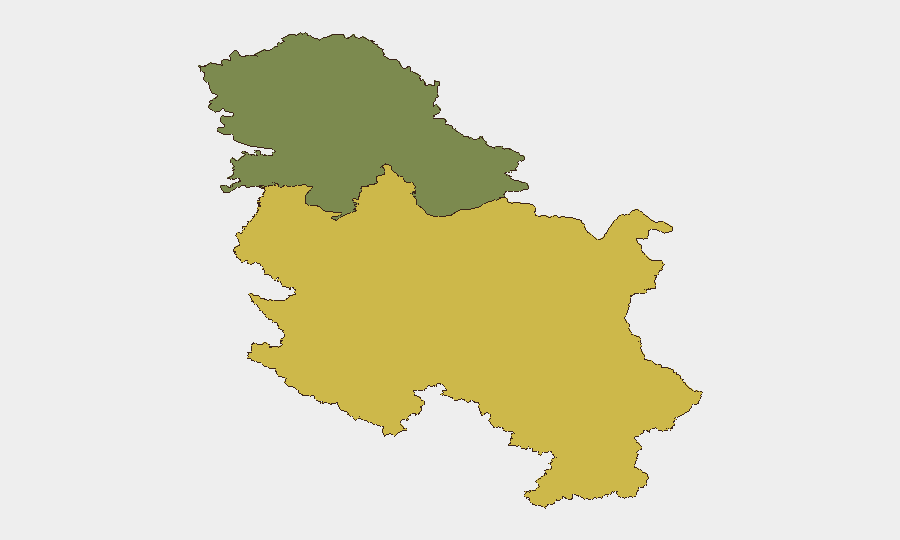
Situation Summary
Serbia faces a period of elevated political volatility following President Aleksandar Vučić's resignation announcement on September 27, triggering a transition toward early parliamentary elections. Student-led protests continue nationwide, and authorities have initiated a broad amnesty covering protest-related figures—a move likely intended to reduce tensions ahead of the electoral process. Media freedom concerns and isolated instances of political group confrontations indicate a fragile security environment in which election-related unrest remains a credible risk, particularly in Central Serbia (composite risk score 65).
Key Developments
- Belgrade, September 27: President Aleksandar Vučić announced his resignation, stating he would remain politically active and run in forthcoming early parliamentary elections. The move signals a response to sustained student-led protest pressure and political pressure (Reuters, France 24).
- Belgrade, September 27–28: The government granted amnesty or pardon to 49 individuals connected to protest activity, including 12 anti-government activists from Novi Sad and 11 people accused of attacks on protest blockaders. The measure is interpreted as an effort to de-escalate tensions before elections (Reuters, Srpske.rs).
- Serbia, nationwide, September 27–28: Early parliamentary elections have been formally initiated following the president's resignation. Authorities expressed concern about potential election-night unrest, and the timeframe for balloting remains subject to official announcement (Reuters, CGTN).
- Belgrade, September 23: An international media watchdog issued a formal call for enhanced protection of Serbian journalists, citing documented increases in threats, hostility, and violence directed at media personnel in the run-up to the election (Associated Press, Washington Post).
- Vranje, September 23: A student cycling group and a Serbian Progressive Party (SNS) supporters' rally assembled simultaneously near the Robna Kuća department store. Police established a separation cordon; no physical confrontation was reported in available sources.
- Serbia–Republika Srpska cross-border, September 25: Student campaigners reported harassment and police sanctions while conducting campaign activities in Republika Srpska. The incident reflects spillover political tensions linked to the Serbian student movement but occurred outside Serbia's borders.
Highest-Risk Areas
Central Serbia (risk score 65) is the primary geographic driver of current threat, reflecting Belgrade's concentration of political institutions, protest activity, and election-related uncertainty. Vojvodina (risk score 35), including Novi Sad, remains a secondary concern due to documented activist presence and prior incidents tied to the student movement. The amnesty granted to Novi Sad activists suggests authorities view that region as a potential flashpoint. Media pressure and political polarization are distributed nationwide, but physical security risks cluster in Central Serbia's urban centers, where election rallies, protests, and law-enforcement deployments are most likely to interact.
How GeoBit Would Assist
Organizations with personnel or assets in Serbia should employ AOI Monitoring & Early Warning to track protest sites, political rally locations, and police deployments in real time, with alerting triggered by crowd size or proximity to corporate facilities. Election Monitoring and Sentiment & Temporal Analysis across social media (X, Telegram) and local news will provide 48–72-hour advance warning of planned demonstrations or counter-demonstrations. Risk & Threat Assessment fused with OSINT on journalist targeting, activist networks, and security-force posture will help duty-of-care teams assess venue safety and staff movement during the electoral period.
7-Day Outlook
Election timing and rules are expected to be announced within days, likely crystallizing protest schedules and political rally calendars. Journalist safety and student-activist coordination remain high-visibility pressure points. The amnesty suggests government intent to suppress large-scale disorder, but isolated confrontations between political factions remain probable through election day.
Highest-Risk Areas — Ranked
| # | State / Region | Risk |
|---|---|---|
| 1 | Central Serbia | 65 |
| 2 | Vojvodina | 35 |
Sources
Previous Weekly Briefs
A new Serbia brief is written every Monday, covering the week — each with its own risk map and downloadable CSV. Use the calendar to go further back.
- September 22, 2026
- September 15, 2026
- September 8, 2026
- September 2, 2026
- August 31, 2026
- August 29, 2026
- August 27, 2026
📅 Browse past briefs by calendar →
Highlighted days have a brief. Tap a day for that day's map & analysis, or “csv” for that day's dataset ($5).
Atlas — our AI intelligence desk — emails them this snapshot personally. Nothing else, no list.