Situation Summary
Tajikistan remains a low-intensity, regionally fragmented security environment with composite threat score of 3 globally. The country's primary vulnerabilities cluster in Khatlon Region (bordering Afghanistan) and the capital, Dushanbe, where border instability, transnational militant networks, and narcotics trafficking create persistent operational risk. No acute security incidents have been reliably documented in the last 24–48 hours; the threat picture is characterized by baseline institutional crime, customs enforcement activity, and routine military exercises rather than acute crisis.
Key Developments
No clearly documented new security incidents meeting threshold criteria were identified in the last 24–48 hours via open sources, news platforms, or social media in English or Russian.
The closest operationally relevant signals from the broader 7-day window are:
- Dushanbe, Russia's 201st Military Base (20 July) – Russian forces conducted counter-terrorism and counter-UAV exercises, including electronic-warfare drills and small-arms counter-drone measures; relevant to broader regional military posture but not a new incident.
- Khwahan District / Panj River border (19 July) – Unidentified attackers engaged Taliban forces on the Afghanistan side of the Tajikistan border; Taliban subsequently detained local residents. This cross-border activity signals continued militant presence in neighboring zones but occurred outside your 24–48h window.
- Dushanbe / Vahdat (pre-26 July, timing unclear) – State security committee detained nine individuals suspected of links to a mass-casualty incident in Russia and associated militant networks. Relevant to transnational security nexus but predates the current 48-hour briefing period.
- National crime & enforcement (21 July aggregate report) – Ministry of Internal Affairs reported 11,731 crimes in H1 2026, 292 firearms seized, and 2,963 kg of narcotics confiscated; this is structural trend data, not discrete incidents.
Highest-Risk Areas
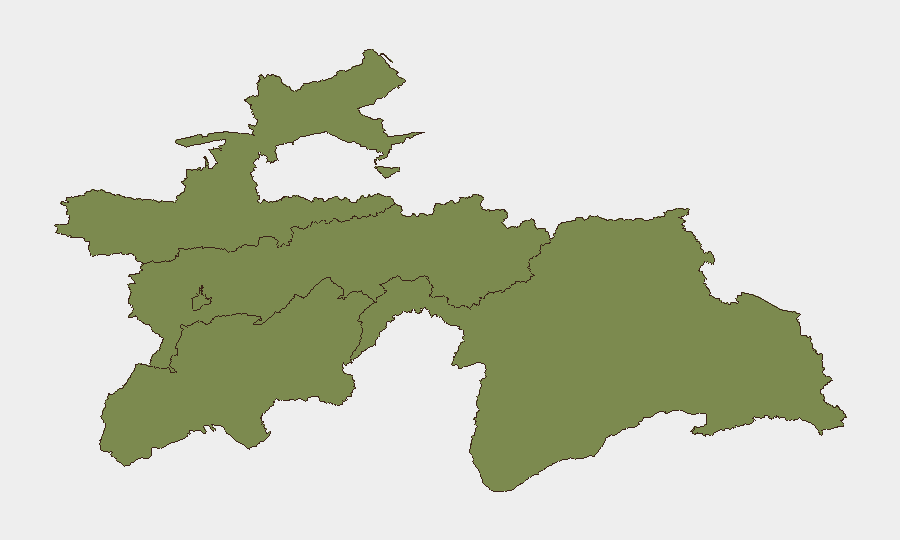
Khatlon Region (risk score 31.3) dominates Tajikistan's threat landscape, driven by proximity to Afghanistan, porous borders, narcotics transit routes, and residual militant networks. Dushanbe (16.3) concentrates institutional risk—government facilities, diplomatic presence, and transnational criminal/extremist nodes—while maintaining a significantly lower absolute risk profile than the border regions. Sughd, Republican Subordination districts, and Gorno-Badakhshan all register minimal tracked risk (1.3), reflecting either lower incidence or reduced reporting and monitoring intensity.
How GeoBit Would Assist
Security teams managing Tajikistan exposure should employ AOI Monitoring & Early Warning for Khatlon and Dushanbe to detect border incidents, militant movement, or trafficking activity in near-real time. Intel Sweep (X/Twitter OSINT, multi-language feeds, Telegram intelligence) enables 24-hour detection of emerging incidents, protests, or regime instability that may not appear in formal news channels within hours. Network & Actor Analysis and entity extraction are critical for tracking transnational militant, narcotics, and criminal networks operating across the Afghanistan–Tajikistan border and into Russia.
7-Day Outlook
No acute escalation is forecast for the next 7 days based on current open-source signals. Baseline risks—border skirmishes, narcotics interdiction, institutional crime, and Russian base security operations—will likely persist at routine levels. Monitoring should remain focused on Khatlon cross-border activity and Dushanbe security-service actions, particularly any development tied to transnational militant networks or instability in neighboring Afghanistan.
Highest-Risk Areas — Ranked
| # | State / Region | Risk |
|---|---|---|
| 1 | Khatlon Region | 31.3 |
| 2 | Dushanbe | 16.3 |
| 3 | Sughd Region | 1.3 |
| 4 | Districts of Republican Subordination | 1.3 |
| 5 | Gorno-Badakhshan Autonomous Region | 1.3 |
Previous Daily Briefs
A new Tajikistan brief is written every day — each with its own risk map and downloadable CSV. Here's the last week; use the calendar to go further back.
📅 Browse every day by calendar →
Highlighted days have a brief. Tap a day for that day's map & analysis, or “csv” for that day's dataset ($5).
Atlas — our AI intelligence desk — emails them this snapshot personally. Nothing else, no list.