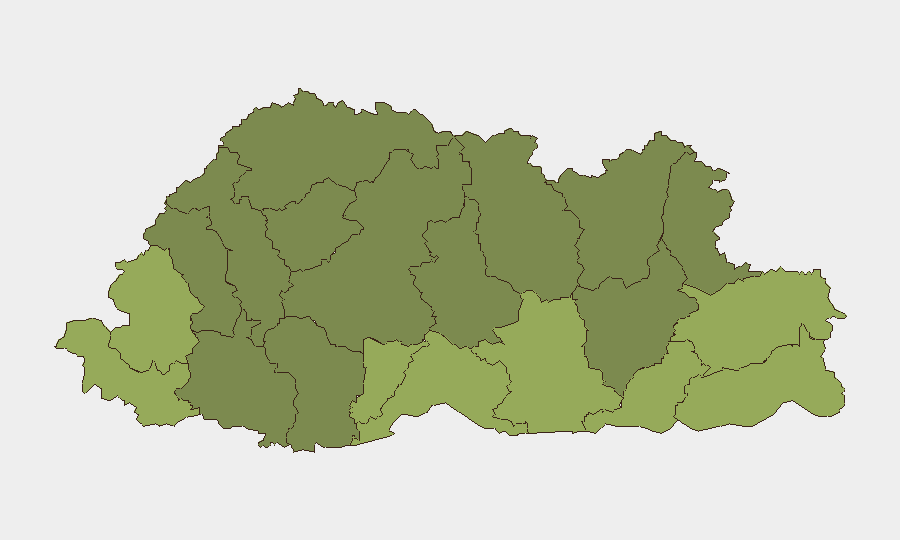
Situation Summary
Bhutan remains one of the world's lowest-threat environments, with a national composite score of 3 and no recorded security events in the current tracking window. The past week was dominated by a high-level bilateral visit from India's External Affairs Minister, centered on infrastructure development, energy cooperation, and economic connectivity rather than security incidents or unrest. No violent incidents, civil disorder, crime events, political crises, or travel disruptions were reported across the country during September 16–22, 2026.
Key Developments
- September 16 — Samdrup Jongkhar & Trashigang: Bhutan and India inaugurated the 80-metre Jaganathan Bridge under India's Project Dantak, improving cross-border road connectivity and reducing travel times between the eastern districts.
- September 16 — Paro: Indian External Affairs Minister S. Jaishankar arrived in Bhutan for an official bilateral visit, signaling sustained high-level engagement between the two nations on development and strategic partnership.
- September 16–18 — Thimphu & countrywide: Jaishankar held meetings with Bhutanese Foreign Minister D.N. Dhungyel, Prime Minister Tshering Tobgay, and King Jigme Khesar Namgyel Wangchuck, focusing on development assistance, energy, trade, education, and healthcare.
- September 16 — Gasa: Jaishankar and Dhungyel laid the foundation stone for the 500-kW Lunana Hydropower Project in northern Bhutan, part of ongoing bilateral energy cooperation.
- September 16 — Bumthang: The Indian delegation handed over 43 pureline Jersey cows to Bhutan's dairy sector and visited cultural sites, including Wangduechhoeling Palace and Kurjey Lhakhang.
- September 18 — Bhutan–India relations: Official statements confirmed expanded cooperation on bilateral infrastructure, energy development, and economic connectivity as outcomes of the ministerial visit.
Highest-Risk Areas
Samtse, Sarpang, Haa, Pemagatshel, and Samdrup Jongkhar districts form a southern and eastern belt with composite risk scores of 50–58—substantially elevated compared to the national baseline. These districts border India and encompass lower-altitude, more densely populated areas with greater exposure to cross-border activity, smuggling routes, and logistical networks. However, the absence of confirmed discrete events in the current window indicates these risks remain structural and latent rather than acute. Risk in higher-altitude northern districts (Gasa, Lhuntse) and central regions (Wangdue Phodrang) is significantly lower, reflecting isolation, sparse population, and limited infrastructure.
How GeoBit Would Assist
Intel Sweep, OSINT fusion, and multi-language search would enable continuous monitoring of Bhutanese media, social platforms, and cross-border signals to detect early indicators of crime, civil unrest, or political instability in high-risk districts. AOI monitoring and early warning on Samtse, Sarpang, and Samdrup Jongkhar would provide persistent alerting if security conditions shift, particularly around border and trade corridors. GIS and spatial analysis combined with routing and network analysis would support duty-of-care teams in route planning around higher-risk districts and identification of alternative corridors for personnel or asset movement.
7-Day Outlook
No acute security threats are anticipated in the near term. Bilateral infrastructure development and energy projects are expected to continue, supported by sustained India–Bhutan engagement. Structural risks in southern and eastern border districts remain stable absent new triggering events; corporate teams should maintain standard monitoring posture and updated contingency plans for these areas.
Highest-Risk Areas — Ranked
| # | State / Region | Risk |
|---|---|---|
| 1 | Samtse District | 58 |
| 2 | Sarpang District | 55 |
| 3 | Haa District | 52 |
| 4 | Pemagatshel District | 50 |
| 5 | Samdrup Jongkhar District | 48 |
| 6 | Tsirang District | 45 |
| 7 | Zhemgang District | 42 |
| 8 | Trashigang District | 40 |
| 9 | Mongar District | 38 |
| 10 | Gasa District | 35 |
| 11 | Lhuntse District | 32 |
| 12 | Wangdue Phodrang District | 30 |
Sources
Previous Weekly Briefs
A new Bhutan brief is written every Monday, covering the week — each with its own risk map and downloadable CSV. Use the calendar to go further back.
- September 15, 2026
- September 8, 2026
- September 1, 2026
- August 29, 2026
- August 26, 2026
- August 23, 2026
- August 21, 2026
📅 Browse past briefs by calendar →
Highlighted days have a brief. Tap a day for that day's map & analysis, or “csv” for that day's dataset ($5).
Atlas — our AI intelligence desk — emails them this snapshot personally. Nothing else, no list.