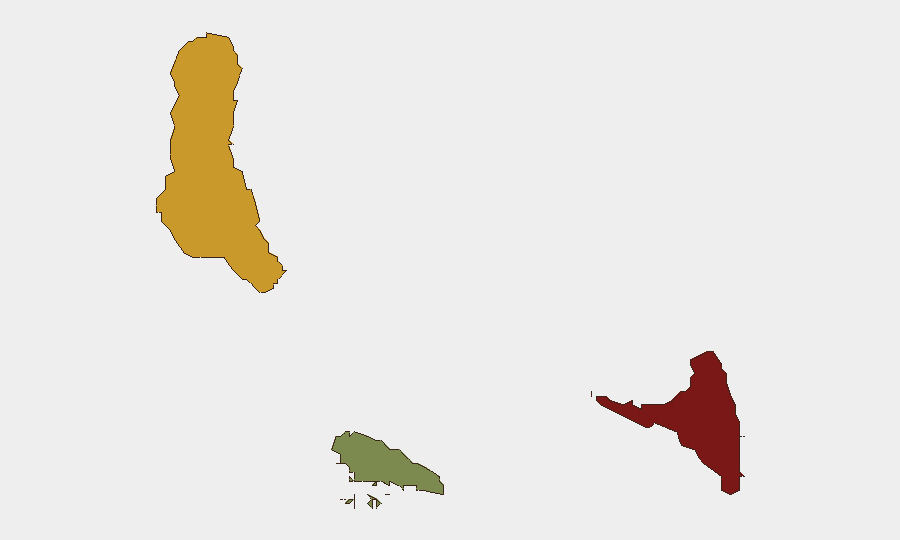
Situation Summary
Comoros remains a low-frequency threat environment (global rank #136) with no confirmed security incidents reported in the past 24–48 hours. However, underlying civil-unrest pressure persists: strikes and protests over fuel prices and governance were documented as recently as 12 August, and labour tensions at Anjouan's port (SGTM dock workers) are escalating toward legal action as of 17 August. The archipelago's fragmented administration and economic fragility create conditions for periodic social friction, particularly in Anjouan, though outright violence or organized conflict remains limited.
Key Developments
- Anjouan, Comoros – 17 August 2026: Dock workers employed by French shipping subsidiary SGTM have prepared legal action against the company following missed deadlines to resolve wage arrears and working-condition grievances. No blockade or strike confirmed, but the dispute signals labour unrest and potential port-operations friction in the highest-risk island.
- No verified security incidents in Comoros (18 August window): Intelligence sweep, open-source news, and available web indexing show no confirmed protests, clashes, infrastructure failures, or crime events specifically in Comoros territory in the past 48 hours.
- Maritime context (Indian Ocean region): A commercial vessel transited the Strait of Hormuz on 18 August and was struck by unknown projectile, resulting in crew casualty and coast-guard assistance. This incident occurs outside Comoros waters and does not involve Comoros-flagged or direct Comoros-linked assets, but underscores elevated maritime risk across the western Indian Ocean.
Highest-Risk Areas
Anjouan (risk score 88) remains the dominant concern, driven by fragmented governance, chronic labour disputes, and economic stress. Grande Comore (score 72) carries secondary risk, reflecting capital-city concentration of political volatility and intermittent protest activity. Moheli (score 35) presents substantially lower threat profile. The labour flare-up at Anjouan's port exemplifies why the island ranks first: operational infrastructure (maritime trade, employment) intersects with grievance channels where strikes and work stoppages carry outsized impact on regional supply chains and staff safety.
How GeoBit Would Assist
Security teams managing personnel or supply-chain assets in Comoros should employ AOI Monitoring & Early Warning on Anjouan's port and Grande Comore administrative zones to detect emerging strikes, protests, or labour mobilization before they escalate to blockades or violence. Multi-language OSINT and sentiment analysis on local social media, union communications, and news feeds will improve early visibility of civil-unrest triggers (fuel-price announcements, wage disputes, electoral friction). Entity extraction and network analysis of labour unions, port operators, and political actors will clarify which grievance channels are most likely to spark disruption in the coming weeks.
7-Day Outlook
No imminent security spike is forecast; however, the Anjouan labour dispute may harden into a work action if SGTM or authorities do not respond to legal pressure within days. Fuel-price volatility and broader economic stress will likely sustain low-level protest sentiment on Grande Comore. Maritime risk remains elevated across the region, but Comoros-specific territorial or shipping incidents are not currently indicated.
Highest-Risk Areas — Ranked
| # | State / Region | Risk |
|---|---|---|
| 1 | Anjouan | 88 |
| 2 | Grande Comore | 72 |
| 3 | Moheli | 35 |
Sources
Previous Daily Briefs
A new Comoros brief is written every day — each with its own risk map and downloadable CSV. Here's the last week; use the calendar to go further back.
- August 16, 2026
- August 14, 2026
- August 12, 2026
- August 10, 2026
- August 8, 2026
- August 6, 2026
- August 5, 2026
📅 Browse every day by calendar →
Highlighted days have a brief. Tap a day for that day's map & analysis, or “csv” for that day's dataset ($5).
Atlas — our AI intelligence desk — emails them this snapshot personally. Nothing else, no list.