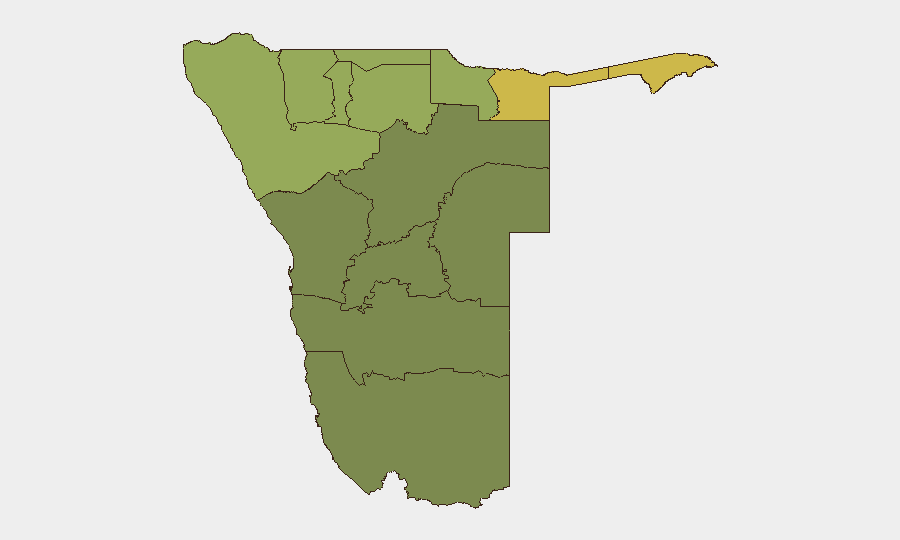
Situation Summary
Namibia remains a low-threat environment globally (rank #123, composite score 14) with no large-scale civil unrest, conflict, or terrorism reported in the past week. However, a confirmed ransomware intrusion at the Ministry of Defence and Veterans Affairs—attributed to the RansomHouse cybercriminal group—has elevated national cyber-security and data-protection risk, particularly given the sensitivity of military networks. Localised violent crime and wildlife hazards continue in border and rural regions, while opportunistic urban crime (robbery, fraud) and gender-based violence remain persistent concerns.
Key Developments
- Defence Ministry ransomware attack confirmed (Windhoek, 19–21 Sep 2026). NAM-CSIRT confirmed unauthorised activity in the Ministry of Defence and Veterans Affairs network, linked to RansomHouse. The group listed the ministry on its dark-web leak site around 16 Sep, threatening release of stolen data. Intrusion likely occurred around 12 Sep; incident response and remediation ongoing. No evidence of operational military disruption to date.
- RansomHouse double-extortion campaign (national, 16–21 Sep 2026). International cybersecurity analysis confirms the NDF/MODVA breach as part of a broader RansomHouse campaign threatening "full leak" of sensitive military information. Regional commentary notes this as the third major Namibian institutional compromise in approximately 21 months, underscoring systemic cyber-security vulnerabilities.
- Attempted murder at Groot Aub bar (Khomas Region, 18 Sep 2026). A 21-year-old suspect was arrested following an alleged stabbing at a bar in Groot Aub on Friday 18 Sep, classified as attempted murder. Incident reflects localised violent crime in peri-urban areas.
- Hippopotamus attack drowning (Kabbe South, Zambezi Region, 18 Sep 2026). A Zambian father and son drowned when a hippopotamus struck their canoe on the Mpukano River channel on Friday 18 Sep. Incident highlights wildlife and river transport hazards for cross-border communities and travellers.
- Sexual assault investigation (Oshikoto Region, Aug–Sep 2026). Police are investigating a case in which a 62-year-old man allegedly raped his 14-year-old niece multiple times between August and September. Formally reported in weekend crime bulletin on 20 Sep 2026.
- Tourist robbery arrests (Otjiwarongo, Otjozondjupa Region, 16 Sep 2026). Three men arrested for robbing two tourists at a hotel in Otjiwarongo were remanded in custody following court appearance on 16 Sep. Incident demonstrates targeting of tourists by opportunistic criminals in urban centres; prompt law-enforcement response noted.
- Fraudulent traffic-fine payment scam (national, 19–20 Sep 2026). NAMPOL issued a warning about a fraudulent website and SMS/WhatsApp links falsely offering traffic-fine amnesty payments. Scam targets personal data and financial information from motorists.
- Operation Basadi crime-fighting launch (national, 19 Sep 2026). The Ministry of Home Affairs launched Operation Basadi on Friday 19 Sep, an intelligence-driven crime-fighting initiative designed to strengthen police response and community safety. Will likely increase visible enforcement and checkpoints nationwide.
Highest-Risk Areas
Zambezi (risk 68), Kavango East (62), and Kavango West (58) regions are Namibia's highest-risk areas, driven by cross-border crime, wildlife hazards, and limited law-enforcement presence in remote zones. Northern and north-central regions (Kunene, Oshikoto, Ohangwena, Omusati) score 42–52, reflecting ongoing violent-crime concerns and community safety gaps. Central and southern regions (Erongo, Hardap, Omaheke) are substantially lower-risk, though localised incidents (robbery, fraud) occur in urban nodes.
How GeoBit Would Assist
Security teams would leverage AOI Monitoring & Early Warning to track Zambezi and Kavango regions for cross-border incidents and wildlife hazards; Intel Sweep and OSINT fusion to corroborate cyber incidents and track RansomHouse activity on dark-web forums; and Network & Actor Analysis to map criminal and threat-actor relationships. Routing & Network Analysis supports alternative journey planning to avoid high-risk corridors during elevated crime periods.
7-Day Outlook
Operation Basadi will likely drive increased police visibility and checkpoints, potentially reducing opportunistic street crime in urban areas over the short term. Cyber remediation at the Defence Ministry will remain ongoing, with reputational and intelligence-leakage risks dependent on RansomHouse's follow-through on leak threats. No large-scale security deterioration is anticipated in the coming week absent new developments.
Highest-Risk Areas — Ranked
| # | State / Region | Risk |
|---|---|---|
| 1 | Zambezi | 68 |
| 2 | Kavango East | 62 |
| 3 | Kavango West | 58 |
| 4 | Kunene Region | 52 |
| 5 | Oshikoto | 48 |
| 6 | Ohangwena | 45 |
| 7 | Omusati | 42 |
| 8 | Oshana | 40 |
| 9 | Otjozondjupa | 35 |
| 10 | Erongo Region | 32 |
| 11 | Hardap | 28 |
| 12 | Omaheke | 25 |
Sources
Previous Weekly Briefs
A new Namibia brief is written every Monday, covering the week — each with its own risk map and downloadable CSV. Use the calendar to go further back.
- September 14, 2026
- September 7, 2026
- September 1, 2026
- August 30, 2026
- August 28, 2026
- August 25, 2026
- August 23, 2026
📅 Browse past briefs by calendar →
Highlighted days have a brief. Tap a day for that day's map & analysis, or “csv” for that day's dataset ($5).
Atlas — our AI intelligence desk — emails them this snapshot personally. Nothing else, no list.