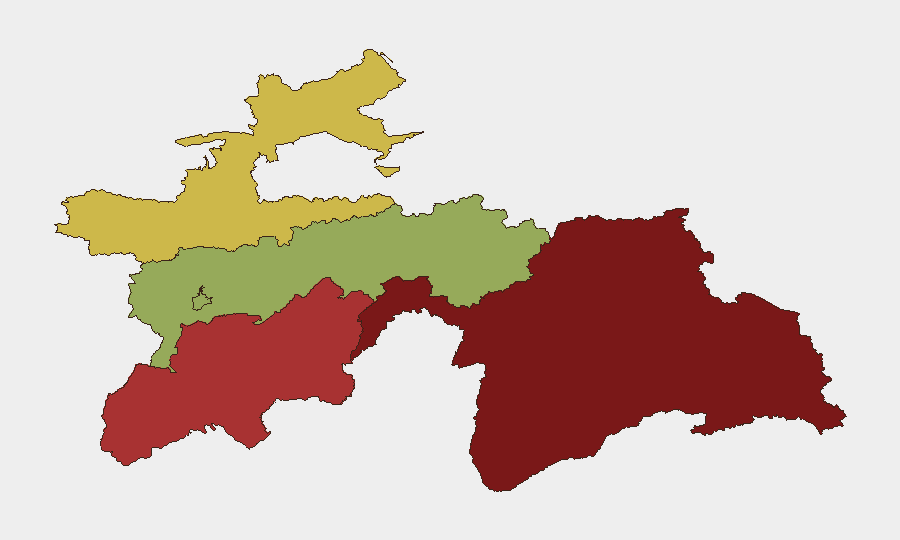
Situation Summary
Tajikistan remains a low-frequency threat environment globally (rank #132), with no significant security incidents reported during the past week. However, law-enforcement and government officials have publicly emphasized persistent concerns around online radicalization, cross-border cybercrime, extremism recruitment, and terrorism financing. Border security tensions with Afghanistan continue to warrant attention, particularly in remote mountain regions where smuggling and armed incursions have historically occurred.
Key Developments
- Dushanbe — 6 November 2026: Tajik law-enforcement officials convened to review extremist and terrorist-crime trends, citing active threats from online radicalization, recruitment of youth and students, financial fraud schemes, and transnational cybercrime operations.
- National level — 6 November 2026: Tajik authorities called for enhanced domestic and international action to counter terrorism, extremism, and cybercrime; regional security cooperation along the Afghan border was flagged as a priority area.
- Astana, Kazakhstan — 6 November 2026: President Emomali Rahmon addressed an international forum, warning that artificial intelligence is increasingly being weaponized by terrorist and extremist organizations, and urging strengthened global counter-measures.
Highest-Risk Areas
Gorno-Badakhshan Autonomous Region (risk score 92) and Khatlon Region (risk score 78) dominate the threat landscape, driven by geographic isolation, porous borders with Afghanistan, limited state capacity, and historical trafficking and insurgent activity. Sughd Region (score 65) presents secondary but significant risk, primarily related to cross-border criminal networks and radicalization. Dushanbe (score 42), while substantially lower risk, remains the administrative and communications hub where terrorism-financing, recruitment, and cybercrime are concentrated and monitored.
How GeoBit Would Assist
Corporate security and duty-of-care teams should deploy AOI Monitoring & Early Warning to track high-risk border zones in Gorno-Badakhshan and Khatlon for emerging smuggling, militant movement, or cross-border incident activity with automated alerting. Multi-language OSINT, Telegram & X monitoring, and network analysis can identify emerging radicalization campaigns, extremist financing channels, and recruitment networks targeting Tajik youth and diaspora communities. Conflict & military force-structure tracking and border & disputed-territory search enable real-time awareness of Afghan-side military deployments and smuggling routes that may affect Tajik security posture.
7-Day Outlook
No acute security escalation is expected in the near term; however, the frequency and explicitness of official warnings regarding radicalization, cybercrime, and AI-enabled extremism suggest government concern is rising. Seasonal winter weather will reduce cross-border activity in high-altitude zones, but urban cybercrime, financial fraud, and online recruitment are likely to remain constant. Continued U.S. and regional focus on Taliban consolidation in Afghanistan and potential refugee/displaced-person flows warrant sustained border monitoring through early 2027.
Highest-Risk Areas — Ranked
| # | State / Region | Risk |
|---|---|---|
| 1 | Gorno-Badakhshan Autonomous Region | 92 |
| 2 | Khatlon Region | 78 |
| 3 | Sughd Region | 65 |
| 4 | Districts of Republican Subordination | 58 |
| 5 | Dushanbe | 42 |
Sources
Previous Weekly Briefs
A new Tajikistan brief is written every Monday, covering the week — each with its own risk map and downloadable CSV. Use the calendar to go further back.
- November 2, 2026
- October 26, 2026
- October 19, 2026
- October 12, 2026
- October 5, 2026
- September 28, 2026
- September 21, 2026
📅 Browse past briefs by calendar →
Highlighted days have a brief. Tap a day for that day's map & analysis, or “csv” for that day's dataset ($5).
Atlas — our AI intelligence desk — emails them this snapshot personally. Nothing else, no list.