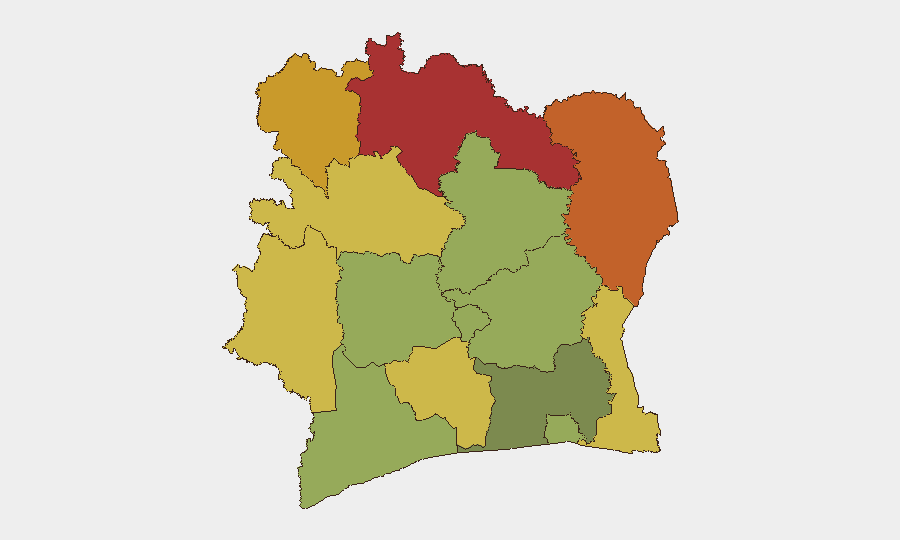
Situation Summary
Ivory Coast remains a moderate-tier security risk (global rank #64) with primary drivers rooted in northern insurgency and terrorism activity. No major security incidents were recorded during the week of September 28–October 5, 2026, though education-sector disruptions and routine government counter-illegal-mining operations dominated reporting. The security environment remains stable in major urban centers, particularly Abidjan, while northern districts continue to carry elevated threat profiles independent of current incident activity.
Key Developments
- Abidjan — October 2: The Ministry of Education reported disruption or blocking of 564 secondary schools, signaling significant unrest within the education sector. The scale and cause of the disruptions remain incompletely documented in available sources.
- Abidjan, Alassane Ouattara Stadium (Ebimpé) — October 3: Côte d'Ivoire hosted Cameroon in a football friendly (Cameroon won 1–0). Available reporting indicates the event proceeded without major public-order incidents or associated violence.
- Abidjan, Félix Houphouët-Boigny Stadium area — September 29: Police imposed temporary traffic restrictions and lane closures around the stadium ahead of the Côte d'Ivoire–Somalia football match, creating localized travel disruption.
- National — September 30 to October 2: The government deployed new equipment to anti-illegal-mining and security forces, including 30 pickup trucks, 35 troop carriers, 300 motorcycles, 12 boats, and drones. The initiative aims to expand operations against illegal mining; no specific clashes or raids were reported during this period.
Highest-Risk Areas
The four northern districts—Savanes, Zanzan, Denguélé, and Comoé (risk scores 78, 75, 72, and 70 respectively)—drive the country's elevated insurgency and terrorism threat ranking. These regions, bordering Burkina Faso and Mali, remain exposed to spillover activity from the Sahel conflict and localized militant networks. Montagnes and Woroba districts (scores 68 and 65) extend this risk corridor westward. By contrast, Abidjan and southern coastal districts present substantially lower risk (45 and below), reflecting greater state presence and urbanization. Organizations with northern operations or supply chains should maintain heightened vigilance in Savanes and Zanzan districts regardless of current incident lulls.
How GeoBit Would Assist
Security teams monitoring Ivory Coast should deploy AOI Monitoring & Early Warning on high-risk northern districts to track emerging militant activity, armed-group movements, and cross-border incursions before they escalate into discrete incidents. OSINT fusion and multi-language search across local media, social platforms (X, Telegram), and regional broadcasts will provide early signals of education-sector strikes, opposition mobilization, or security-force operations that affect travel and supply-chain continuity. GIS & Spatial Analysis combined with Routing & Network Analysis enables real-time alternative-route planning for personnel and cargo, particularly between Abidjan and northern regions, reducing exposure to unpredictable roadblocks or insecurity corridors.
7-Day Outlook
Near-term security conditions are likely to remain stable in urban centers and southern zones, with routine operations by government forces against illegal mining continuing in remote areas. Education-sector unrest may persist or expand if underlying labor or political grievances are unresolved, potentially affecting expatriate family schedules and school calendars. Northern districts will maintain structural vulnerability to cross-border militant activity; organizations should treat elevated risk in Savanes and Zanzan as endemic rather than incident-driven.
Highest-Risk Areas — Ranked
| # | State / Region | Risk |
|---|---|---|
| 1 | Savanes District | 78 |
| 2 | Zanzan District | 75 |
| 3 | Denguélé District | 72 |
| 4 | Comoé District | 70 |
| 5 | Montagnes District | 68 |
| 6 | Woroba District | 65 |
| 7 | Gôh-Djiboua District | 60 |
| 8 | Sassandra-Marahoué District | 58 |
| 9 | Vallée du Bandama District | 55 |
| 10 | Bas-Sassandra District | 52 |
| 11 | Lacs District | 48 |
| 12 | Abidjan | 45 |
Sources
Previous Weekly Briefs
A new Ivory Coast brief is written every Monday, covering the week — each with its own risk map and downloadable CSV. Use the calendar to go further back.
- September 28, 2026
- September 21, 2026
- September 14, 2026
- September 7, 2026
- September 2, 2026
- September 1, 2026
- August 31, 2026
📅 Browse past briefs by calendar →
Highlighted days have a brief. Tap a day for that day's map & analysis, or “csv” for that day's dataset ($5).
Atlas — our AI intelligence desk — emails them this snapshot personally. Nothing else, no list.