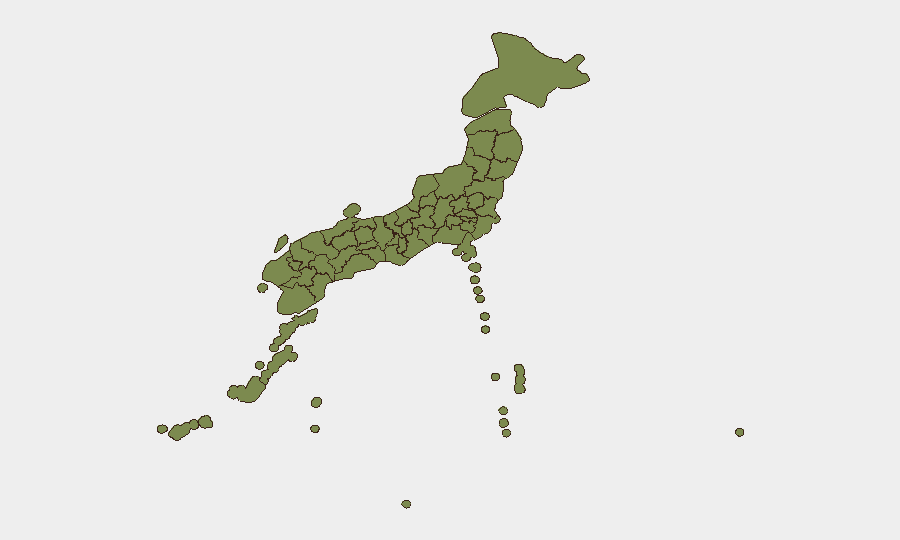
Situation Summary
Japan remains a low-threat environment at rank #125 globally, with a composite threat score of 6 and 262 tracked events. However, sub-national concentrations—particularly in Nagano Prefecture (risk 33.2)—and recent signals of political friction, labor-management disputes, and financial-sector investigations warrant focused monitoring. The security posture is stable but increasingly granular in risk distribution.
Key Developments
- Japan (national), 2026-07-11 – A 15-year-old student was arrested on suspicion of fraudulently canceling approximately 46,800 Bandai Channel accounts by exploiting a system vulnerability, signaling emerging youth-driven cybercrime and payment-system exposure.
- Sendai / Mitsubishi, 2026-07-10 – Official disapproval from Sendai directed at Mitsubishi; context remains limited, but suggests labor, environmental, or regulatory tension at a major industrial actor with national supply-chain implications.
- Japan (national), 2026-07-11 – Carrier-sector investigation initiated; details sparse, but timing aligns with broader "reduce relations" signal and warrants tracking for transportation-network or logistics disruption risk.
- Japan (national), 2026-07-11 – Public disapproval statement from Japanese nationals toward an unspecified company; reflects broader anti-corporate sentiment or labor grievance without immediate operational specificity.
- Kyoto Prefecture, 2026-07-11 – Public statement from Kyoto Prefecture involving Buddhist institutions; may signal cultural-heritage or religious-institutional tension but does not yet indicate acute civil unrest or travel impact.
- Japan (national), 2026-07-10 – Ruling party vs. opposition disapproval signals; routine parliamentary friction without escalation indicators at present.
- Japan (national), 2026-07-09 – Unspecified threat signal between Japan and military actors; context limited but warrants inclusion in 72-hour monitoring queue for potential regional security implications.
- Student vs. Engineer occupation (territory), 2026-07-10 – Localized territory occupation involving student and engineer cohorts; specific venue and scale unknown, but reflects labor or campus-based tension.
Highest-Risk Areas
Nagano Prefecture dominates the sub-national ranking (33.2), suggesting concentrated industrial, labor, or infrastructure vulnerability—possibly linked to manufacturing or energy assets. Tokyo (9.4) reflects capital-city baseline complexity and political/financial-sector density. Hokkaido (8.5) and Niigata (8.3) follow, likely tied to resource extraction, agricultural labor, or border-proximate sensitivities. Together, these four prefectures account for the majority of tracked event volume and warrant asset-specific monitoring rather than blanket Japan-wide protocols.
How GeoBit Would Assist
Security teams should deploy Intel Sweep and multi-language OSINT fusion to disambiguate the carrier investigation and Sendai–Mitsubishi tension, isolating supply-chain or labor-dispute specificity. Persistent AOI monitoring on Nagano Prefecture, Sendai, and key industrial sites (Mitsubishi, Honda, logistics hubs) with event-alerting thresholds would provide 24–48-hour warning of escalation from disapproval to operational disruption. Entity extraction and sentiment analysis on Japanese-language social media and news feeds will clarify youth-cybercrime clustering and corporate-grievance momentum.
7-Day Outlook
No immediate escalation is forecast. Political and labor friction remains within routine variance. The cybercrime arrest and carrier investigation suggest incremental regulatory activity rather than systemic threat. Monitoring should intensify if Nagano-Prefecture risk drivers shift from investigation to enforcement or if disapproval signals cross into protest or supply-chain action within 72 hours.
Highest-Risk Areas — Ranked
| # | State / Region | Risk |
|---|---|---|
| 1 | Nagano Prefecture | 33.2 |
| 2 | Tokyo | 9.4 |
| 3 | Hokkaido Prefecture | 8.5 |
| 4 | Niigata Prefecture | 8.3 |
| 5 | Hiroshima Prefecture | 6.6 |
| 6 | Hyogo Prefecture | 6 |
| 7 | Kumamoto Prefecture | 4.7 |
| 8 | Kyoto Prefecture | 4.3 |
| 9 | Osaka Prefecture | 4.1 |
| 10 | Aichi Prefecture | 4.1 |
| 11 | Saitama Prefecture | 4.1 |
| 12 | Shizuoka Prefecture | 4 |
Sources
Previous Daily Briefs
A new Japan brief is written every day — each with its own risk map and downloadable CSV. Here's the last week; use the calendar to go further back.
📅 Browse every day by calendar →
Highlighted days have a brief. Tap a day for that day's map & analysis, or “csv” for that day's dataset ($5).
Atlas — our AI intelligence desk — emails them this snapshot personally. Nothing else, no list.