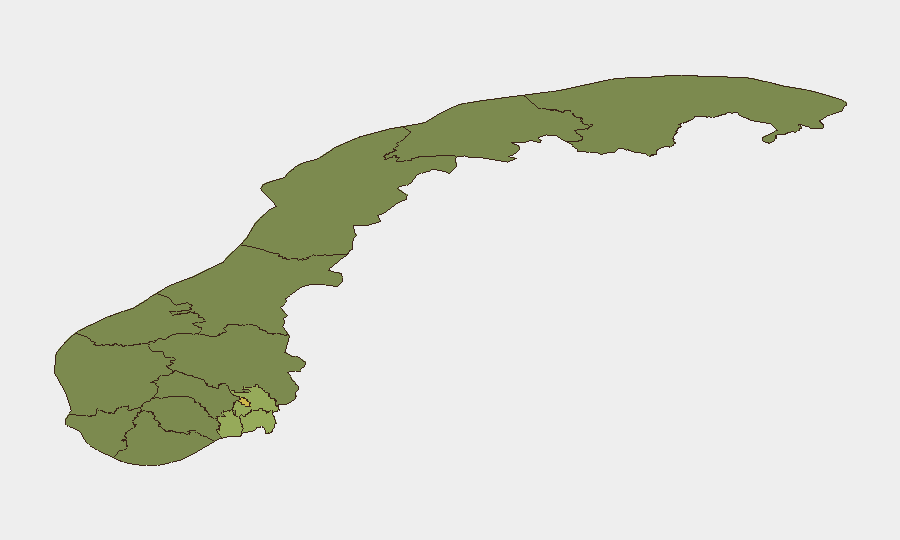
Situation Summary
Norway remains at global threat rank #51 with a composite score of 35, reflecting a stable baseline security environment. However, the country faces concurrent acute stressors: a major pro-Russian DDoS campaign against critical government digital infrastructure (ongoing since 24 August), the death of King Harald V and formal transition to King Haakon VIII (creating large public gatherings and elevated security operations in Oslo), and an air traffic controllers' strike extending through 30 August that continues to disrupt civilian aviation. These overlapping events are concentrated in the capital and key transport hubs, elevating Oslo's sub-national risk score to 68—significantly above other Norwegian regions.
Key Developments
- Oslo, 29–30 August: Thousands of Norwegian civilians continue to gather around the Royal Palace and central Oslo to mourn King Harald V and support the transition to King Haakon VIII. Large, sustained crowds imply traffic restrictions, heightened police presence, and potential short-notice cordons around government and royal buildings through the formal swearing-in scheduled for Tuesday.
- Nationwide (e-government services), 29–30 August: DDoS attacks attributed to pro-Russian hacker group "Server Killers" remain partially active after launching 24–26 August. Up to 10 critical government digital services—including ID-porten (national identity verification platform), e-prescriptions, and public-records access—have experienced intermittent outages. Authorities report no data breach; most services have been stabilized but periodic access problems persist for users.
- Nationwide (airports/airspace), 30 August: Norwegian Air Traffic Controllers' Association strike continues through 30 August, reducing capacity at Oslo Gardermoen, Bergen Flesland, Stavanger Airport, and potentially Tromsø. Approximately 76 flights were cancelled during the initial 23 August closure; ongoing reductions in capacity are expected to cause further delays and crowding at major hubs through the end of the month.
- Oslo, 28–29 August: Formal state mourning period and political transition to King Haakon VIII underway. Authorities managing both mass public gatherings for tributes to the late King and preparations for official state ceremonies, creating elevated security posture and potential movement restrictions in the capital's central areas.
- Nationwide (digital infrastructure), through 30 August: Norwegian Digitalisation Agency (Digdir) continues stabilization and monitoring of shared government platforms following cyberattack. Users of e-health services, municipal portals, and digital ID systems may experience intermittent service interruptions.
Highest-Risk Areas
Oslo (risk 68) dominates the national profile, driven by the convergence of large public gatherings following the King's death, state ceremony preparations, and ongoing exposure to the DDoS campaign affecting government services in the capital. Akershus (risk 52), immediately surrounding Oslo, faces secondary spillover risk from transport disruption and security operations. Østfold (risk 48) and Vestfold (risk 42) reflect their proximity to Oslo and the eastern border; Rogaland (risk 38) correlates with aviation disruption at Stavanger Airport and a reported kidnapping incident on 20 August. All other regions remain below risk 35, indicating that acute threats remain concentrated in the capital region and key transport corridors.
How GeoBit Would Assist
Organizations with personnel or assets in Norway should employ Intel Sweep and multi-language OSINT feeds to track real-time developments in the DDoS campaign and state transition ceremonies in Oslo. AOI Monitoring & Early Warning on Oslo's central district, Gardermoen Airport, and Digdir infrastructure would provide 24-hour alerting for crowd escalation, security cordons, or service outages. Routing & Network Analysis capabilities enable alternative travel planning around airport closures and traffic restrictions created by royal mourning events.
7-Day Outlook
The air traffic controllers' strike is expected to conclude by 31 August, allowing gradual normalization of flight schedules through early September. State ceremonies and public mourning in Oslo will peak around the King's funeral and swearing-in (likely early September), then diminish; security cordons and crowd management will remain elevated through that period. The DDoS threat is likely to abate as immediate geopolitical drivers (Norway–Ukraine cooperation announcements) recede, though intermittent attacks on Norwegian infrastructure by pro-Russian groups remain plausible through the autumn.
Highest-Risk Areas — Ranked
| # | State / Region | Risk |
|---|---|---|
| 1 | Oslo | 68 |
| 2 | Akershus | 52 |
| 3 | Østfold | 48 |
| 4 | Vestfold | 42 |
| 5 | Rogaland | 38 |
| 6 | Buskerud | 35 |
| 7 | Trøndelag | 32 |
| 8 | Telemark | 28 |
| 9 | Vestland | 27 |
| 10 | Agder | 26 |
| 11 | Møre og Romsdal | 22 |
| 12 | Innlandet | 20 |
Sources
Previous Daily Briefs
A new Norway brief is written every day — each with its own risk map and downloadable CSV. Here's the last week; use the calendar to go further back.
- August 29, 2026
- August 28, 2026
- August 27, 2026
- August 26, 2026
- August 25, 2026
- August 24, 2026
- August 23, 2026
📅 Browse every day by calendar →
Highlighted days have a brief. Tap a day for that day's map & analysis, or “csv” for that day's dataset ($5).
Atlas — our AI intelligence desk — emails them this snapshot personally. Nothing else, no list.