Situation Summary
Australia maintains a relatively low global security risk profile (composite threat score 3; ranked #177 globally), but is experiencing a sustained uptick in cybersecurity incidents affecting critical infrastructure, government, and commercial sectors. The past 48 hours have seen renewed public reporting on major data breaches in fleet management and travel services, compounded by confirmed cyberattacks on critical infrastructure that triggered service disruptions. New South Wales and Northern Territory remain significantly elevated above other jurisdictions, driven by concentrated incident activity and threat signalling.
Key Developments
- Teletrac Navman GPS fleet-data breach (national impact) – 2026-07-09. A threat actor ("laserscript") is selling continuous real-time GPS tracking data exfiltrated from the fleet-management provider, comprising ~670,000 GPS records, 30,000+ vehicles, and personal data (licence numbers, emails, mobile numbers) on 8,400 drivers across 2,988 organisations in Australia and New Zealand. Reporting amplified across Australian cybersecurity channels over the last 24–48 hours.
- Gold Coast City Council fleet exposure (Queensland) – 2026-07-09. Within the Teletrac Navman dataset, threat actor claims possession of 4,800 GPS positions and 234 vehicles belonging to Gold Coast City Council, plus 5,600 positions and 312 vehicles for other named entities. Raises operational and physical-security risks via real-time vehicle and staff-movement tracking.
- Australian travel company customer data leak – 2026-07-09. A threat actor shared personal information for over 16,000 customers of an Australian travel company on an underground forum. Exposed data includes names and contact details; coverage centred in Sydney, NSW. Increases fraud and phishing risk for affected travellers.
- Critical infrastructure cyberattacks and service disruptions (national) – 2026-07-09. The Cyber Security Council confirmed that cyberattacks over the past week caused two major disruptions to Australian public-service delivery. Latest Council statement (24–48 hours ago) asserts services are now operating normally, indicating ongoing incident-response activity.
- Elevated transport and travel-sector cyber-risk discourse (Australia-wide) – 2026-07-09. Australian cybersecurity commentary and social media (last 24–48 hours) are concentrating on transport, fleet management, and travel-industry exposure following the Teletrac Navman and travel-company incidents, amplifying sector-specific threat awareness.
Highest-Risk Areas
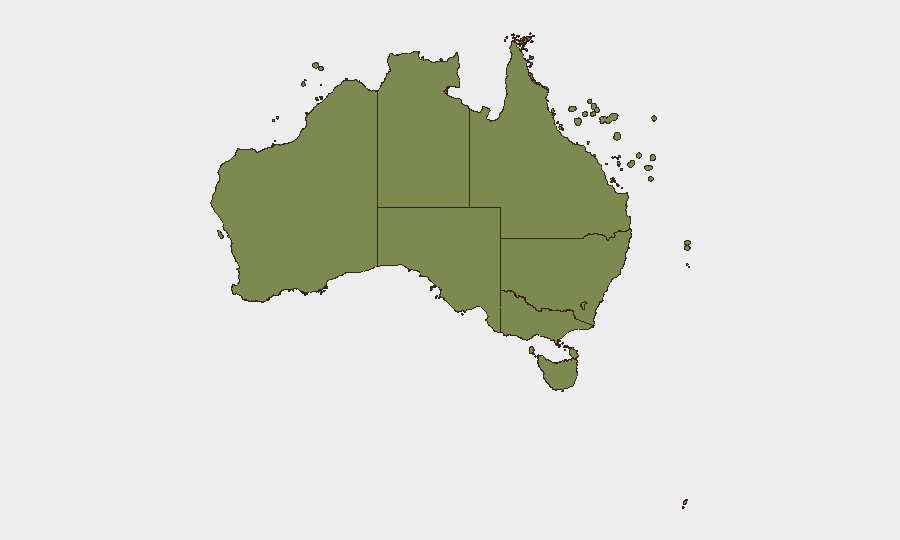
New South Wales (31.8) and Northern Territory (24.5) drive the majority of tracked risk, significantly outpacing other jurisdictions. NSW is the epicentre of recent cyber-incident reporting and critical-infrastructure targeting, as well as the focal point for travel-sector breach disclosure (Sydney-based). Northern Territory's elevated score reflects concentrated event activity over recent days. Victoria (11.3) follows at a much lower level, while all other mainland and territory jurisdictions remain below 7.0, indicating that risk is geographically concentrated and not evenly distributed.
How GeoBit Would Assist
Intel Sweep and global event feeds would monitor emerging Teletrac Navman compromise cascades across government and critical-infrastructure customer bases. OSINT fusion (X/Twitter, Telegram, underground-forum monitoring) would track threat-actor communications and dataset sale activity in real time, enabling early detection of secondary data sales or targeting announcements. GIS & Spatial Analysis combined with AOI Monitoring & Early Warning would allow security teams to overlay fleet-exposure data with critical-infrastructure locations and government facilities, identifying which physical assets face heightened operational-security risk from GPS-tracking disclosure.
7-Day Outlook
Threat-actor activity is likely to continue leveraging publicly disclosed breach datasets for secondary social-engineering campaigns and phishing attacks against affected organisations and individuals. Further critical-infrastructure incidents remain possible given the recent pattern of successful cyberattacks; heightened incident-response posture by the Cyber Security Council and sector operators may reduce immediate disruption risk but does not eliminate targeting incentives.
Highest-Risk Areas — Ranked
| # | State / Region | Risk |
|---|---|---|
| 1 | New South Wales | 31.8 |
| 2 | Northern Territory | 24.5 |
| 3 | Victoria | 11.3 |
| 4 | Australian Capital Territory | 6.7 |
| 5 | Queensland | 6.2 |
| 6 | Western Australia | 5.7 |
| 7 | South Australia | 5.3 |
| 8 | Tasmania | 5.3 |
| 9 | Ashmore and Cartier Islands | 1.8 |
| 10 | Jervis Bay Territory | 1.8 |
| 11 | Coral Sea Islands | 1.8 |
Sources
Previous Daily Briefs
A new Australia brief is written every day — each with its own risk map and downloadable CSV. Here's the last week; use the calendar to go further back.
📅 Browse every day by calendar →
Highlighted days have a brief. Tap a day for that day's map & analysis, or “csv” for that day's dataset ($5).
Atlas — our AI intelligence desk — emails them this snapshot personally. Nothing else, no list.