Situation Summary
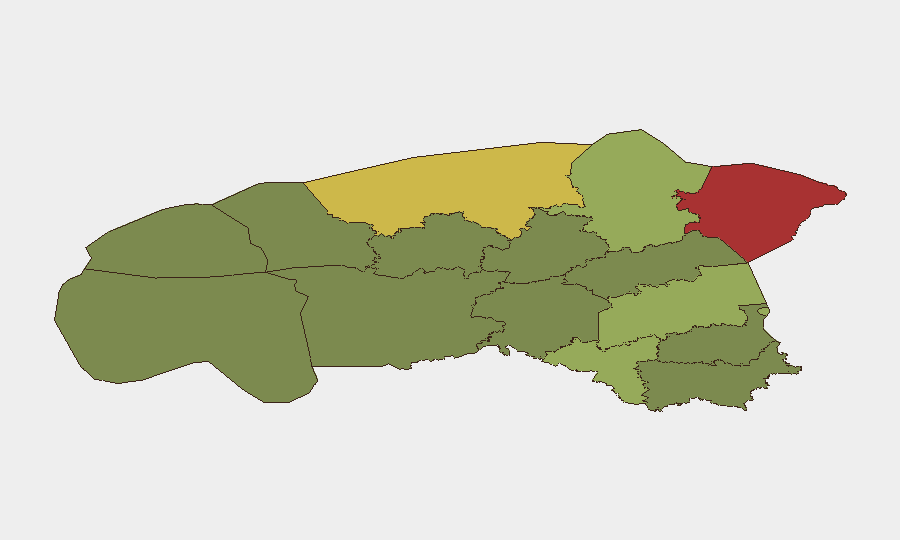
Estonia faces an elevated and multi-layered security environment, combining domestic hate-motivated crime, suspected state-directed hybrid and sabotage operations, political instability in the defence establishment, and regional migration and border pressures. The past week saw a possible attack on central government infrastructure, a slate of extremist hate crimes, accelerating Russian hybrid activity according to official statements, and disruptions to ministerial operations near active conflict zones. Overall national threat ranking remains moderate (#125 globally), but sub-national concentrations—particularly in Ida-Viru and Harju counties—reflect elevated exposure to both conventional security incidents and hybrid threats.
Key Developments
- Tallinn, Suur‑Ameerika Street – Government building façade damage under investigation (7 Sept). Police opened a criminal investigation into possible bullet holes discovered on the exterior of a joint ministerial "super ministry" building, treating the incident as a potential security threat to central government infrastructure.
- Tallinn – Hate-motivated arson and assaults charged (9 Sept). Prosecutors charged a 16-year-old with multiple arson attacks and violent assaults targeting minority-owned businesses and vehicles, including a kebab kiosk on Akadeemia Road and an Indian restaurant on Rahumäe Road, signalling escalating hate-crime risk in the capital.
- Vääna‑Jõesuu (west of Tallinn) – Soviet propaganda poster incitement probe launched (8 Sept). Police opened misdemeanor proceedings after a large World War II Soviet propaganda poster displaying "Death to the fascist viper" was discovered on a private house and found visible from public view; authorities are seeking removal under incitement-to-hatred provisions.
- Tallinn–Helsinki ferry route – Six migrants discovered hidden in vehicle (6 Sept discovery; 11 Sept Border Guard statement). Finnish authorities found five Eritrean and one Moroccan national concealed in a vehicle arriving from Tallinn; the foreign driver was arrested on smuggling charges. Estonian and Finnish authorities characterized the discovery as part of a broader pattern of irregular migration flowing through Belarus and Estonia into the Schengen zone.
- National level – Senior state official warns of accelerated Russian hybrid operations (11–12 Sept). Erkki Tori, State Chancellery coordination director, stated Russia has stepped up hybrid actions against Estonia in 2026; he referenced the August Milrem Robotics fire and Slava Ukraini restaurant arson as suspected sabotage cases, indicating heightened concern over critical defence-infrastructure security.
- Ministry of Defence – Political leadership disruption (2 & 10 Sept). Defence Minister Hanno Pevkur announced resignation (2 Sept), and Defence Ministry Chancellor Kaimo Kuusk was removed from office (10 Sept) pending investigation by the European Public Prosecutor's Office into defence-related transactions, creating administrative instability in the defence establishment.
- Polish–Ukrainian border – Estonian MFA personnel trapped by Russian drone threat (13 Sept). Members of Estonia's Ministry of Foreign Affairs were unable to leave Ukraine for several hours due to Russian drone activity near the Yagodin checkpoint; a drone strike subsequently struck a nearby gas station, underscoring travel hazard for Estonian officials in conflict-adjacent zones.
Highest-Risk Areas
Ida-Viru County (risk 78) and Harju County (risk 68) drive the sub-national ranking, with Harju—encompassing Tallinn—reflecting the concentration of government, defence, and minority-community targets visible in this week's incidents. Ida-Viru's elevation likely reflects proximity to the Russian border and historical hybrid/cyber exposure. Tartu, Valga, and Lääne-Viru counties (58–52) round out the top tier, consistent with geographic and strategic vulnerability patterns in northeastern and eastern Estonia.
How GeoBit Would Assist
Security teams should employ AOI Monitoring & Early Warning on critical infrastructure sites (government buildings, defence facilities) and minority-community neighbourhoods to detect emerging hate-crime or sabotage patterns. OSINT fusion and network analysis applied to extremist and migration-related actor networks would support early detection of coordinated campaigns. Routing & network analysis and maritime/aviation tracking would enhance awareness of irregular border-crossing routes and personnel movements between Estonia and neighbouring countries.
7-Day Outlook
Hate-motivated incidents are likely to persist absent targeted community engagement and law-enforcement surge. Russian hybrid activity is expected to remain elevated and diffuse, with sabotage and infrastructure risk requiring sustained vigilance. Defence-sector instability may complicate response coordination over the near term.
Highest-Risk Areas — Ranked
| # | State / Region | Risk |
|---|---|---|
| 1 | Ida-Viru County | 78 |
| 2 | Harju County | 68 |
| 3 | Tartu County | 58 |
| 4 | Valga County | 55 |
| 5 | Lääne-Viru County | 52 |
| 6 | Pärnu County | 35 |
| 7 | Rapla County | 32 |
| 8 | Jõgeva County | 30 |
| 9 | Järva County | 28 |
| 10 | Viljandi County | 25 |
| 11 | Põlva County | 22 |
| 12 | Võru County | 18 |
Sources
Previous Weekly Briefs
A new Estonia brief is written every Monday, covering the week — each with its own risk map and downloadable CSV. Use the calendar to go further back.
- September 7, 2026
- September 1, 2026
- August 30, 2026
- August 27, 2026
- August 25, 2026
- August 23, 2026
- August 21, 2026
📅 Browse past briefs by calendar →
Highlighted days have a brief. Tap a day for that day's map & analysis, or “csv” for that day's dataset ($5).
Atlas — our AI intelligence desk — emails them this snapshot personally. Nothing else, no list.