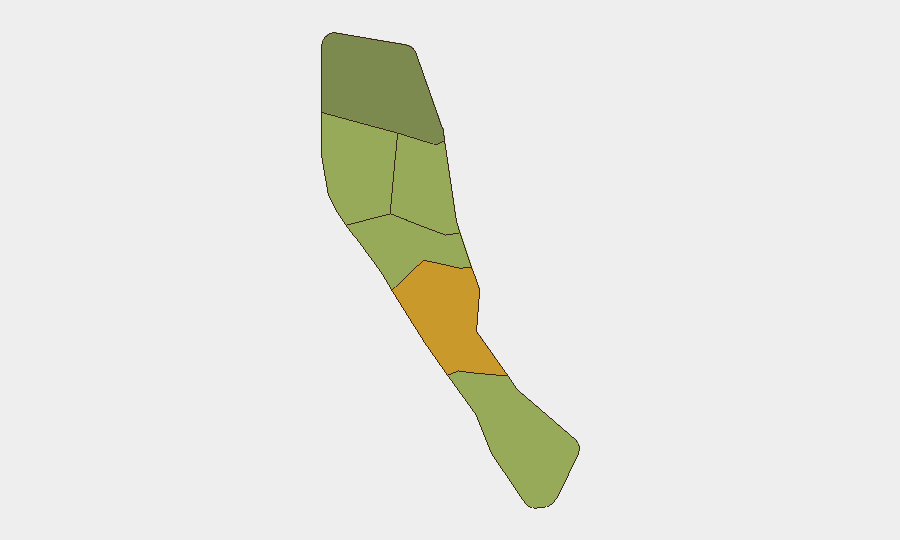
Situation Summary
Vanuatu remains a low-threat jurisdiction (global rank #161; composite threat score 7) with no discrete security incidents recorded during the week of 7–13 October 2026. A magnitude-6.3 earthquake struck offshore Malampa Province on 8 October with no reported damage or casualties. The country's security profile is shaped by persistent transnational crime vectors—drug trafficking and people smuggling—rather than by acute violence or instability; a planned joint maritime patrol with Solomon Islands signals regional effort to address these flows.
Key Developments
- Offshore Malampa Province (northeast of Norsup), 8 October 2026: A magnitude-6.3 earthquake (some sources reported 6.6) occurred approximately 102–105 km northeast of Norsup at a depth of 10 km. No damage, injuries, or tsunami warning were reported. Vanuatu's seismic activity remains routine within the region's Pacific Ring of Fire context.
- Motalava, Torba Province, 8 October 2026: Vanuatu's government announced plans for its first major joint maritime patrol with Solomon Islands to counter drug trafficking, people smuggling, maritime crime, and other transnational offences. The operation was announced as preparatory; no operational report of patrol commencement was available in the reporting window.
- No other discrete security events met verification criteria for the 7–13 October period. Reports on vessel sanctions and Australia–Vanuatu treaty proceedings concerned developments outside Vanuatu or predating the current week.
Highest-Risk Areas
Shefa Province (composite risk 72) leads sub-national risk and likely reflects concentration of the capital, Port Vila, where transnational crime flows, informal-sector labor disputes, and maritime trafficking networks converge. Penama (58) and Sanma (52) follow; both are northern maritime zones where people smuggling and drug transit represent ongoing exposure. Malampa (48), despite this week's earthquake, remains mid-tier in security risk—seismic events do not materially elevate operational security threat. Collectively, the archipelago's maritime geography and position between major drug and smuggling routes sustain elevated risk in coastal provinces, while inter-provincial variability reflects population density and port activity rather than political instability or armed conflict.
How GeoBit Would Assist
Security teams with personnel or assets in Vanuatu would leverage AOI Monitoring & Early Warning to establish persistent watch on high-risk provinces (Shefa, Penama, Sanma) for transnational-crime indicators, labor unrest, or maritime anomalies, with alerting on rapid escalation. Maritime & Aviation tracking, paired with Network & Actor Analysis, would map smuggling networks and trafficking flows across the archipelago and into neighboring waters. Environmental & Health monitoring would integrate seismic and meteorological data to support business continuity and emergency-response planning in earthquake-prone zones.
7-Day Outlook
No acute security deterioration is anticipated in the near term. The announced Solomon Islands joint patrol, if operationalized, may temporarily disrupt transnational-crime logistics but is unlikely to alter the underlying risk trajectory. Routine seismic activity and persistent organized-crime pressures will remain the primary operational considerations for corporate duty-of-care teams.
Highest-Risk Areas — Ranked
| # | State / Region | Risk |
|---|---|---|
| 1 | Shefa Province | 72 |
| 2 | Penama | 58 |
| 3 | Sanma | 52 |
| 4 | Malampa | 48 |
| 5 | Tafea | 45 |
| 6 | Torba | 35 |
Sources
Previous Weekly Briefs
A new Vanuatu brief is written every Monday, covering the week — each with its own risk map and downloadable CSV. Use the calendar to go further back.
- October 6, 2026
- September 29, 2026
- September 22, 2026
- September 15, 2026
- September 8, 2026
- September 2, 2026
- August 31, 2026
📅 Browse past briefs by calendar →
Highlighted days have a brief. Tap a day for that day's map & analysis, or “csv” for that day's dataset ($5).
Atlas — our AI intelligence desk — emails them this snapshot personally. Nothing else, no list.