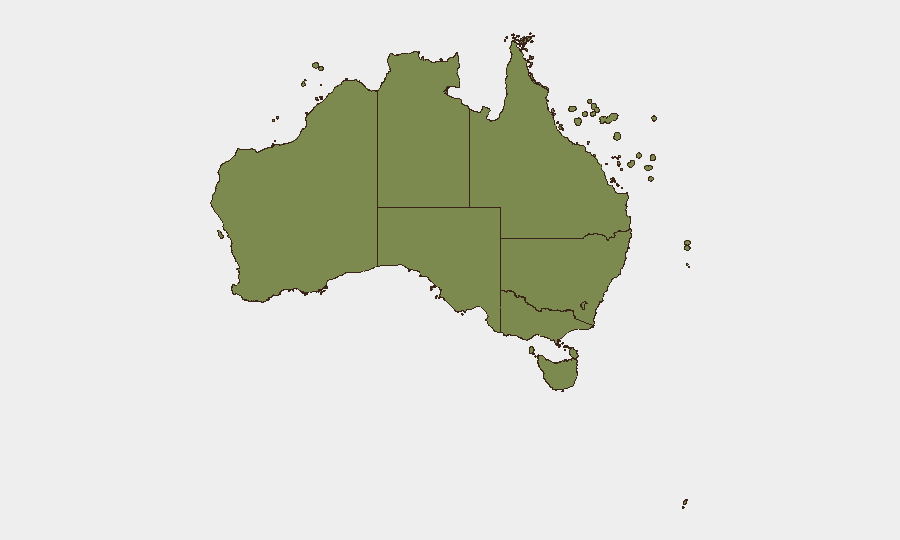
Situation Summary
Australia remains a low-risk jurisdiction globally (rank #141, composite score 5) with 786 tracked events, but risk is highly concentrated in the Northern Territory and New South Wales, which together account for a substantial portion of domestic threat activity. Recent signals (10–11 July) include investigative actions, administrative sanctions, and small-arms police incidents, alongside infrastructure and cybersecurity events affecting critical national systems. The overall security environment is stable but requires focused monitoring of higher-risk sub-national zones and emerging cyber threats to business and government operations.
Key Developments
- National airports (Sydney and others) – infrastructure disruption, ~11 July
A third-party technical failure caused widespread delays and queuing at international terminals; Australian Border Force acknowledged system failures affecting check-in and security processing. Airlines implemented workarounds. Recency confirmed via broadcast reporting, though exact timestamp requires verification.
- Australia and New Zealand – data breach (Teletrac Navman fleet-management platform) – exfiltration late June; sale advertised early July
Threat actor "laserscript" advertised stolen real-time GPS data and driver information covering ~2,988 organisations and >670,000 position records. Impacted entities include Gold Coast City Council, Pacific National, Veolia, BHP Newman Operations (WA), Aldi Stores Australia, and others. Data includes vehicle registrations and personal details for ~8,400 drivers, now active on dark-web marketplaces. Represents current operational-security and physical-security risk to fleet-dependent organisations across both nations.
- Small-arms police incidents – 9 July
Two separate police small-arms engagements reported; locations and casualties not specified in available signals. Indicates elevated police-use-of-force activity in the reporting window.
- Administrative sanctions (Australia vs. Constable) – 11 July
Formal disciplinary action taken; context and jurisdiction require clarification via direct intelligence sweep.
- Political/institutional statements and disapproval signals – 10–11 July
Multiple public statements issued by government, university, and business entities; disapproval noted regarding Senator and Queensland authorities. Underlying policy or incident drivers not confirmed in available open sources.
Highest-Risk Areas
Northern Territory (risk 32.2) and New South Wales (risk 30.6) dominate the national risk profile, together representing nearly 63 points of the 141-point total sub-national score. NT's elevated risk likely reflects remote-area governance, resource-sector activity, and Indigenous community tensions; NSW concentrates urban crime, organised-crime networks, and critical infrastructure vulnerability. Victoria (18.9) and Western Australia (11.7) carry moderate risk; remaining states and territories fall below 6 points each. Corporate and government teams with personnel or assets in NT and NSW should prioritise localised threat monitoring and contingency planning.
How GeoBit Would Assist
Security teams should deploy Intel Sweep and multi-language OSINT fusion to monitor emerging political statements and institutional actions signalled on 10–11 July and identify underlying drivers. Cyber-threat and crime-specific search combined with entity extraction and network analysis would track the Teletrac Navman breach exposure across fleet-dependent supply chains and critical infrastructure. AOI Monitoring with persistent alerting on NT and NSW would enable early warning of escalating police activity, organised-crime incidents, or resource-sector disruption. Alternative route and journey planning would support real-time travel-risk mitigation for personnel in high-risk zones.
7-Day Outlook
Risk is expected to remain stable at the national level; however, ongoing police activity and the active dark-web sale of fleet-telematics data warrant close watch. Corporate and government organisations dependent on GPS-tracked fleets or vehicle management should initiate breach-response and data-compromise notifications immediately. Political and administrative actions signalled mid-July may clarify over the coming week and could indicate emerging policy or regulatory changes requiring compliance review.
Highest-Risk Areas — Ranked
| # | State / Region | Risk |
|---|---|---|
| 1 | Northern Territory | 32.2 |
| 2 | New South Wales | 30.6 |
| 3 | Victoria | 18.9 |
| 4 | Western Australia | 11.7 |
| 5 | Australian Capital Territory | 5.6 |
| 6 | South Australia | 4.3 |
| 7 | Queensland | 4.2 |
| 8 | Ashmore and Cartier Islands | 2.2 |
| 9 | Tasmania | 2.2 |
| 10 | Jervis Bay Territory | 2.2 |
| 11 | Coral Sea Islands | 2.2 |
Sources
Previous Daily Briefs
A new Australia brief is written every day — each with its own risk map and downloadable CSV. Here's the last week; use the calendar to go further back.
📅 Browse every day by calendar →
Highlighted days have a brief. Tap a day for that day's map & analysis, or “csv” for that day's dataset ($5).
Atlas — our AI intelligence desk — emails them this snapshot personally. Nothing else, no list.