Situation Summary
Japan remains a low-threat operating environment with a composite threat ranking of #137 globally and no confirmed major civil unrest or physical-security crises in the past 24–48 hours. However, the security landscape is defined by elevated cyber and data-protection risk, driven by two major telecom/logistics breaches (KDDI, Nihon Kotsu), a record-high personal data breach caseload (19,417 cases in fiscal 2025), and isolated law-enforcement interventions against violent-crime planning. The threat posture is stable but increasingly digital in character, with implications for authentication, supply-chain operations, and customer-information security.
Key Developments
- Tokyo (nationwide impact) – Nihon Kotsu taxi cyberattack (July 11–13, 2026): Japan's largest taxi operator disclosed malware-based unauthorized access to online reservation, telephone dispatch, and internal systems, disrupting nationwide taxi bookings. No confirmed data leak to date, but investigation ongoing.
- Nationwide – KDDI telecom data breach exposure (late June–early July, disclosed July 9–11, 2026): Approximately 12 million email addresses and 7 million passwords exposed; credential-compromise and account-takeover risk elevated for corporate and individual users reliant on KDDI authentication and communications services.
- Toyama Prefecture (targeting Tokyo) – Arrest for planned indiscriminate killing (reported July 14, 2026): Police arrested a 53-year-old man who broadly admitted to planning an indiscriminate killing with alleged connection to Tokyo. No attack occurred; case reflects pre-incident violent-crime planning and active law-enforcement intervention.
- Tokyo (corporate sites) – Bid-rigging raids on refrigeration suppliers (reported July 14, 2026): Authorities raided three firms suspected of bid-rigging in Seven-Eleven Japan refrigeration contracts, indicating ongoing white-collar crime enforcement but with low direct impact on physical security or travel safety.
- National level – Counter-intelligence pledge following espionage concerns (circulated July 14, 2026): Japanese government pledged to strengthen counter-intelligence measures in response to allegations of Russian espionage networks; heightened political attention to foreign intelligence activity but no immediate operational disruption.
- Nationwide – Record government-sector data breaches (cabinet report adopted July 8, 2026, covering fiscal 2025): Government agencies experienced a record 2,278 personal data breach cases in fiscal 2025, as part of a national total of 19,417 cases—the second-highest annual record—underscoring systemic cyber-risk elevation.
Highest-Risk Areas
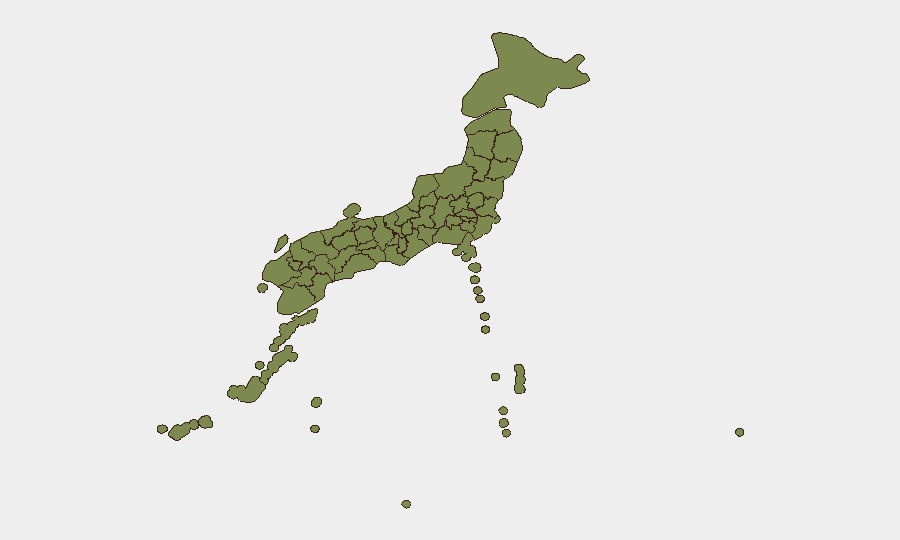
Nagano Prefecture (risk score 32.9) and Tokyo (28.4) dominate the sub-national risk ranking and account for approximately 77 percent of tracked threat events in Japan. Nagano's elevated score reflects concentrated incident reporting rather than widespread civil instability; Tokyo's high ranking reflects both national capital concentration of cyber incidents (KDDI, Nihon Kotsu operations centers, government agencies) and law-enforcement activity. Hokkaido, Aichi, and Hyogo show materially lower risk (9.6, 8.6, 4.2 respectively), suggesting regional threat concentration in central and eastern urban centers rather than nationwide dispersion.
How GeoBit Would Assist
Security teams can deploy Intel Sweep and multi-language OSINT feeds to monitor evolving cyber-incident disclosures and law-enforcement actions in real time, supplemented by Telegram and X/Twitter OSINT to track threat-actor and activist sentiment around telecom and infrastructure vulnerabilities. AOI Monitoring & Early Warning on Tokyo and Nagano prefectures would provide persistent watch on violent-crime planning, protest activity, and supply-chain disruption indicators. Network & Actor Analysis would map credential-compromise propagation and account-takeover risk from the KDDI and Nihon Kotsu breaches across corporate client bases.
7-Day Outlook
No major escalation in physical security threats is forecast; however, follow-on credential-compromise incidents and fraud attempts stemming from the KDDI and Nihon Kotsu breaches are expected to persist. Law-enforcement activity on violent-crime planning and bid-rigging will likely continue at current tempo. Cyber-incident disclosure and remediation efforts in the telecom and logistics sectors will remain the dominant near-term risk driver for corporate operations and authentication-dependent services.
Highest-Risk Areas — Ranked
| # | State / Region | Risk |
|---|---|---|
| 1 | Nagano Prefecture | 32.9 |
| 2 | Tokyo | 28.4 |
| 3 | Hokkaido Prefecture | 9.6 |
| 4 | Aichi Prefecture | 8.6 |
| 5 | Hyogo Prefecture | 4.2 |
| 6 | Kyoto Prefecture | 3.6 |
| 7 | Yamagata Prefecture | 3.6 |
| 8 | Fukushima Prefecture | 3.6 |
| 9 | Iwate Prefecture | 3.6 |
| 10 | Fukuoka Prefecture | 3.3 |
| 11 | Kochi Prefecture | 3.3 |
| 12 | Wakayama Prefecture | 3.3 |
Sources
Previous Daily Briefs
A new Japan brief is written every day — each with its own risk map and downloadable CSV. Here's the last week; use the calendar to go further back.
📅 Browse every day by calendar →
Highlighted days have a brief. Tap a day for that day's map & analysis, or “csv” for that day's dataset ($5).
Atlas — our AI intelligence desk — emails them this snapshot personally. Nothing else, no list.