Situation Summary
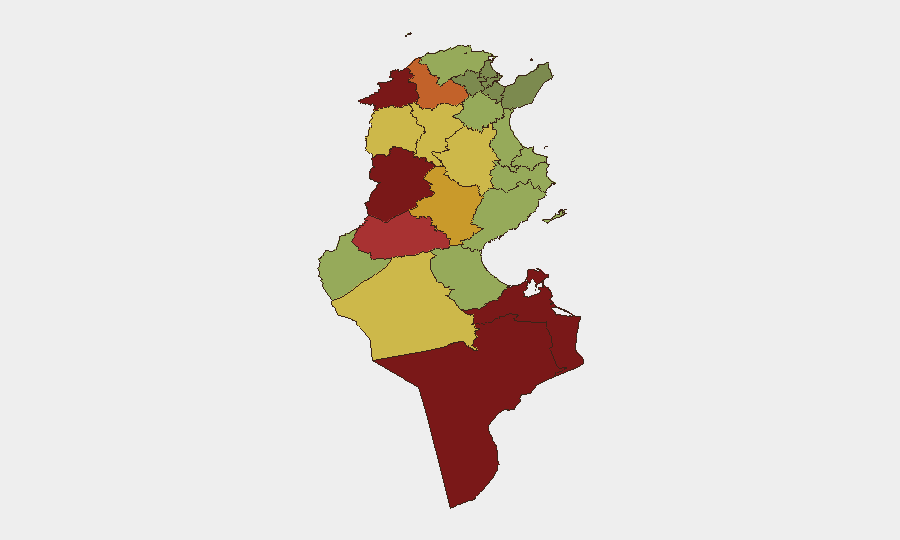
Tunisia remains a moderate-risk environment (global rank #74) with no major security incidents in the current 24–48 hour window, but acute service disruptions tied to a severe heat wave are driving immediate operational risk. Extreme temperatures, power cuts, water shortages, and associated health impacts are straining infrastructure and generating localized protest activity in the capital. Northwest and south-central governorates (Kasserine, Jendouba, Tataouine) remain significantly elevated in underlying risk, though current event density remains low.
Key Developments
- Nationwide, 2026-08-29: Severe heat wave continues to trigger rolling power cuts and water supply disruptions across the country. French and German foreign ministries issued updated travel precautions warning of temporary electricity and drinking-water outages affecting grid capacity, mobile networks, water supply, ATMs, and card payment systems.
- Tunis, 2026-08-29: Hundreds protested in the capital over acute water and electricity shortages, rising living costs, and extreme heat conditions, with some demonstrators calling for President Kais Saïed's resignation. No violence or security force response was reported in available sources.
- Nationwide, 2026-08-29: Medical sources reported heat-related deaths, with one doctors' association citing 13 deaths in 24 hours; the health ministry has not yet published a confirmed national toll. Hospital strain due to heat exposure represents a secondary service-disruption risk.
- Nationwide, 2026-08-29: High-weather alerts remain in effect across most governorates due to extreme heat, sirocco winds, and thunderstorm risk, compounding infrastructure strain and travel inconvenience.
- Ben Guerdane, 2026-08-24 to 2026-08-25: Renewed protests and police clashes occurred following a migrant-boat sinking incident, including road blockages and tire burning. Note: the underlying incident predates this window; coverage remained active in last 48 hours.
- National, 2026-08-25: EasyJet flight cancellations stranded passengers in Tunisia, illustrating short-term aviation disruption linked to operational strain from heat and service outages.
Highest-Risk Areas
Kasserine, Jendouba, Tataouine, and Médenine (composite scores 92, 88, 85, 83 respectively) comprise the highest-risk tier in Tunisia and are driven primarily by civil unrest, economic fragility, and proximity to porous borders with Libya and Algeria. These northwest and south-central regions have historically seen periodic labor protests, informal-economy grievances, and limited state capacity. Gafsa, Béja, and Sidi Bouzid (scores 78, 75, 72) form a secondary elevated belt, often linked to similar structural factors. The capital region and coastal areas remain lower-risk, though Tunis saw protest activity on 2026-08-29 tied to service failures rather than political volatility.
How GeoBit Would Assist
Security teams with Tunisian operations should employ AOI Monitoring & Early Warning to track Kasserine, Jendouba, and other high-risk governorates for escalation in protest activity or supply-chain disruption. Intel Sweep, multi-language OSINT, and sentiment analysis can detect emerging labor actions, civil unrest, or health crises in real time across French and Arabic channels. Environmental & Health monitoring and Routing & Network Analysis enable duty-of-care teams to anticipate utility outages, identify alternative supply and travel routes, and model workforce availability during heat stress periods.
7-Day Outlook
The heat wave is forecast to persist through early September, sustaining power and water disruption risk across most of Tunisia. Localized protest activity in Tunis and secondary cities may continue if services do not stabilize; no major security escalation is currently signaled. Northwest and border regions warrant sustained monitoring for labor or migrant-related unrest, but the threat environment remains below emergency threshold.
Highest-Risk Areas — Ranked
| # | State / Region | Risk |
|---|---|---|
| 1 | Kasserine | 92 |
| 2 | Jendouba | 88 |
| 3 | Tataouine | 85 |
| 4 | Médenine | 83 |
| 5 | Gafsa | 78 |
| 6 | Béja | 75 |
| 7 | Sidi Bouzid | 72 |
| 8 | Al Kaf | 70 |
| 9 | Kébili | 68 |
| 10 | Kairouan | 65 |
| 11 | Siliana | 62 |
| 12 | Tozeur | 58 |
Sources
Previous Daily Briefs
A new Tunisia brief is written every day — each with its own risk map and downloadable CSV. Here's the last week; use the calendar to go further back.
- August 27, 2026
- August 25, 2026
- August 23, 2026
- August 21, 2026
- August 19, 2026
- August 17, 2026
- August 15, 2026
📅 Browse every day by calendar →
Highlighted days have a brief. Tap a day for that day's map & analysis, or “csv” for that day's dataset ($5).
Atlas — our AI intelligence desk — emails them this snapshot personally. Nothing else, no list.