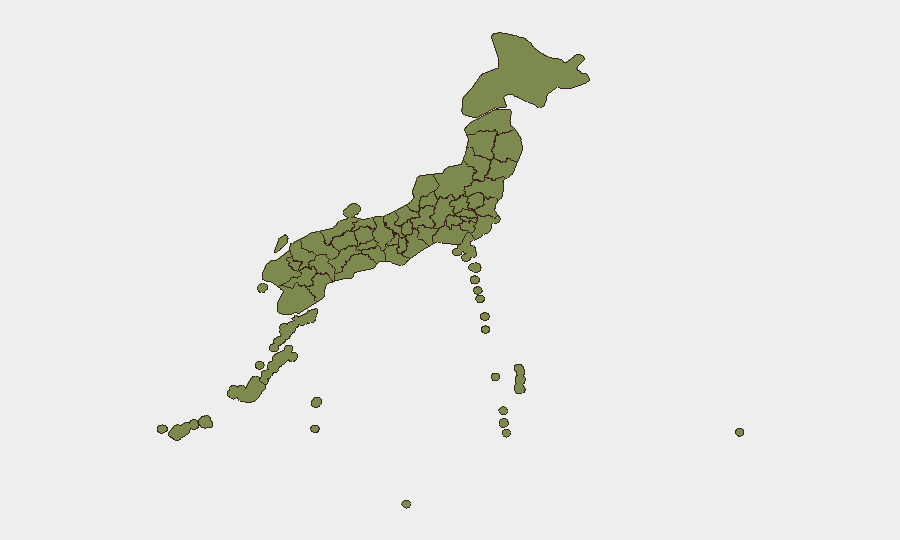
Situation Summary
Japan remains a low-threat environment globally (rank #124, composite score 6), with security risk highly concentrated in Tokyo and a secondary cluster in Nagano Prefecture. Recent developments signal emerging cyber vulnerabilities in critical national infrastructure and a pattern of moderate seismic activity across multiple regions—neither immediately destabilizing but both requiring monitoring. Political and business tensions visible in mid-July statements and enforcement actions suggest ongoing friction between government and corporate entities, though no direct threat to foreign personnel or operations has materialized.
Key Developments
- Nationwide (July 11): Nihon Kotsu, Japan's largest taxi operator, experienced a malware-linked cyberattack that disabled booking, dispatch, and internal systems, marking a significant breach of transportation infrastructure and raising duty-of-care concerns for business travelers relying on ride services.
- Nationwide (July 9–10): KDDI, a major telecom provider, disclosed a cyber breach affecting approximately 12 million email addresses, with unauthorized access occurring in late June through early July; impact on corporate communications and data security remains under assessment.
- Wakayama Prefecture (July 9): A magnitude 5.1 earthquake struck offshore south of Tanabe with no reported major damage; part of a 48-hour sequence of three moderate seismic events (including magnitude 4.7 near Okinawa and 4.4 off Hokuriku).
- Nationwide (July 9–10): A 15-year-old was arrested for fraudulently canceling approximately 46,800 Bandai Channel subscriptions by exploiting system vulnerabilities, indicating potential gaps in payment-platform security.
- Tokyo & National (July 14): Official disapproval statements directed at business and manufacturing entities by the Prime Minister and Japanese government; concurrent arrest/detention action by prosecutors signals enforcement escalation, though underlying trigger and scope remain partially obscured in open-source reporting.
Highest-Risk Areas
Tokyo dominates the sub-national risk profile (score 33.9), driven by concentration of financial, political, and infrastructure targets; recent cyber incidents affecting major service providers and mid-July government enforcement actions reinforce this elevation. Nagano Prefecture's secondary ranking (20.9) is notable but lacks corresponding event detail in current reporting; Hokkaido, Aichi, and Fukushima follow at single-digit scores, with seismic activity the primary driver in coastal zones. Corporate security teams with Tokyo-based operations or supply-chain dependencies should prioritize cyber resilience given the Nihon Kotsu and KDDI incidents.
How GeoBit Would Assist
Intel Sweep and OSINT Fusion would enable continuous monitoring of Japanese government enforcement actions, business-sector statements, and underlying corporate disputes to contextualize July 14 developments and identify escalation triggers. Cyber & Critical Infrastructure Tracking capabilities would support real-time surveillance of transportation, telecommunications, and payment-platform vulnerabilities following the Nihon Kotsu and KDDI breaches, with alerting on secondary compromises. AOI Monitoring & Early Warning with persistent watches on Tokyo and secondary risk zones would flag emerging political-business tensions, seismic clusters, or infrastructure incidents before they affect operations.
7-Day Outlook
Near-term trajectory remains stable but fragile: seismic activity is expected to continue at moderate levels (no major event forecast visible in current data), and cyber-incident tempo in critical infrastructure is likely to remain elevated as organizations patch and investigate. Government-business friction visible in mid-July statements may escalate enforcement or regulatory action, particularly in manufacturing or tech sectors; corporate teams should prepare for potential operational disruptions or compliance reviews over the next week.
Highest-Risk Areas — Ranked
| # | State / Region | Risk |
|---|---|---|
| 1 | Tokyo | 33.9 |
| 2 | Nagano Prefecture | 20.9 |
| 3 | Hokkaido Prefecture | 8 |
| 4 | Aichi Prefecture | 7.4 |
| 5 | Fukushima Prefecture | 7.2 |
| 6 | Hiroshima Prefecture | 6.2 |
| 7 | Hyogo Prefecture | 4.6 |
| 8 | Kyoto Prefecture | 4.2 |
| 9 | Yamagata Prefecture | 4.2 |
| 10 | Iwate Prefecture | 4.2 |
| 11 | Fukuoka Prefecture | 4 |
| 12 | Kochi Prefecture | 4 |
Sources
Previous Daily Briefs
A new Japan brief is written every day — each with its own risk map and downloadable CSV. Here's the last week; use the calendar to go further back.
📅 Browse every day by calendar →
Highlighted days have a brief. Tap a day for that day's map & analysis, or “csv” for that day's dataset ($5).
Atlas — our AI intelligence desk — emails them this snapshot personally. Nothing else, no list.