Situation Summary
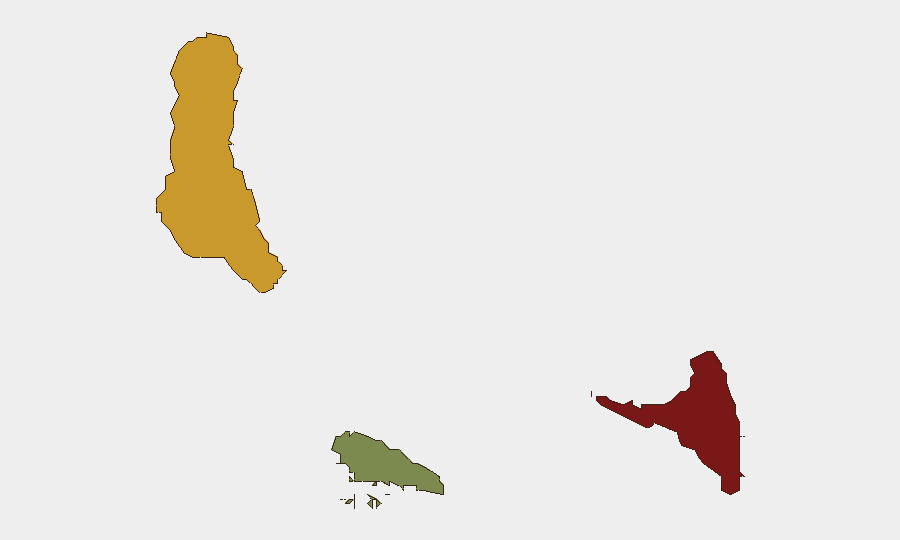
Comoros remains a low-frequency, low-intensity operating environment (global rank #153, composite threat score 8) with no discrete security incidents recorded in the past seven days. The archipelago's risk profile is concentrated in Anjouan (score 88) and Grande Comore (score 72), driven by persistent governance fragility, irregular migration flows, and limited state capacity rather than active conflict or organized violence. Current developments focus on economic and energy infrastructure rather than acute threats, though baseline vulnerabilities in maritime border control and inter-island administrative capacity persist.
Key Developments
- Moroni — September 16: Comoros and China concluded the third session of their Joint Commission on Economic, Commercial and Technical Cooperation, with emphasis on infrastructure projects and export expansion. This signals continued Chinese economic engagement and potential expansion of bilateral development activities.
- Nationwide — September 16: Three solar photovoltaic plants (combined 20 MW capacity) and 16 MWh of battery storage, backed by UAE entities, were inaugurated. The project aims to reduce diesel fuel imports and improve energy security, reflecting investment in critical infrastructure modernization.
- Maritime domain, off Comoros archipelago — September 17: Comorian authorities intercepted 147 migrants (reported as Burundian, Congolese, and Tanzanian nationals) attempting to reach Mayotte. Authorities cited health and smuggling-network concerns in returning the migrants, consistent with ongoing irregular migration pressures in the Indian Ocean corridor.
Highest-Risk Areas
Anjouan, the northernmost and historically least stable island, drives the country's highest composite risk (88), reflecting chronic administrative dysfunction, weak revenue collection, and limited central government reach. Grande Comore (score 72), home to the capital and the seat of national authority, faces concentrated governance and institutional challenges despite its capital status, including service-delivery gaps and informal economy dominance. Moheli (score 35) remains significantly lower-risk, reflecting its smaller population, fewer administrative nodes, and reduced migrant transit activity. Collectively, these rankings reflect fragmentation of state capacity rather than active insurgency or organized crime networks, but they identify the jurisdictions where duty-of-care teams should expect slower emergency response, weaker law enforcement, and greater reliance on informal networks.
How GeoBit Would Assist
Security teams operating in Comoros would benefit from AOI (Area-of-Interest) Monitoring & Early Warning on high-risk islands—particularly Anjouan's coastal zones and Moroni's port facilities—to detect anomalies in migrant flows, vessel movements, or informal security events before they escalate. Maritime & Aviation Tracking combined with Intelligence & OSINT (Telegram/X monitoring, event feed aggregation) would provide early warning of irregular migration movements and cross-border activity. Economic & Trade analysis would inform due diligence on Chinese and UAE-backed infrastructure projects, tracking governance risks and corruption exposure associated with large-scale development contracts.
7-Day Outlook
No acute threats are forecast for the immediate week. Migration pressure in the Indian Ocean corridor is likely to remain steady, with Comorian authorities continuing intercept operations. Infrastructure projects and diplomatic engagement with China and the UAE will proceed without disruption; security teams should monitor corruption and governance risks attached to these initiatives rather than expect acute incidents.
Highest-Risk Areas — Ranked
| # | State / Region | Risk |
|---|---|---|
| 1 | Anjouan | 88 |
| 2 | Grande Comore | 72 |
| 3 | Moheli | 35 |
Sources
Previous Weekly Briefs
A new Comoros brief is written every Monday, covering the week — each with its own risk map and downloadable CSV. Use the calendar to go further back.
- September 15, 2026
- September 8, 2026
- September 1, 2026
- August 30, 2026
- August 28, 2026
- August 26, 2026
- August 24, 2026
📅 Browse past briefs by calendar →
Highlighted days have a brief. Tap a day for that day's map & analysis, or “csv” for that day's dataset ($5).
Atlas — our AI intelligence desk — emails them this snapshot personally. Nothing else, no list.