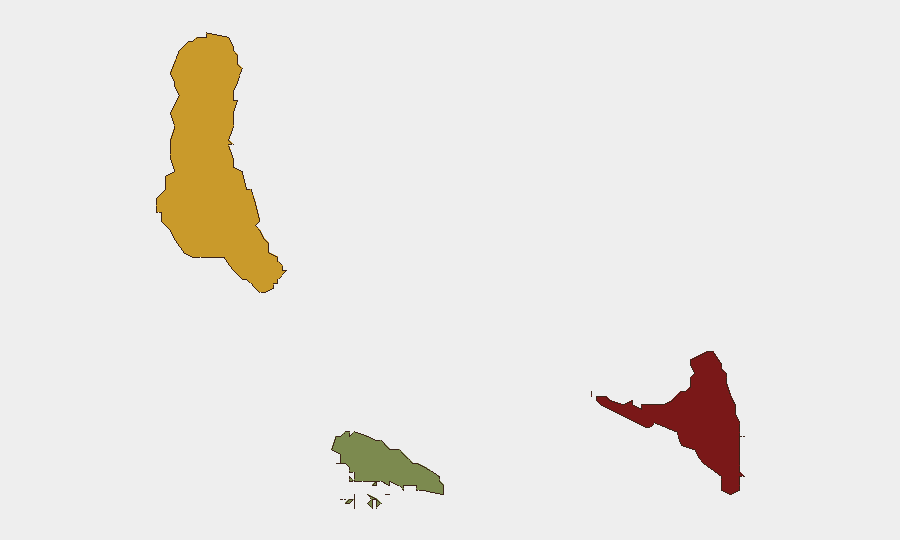
Situation Summary
Comoros remains a low-threat environment overall (global rank #153, composite threat score 8) with no confirmed security incidents, civil unrest, armed conflict, or crime events during the reporting period of September 23–29, 2026. The archipelago's security posture is heavily concentrated in Anjouan, where persistent governance fragility and historical separatism continue to drive elevated risk despite the absence of acute violence this week. Diplomatic activity—including the President's UN address on Mayotte sovereignty and new bilateral ties with Kyrgyzstan—proceeded without reported domestic security consequences.
Key Developments
- Moroni, Grande Comore — September 24: President Azali Assoumani delivered a statement at the UN General Assembly reasserting Comoros' sovereignty claim over Mayotte. No associated civil unrest, security incident, or travel disruption was reported in-country.
- Moroni, Grande Comore — September 29: Namibia's national football delegation arrived for an Africa Cup of Nations qualifier. Standard sporting movement with no security incident.
- Comoros (national) — September 24–29: Comoros and Kyrgyzstan established formal diplomatic relations. No security, civil-unrest, or cross-border consequence was reported.
- No discrete security, conflict, crime, infrastructure-failure, or political-instability incidents were confirmed in Comoros during September 23–29, 2026.
Highest-Risk Areas
Anjouan dominates the risk profile (score 88), reflecting decades of governance instability, weak state authority, and historical separatist sentiment that persist despite political reunification agreements. Grande Comore (score 72) hosts the capital and largest population but remains vulnerable to spillover from Anjouan dynamics and periodic political tension. Moheli (score 35) is substantially lower-risk. The gap between Anjouan's risk score and the broader national composite (8) indicates that archipelago-wide threat concentration is narrow and geographically defined; security teams with personnel or assets in Anjouan should maintain heightened situational awareness, while Grande Comore operations face moderate baseline risk tied to political dynamics rather than acute violence.
How GeoBit Would Assist
Teams operating in Comoros should deploy AOI Monitoring & Early Warning on Anjouan and Grande Comore to detect governance deterioration, political friction, or communal tension before escalation. OSINT fusion (X/Twitter, Telegram, local media, and multi-language search) provides persistent visibility into political messaging and civil-society signals that precede unrest. Risk & Threat Assessment and Network & Actor Analysis capabilities map regime-stability indicators and factional actors across the islands, enabling duty-of-care teams to anticipate disruptions to operations, travel, or supply chains.
7-Day Outlook
No acute security deterioration is anticipated in the near term. Anjouan will remain the primary focus for early-warning monitoring; diplomatic activity (including the Mayotte sovereignty posture) is unlikely to trigger immediate domestic instability. Routine exposure to political messaging and regional maritime activity should be monitored as baseline risk factors.
GeoBit Intelligence | Weekly Security Brief | Comoros | 2026-09-29
Highest-Risk Areas — Ranked
| # | State / Region | Risk |
|---|---|---|
| 1 | Anjouan | 88 |
| 2 | Grande Comore | 72 |
| 3 | Moheli | 35 |
Sources
Previous Weekly Briefs
A new Comoros brief is written every Monday, covering the week — each with its own risk map and downloadable CSV. Use the calendar to go further back.
- September 22, 2026
- September 15, 2026
- September 8, 2026
- September 1, 2026
- August 30, 2026
- August 28, 2026
- August 26, 2026
📅 Browse past briefs by calendar →
Highlighted days have a brief. Tap a day for that day's map & analysis, or “csv” for that day's dataset ($5).
Atlas — our AI intelligence desk — emails them this snapshot personally. Nothing else, no list.