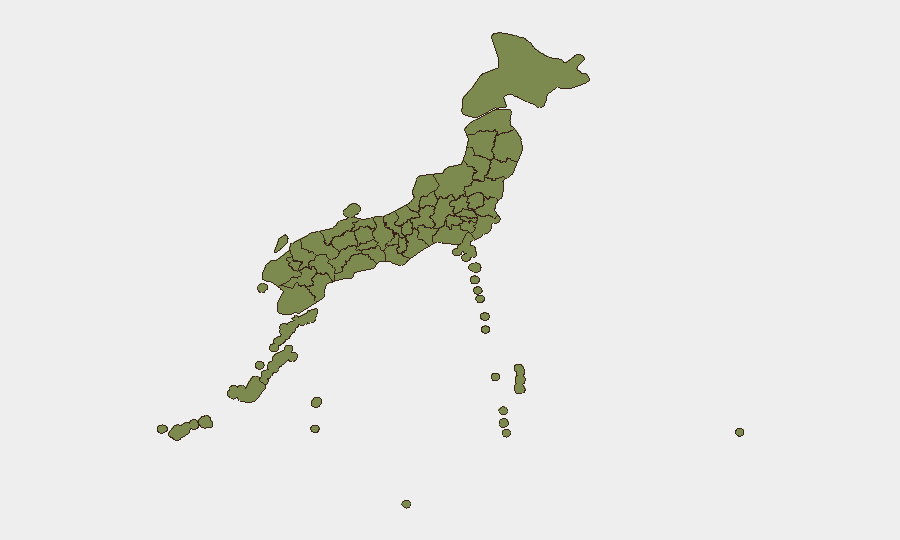
Situation Summary
Japan remains a low-threat environment globally (rank #122, composite score 6), with no active large-scale civil unrest or organized violence. However, multiple cyber incidents affecting critical infrastructure and logistics emerged over July 15–17, creating near-term disruption and credential-compromise risk for corporate users and supply chains. Weather-driven infrastructure stress and localized law-enforcement interventions against violent-crime planning round out the current threat picture, which is characterized by operational friction rather than acute security breakdown.
Key Developments
- Tokyo & surrounding prefectures (July 15–17) – Nihon Kotsu, Japan's largest taxi operator, remains disrupted following a confirmed cyberattack claimed by AiLock group on July 15. Online booking, dispatch, and reservation systems remain offline across Tokyo, Saitama, Kanagawa, and surrounding areas; threat actors have threatened data release, elevating customer-information and corporate-liability risk.
- Nationwide (July 13–17) – Nichirei, a leading food distributor, is gradually restoring systems after a confirmed cyberattack on July 13 disrupted cold-chain logistics and restaurant/retail supply. Full normalization remains uncertain, sustaining short-term risk of localized product shortages and delivery delays.
- Nationwide (July 16–17) – KDDI, Japan's second-largest telecom carrier, continues mitigation of a breach (disclosed July 9–11) affecting ~12 million email addresses and 7 million passwords across five ISP platforms. Elevated credential-compromise and account-takeover risk persists through the mitigation window.
- Toyama Prefecture (reported July 14) – Police arrested a 53-year-old man who admitted planning an indiscriminate killing with alleged targeting of Tokyo. No attack occurred; intervention was pre-incident. Coverage reflects active law-enforcement vigilance but poses minimal direct public risk.
- Tokyo (reported July 14–16) – Authorities raided three firms suspected of bid-rigging on refrigeration contracts for Seven-Eleven Japan. White-collar enforcement action with minimal direct safety impact but potential compliance implications for affected suppliers.
- Nationwide (July 16–17) – Japanese authorities issued preventive heat alerts in 20 regions, with temperature peaks of 35–38°C (Kuwana reached 38.6°C) and concurrent intense rainfall in eastern and northern zones. Conditions raise risk of heat-related medical incidents, localized power strain, and transport disruptions (flight delays, rail slowdowns).
Highest-Risk Areas
Nagano Prefecture (score 33.8) and Tokyo (25.2) drive the national ranking, with Nagano's elevated score likely reflecting weather, seismic, or environmental hazard exposure and Tokyo's driven by cyber incidents, population density, and ongoing law-enforcement activity. Osaka (12.1), Iwate (9.1), and Fukushima (6.8) complete the top five, with Fukushima likely retaining residual risk related to nuclear infrastructure or prior disaster-recovery zones. Current corporate focus should center on Tokyo for cyber and logistics disruption, and on Nagano and northern prefectures for weather-related infrastructure and travel delays.
How GeoBit Would Assist
Corporate security teams would deploy Intel Sweep and multi-language OSINT feeds to track evolving Nihon Kotsu and Nichirei recovery timelines and threat-actor communications, coupled with Network & Actor Analysis to assess AiLock capabilities and credential-leak probability. AOI Monitoring & Early Warning on Tokyo logistics hubs and KDDI service zones enables real-time detection of secondary cyber incidents or supply-chain cascades. Routing & Network Analysis supports alternative journey and delivery planning around active weather hazards and telecom outages.
7-Day Outlook
Cyber recovery and logistics normalization remain the primary near-term drivers, with Nichirei and Nihon Kotsu systems expected to stabilize by late July but downstream supply-chain friction persisting. Heat alerts and rainfall are forecast to persist through the weekend, sustaining localized transport and power risk. No indicators suggest escalation to organized violence or regime-level instability; threat trajectory remains operational disruption rather than political or kinetic emergency.
Highest-Risk Areas — Ranked
| # | State / Region | Risk |
|---|---|---|
| 1 | Nagano Prefecture | 33.8 |
| 2 | Tokyo | 25.2 |
| 3 | Osaka Prefecture | 12.1 |
| 4 | Iwate Prefecture | 9.1 |
| 5 | Fukushima Prefecture | 6.8 |
| 6 | Hiroshima Prefecture | 6.1 |
| 7 | Shizuoka Prefecture | 5.6 |
| 8 | Hokkaido Prefecture | 4.5 |
| 9 | Niigata Prefecture | 4.3 |
| 10 | Kagoshima Prefecture | 4 |
| 11 | Saga Prefecture | 4 |
| 12 | Fukuoka Prefecture | 4 |
Sources
Previous Daily Briefs
A new Japan brief is written every day — each with its own risk map and downloadable CSV. Here's the last week; use the calendar to go further back.
📅 Browse every day by calendar →
Highlighted days have a brief. Tap a day for that day's map & analysis, or “csv” for that day's dataset ($5).
Atlas — our AI intelligence desk — emails them this snapshot personally. Nothing else, no list.