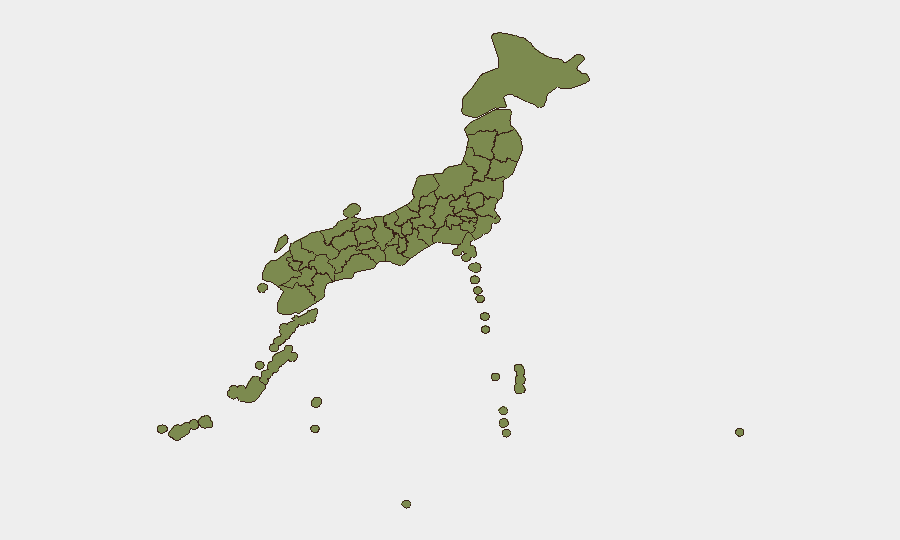
Situation Summary
Japan faces a composite threat environment dominated by maritime tensions with China and Russia, elevated internal security incidents concentrated in Tokyo, and ongoing regional friction across multiple prefectures. The threat ranking reflects acute pressure in the capital and coastal zones, with 72 tracked events generating a composite score of 23. The trajectory shows persistent state-level naval activity in Japan's EEZ paired with sporadic domestic incidents; no imminent systemic breakdown is evident, but operational risk to personnel and assets in Tokyo and Fukushima remains elevated.
Key Developments
- Senkaku Islands / East China Sea (Tuesday, date unconfirmed): China and Japan issued conflicting accounts of a coast guard confrontation involving a Japanese fishing vessel near the disputed waters. Details of boarding, injuries, or vessel damage remain unclear; escalation protocols were not activated.
- Okinotori / Japan's EEZ (Sunday, 20 July 2026): Chinese and Russian naval forces conducted a live-fire drill inside Japan's exclusive economic zone—the first publicly detected Chinese live-fire exercise in Japanese EEZ. The drill included surface-to-air and anti-ship weapons simulation; no direct engagement occurred.
- Tokyo (24 July 2026): An incident labeled "unconventional violence" involving a doctor was reported; specifics are not available in current open-source material. Police investigation initiated.
- Kyoto Prefecture (24 July 2026): Dual incidents reported—a military/police power display directed at a traveler and an arrest of a Chinese national. Context suggests heightened border/immigration scrutiny.
- Hyogo Prefecture (25 July 2026): A threat was issued; attribution and target remain unspecified in available reporting.
- Hospital incident (25 July 2026): A public statement by or concerning a hospital was logged; operational or security details are not yet public.
- Police investigation (25 July 2026): A police officer became subject of an investigation; scope unclear.
Highest-Risk Areas
Tokyo dominates the sub-national ranking at 30.9, reflecting the capital's concentration of government, corporate, and diplomatic infrastructure alongside dense population and visibility. Fukushima Prefecture (16.0) shows elevated risk linked to historical nuclear sensitivity, ongoing industrial/environmental monitoring, and potential for protest activity. Kanagawa Prefecture (9.7) presents secondary risk due to proximity to Tokyo and presence of U.S. military installations. Collectively, these three prefectures account for >56 of the composite score, indicating that risk is geographically concentrated in the Tokyo metropolitan region and Kanto corridor, with secondary concern in coastal/border areas sensitive to maritime or China-related friction.
How GeoBit Would Assist
Security teams should employ Intel Sweep and OSINT fusion to disambiguate the 72 tracked events and establish causal links between maritime incidents, domestic arrests, and police investigations. AOI Monitoring & Early Warning on Tokyo, Kanagawa, and Fukushima Prefecture would detect escalation patterns or coordination across incidents before they reach broader visibility. Maritime & Aviation tracking paired with Satellite & Imagery analysis provides real-time awareness of coast guard and naval activity in the Senkaku, Okinotori, and broader EEZ zones, reducing exposure to surprise confrontations.
7-Day Outlook
Chinese and Russian naval operations in Japan's EEZ will likely continue at current frequency; no formal maritime rules-of-engagement change is expected in the near term. Domestic incident reporting will remain fragmented until police investigations conclude; Tokyo should remain under elevated watch for secondary or copycat incidents. Geopolitical pressure is steady rather than accelerating; duty-of-care teams should maintain enhanced monitoring posture but need not trigger emergency protocols.
Highest-Risk Areas — Ranked
| # | State / Region | Risk |
|---|---|---|
| 1 | Tokyo | 30.9 |
| 2 | Fukushima Prefecture | 16 |
| 3 | Kanagawa Prefecture | 9.7 |
| 4 | Hiroshima Prefecture | 6.4 |
| 5 | Kumamoto Prefecture | 5.9 |
| 6 | Tokushima Prefecture | 5.9 |
| 7 | Aichi Prefecture | 4.3 |
| 8 | Hokkaido Prefecture | 3 |
| 9 | Kyoto Prefecture | 3 |
| 10 | Hyogo Prefecture | 2.6 |
| 11 | Fukuoka Prefecture | 2.2 |
| 12 | Yamagata Prefecture | 2.2 |
Sources
Previous Daily Briefs
A new Japan brief is written every day — each with its own risk map and downloadable CSV. Here's the last week; use the calendar to go further back.
📅 Browse every day by calendar →
Highlighted days have a brief. Tap a day for that day's map & analysis, or “csv” for that day's dataset ($5).
Atlas — our AI intelligence desk — emails them this snapshot personally. Nothing else, no list.