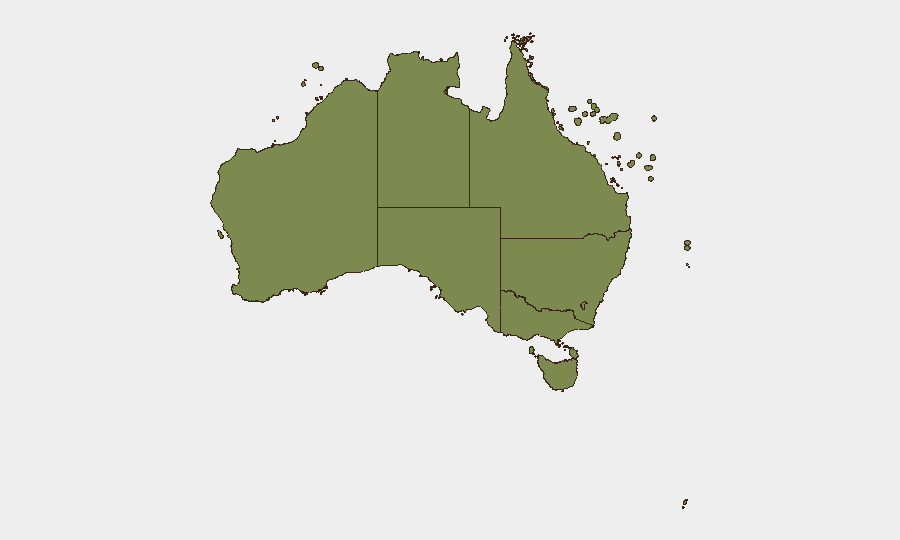
Situation Summary
Australia remains a moderate-risk jurisdiction (rank #119 globally; composite score 6) with 1,982 tracked security events. The past 48 hours have surfaced isolated incidents across multiple domains—hazmat exposure at critical infrastructure, a major data breach affecting ~2 million citizens, elevated property crime in Darwin, and serious violent-crime cases in remote NT communities—rather than a coordinated or systemic threat. Risk is heavily concentrated in New South Wales (31.8) and Western Australia (10.6), with Northern Territory showing acute localized crime activity.
Key Developments
- Adelaide, SA (22–23 July): Hazmat incident at major hospital sickened 11 staff, with one nurse admitted to ICU; decontamination initiated and facility operations partially disrupted, raising short-term health-infrastructure capacity concerns.
- Sydney, NSW (23 July): NSW Police recovered a man's body from Rose Bay; death being investigated as sudden but not yet confirmed as foul play; localised waterfront disruption ongoing.
- National (23 July): ASX-listed company disclosed alleged hacker claiming access to personal data on approximately 2 million Australians; regulators notified and external experts engaged; heightened identity-fraud and cyber-risk environment pending confirmation.
- Darwin region, NT (24 July data release): NT Police Strike Force Trident reported record property-crime volume—1,452 offenders dealt with for 4,466 offences in FY2025/26 vs. 1,362 offenders prior year—indicating sustained elevation in theft and break-in risk.
- Katherine Show, NT (within 48h): Police conducted security blitz, arresting five and detaining two; seized seven knives and 12 prohibited weapons, reflecting ongoing public-order and weapons enforcement.
- Alice Springs, NT (within 48h): Six unidentified males forced entry to residence and assaulted occupant with blunt weapon; offenders remain at large, underscoring home-invasion vulnerability.
- Ramingining, NT (within 48h): Police raided residence and seized ~2,200 bags of kava (AUD 110,000 value) with distribution records; one male charged with illegal sale, reflecting substance-market policing in remote communities.
- West Arnhem and Galiwinku, NT (within 48h): 33-year-old charged over repeated child sexual assault; 34-year-old charged with murder of 17-year-old female in domestic relationship; signalling serious violent-crime activity in remote NT zones.
Highest-Risk Areas
New South Wales dominates the national risk profile (31.8), driven by Sydney's scale, population density, and event frequency; Western Australia (10.6) follows distantly. Northern Territory, while lower in composite ranking (3.1), shows acute concentration of violent crime, property offending, and weapons seizures in Greater Darwin, Katherine, Alice Springs, and remote communities—reflecting localized rather than state-wide destabilization. Queensland (8.7) and Victoria (7.8) remain moderate-risk urban centres. Southern and island territories pose negligible risk (<2.0).
How GeoBit Would Assist
Security teams should deploy AOI Monitoring & Early Warning on high-risk postcodes in Sydney (NSW), Greater Darwin (NT), and Perth/surrounds (WA) to flag emerging crime clusters and public-order incidents in real time. Intel Sweep and multi-language OSINT would corroborate and contextualize events faster than single-source news cycles, especially critical during cyber incidents affecting large populations. Network & Actor Analysis would map criminal networks and repeat offenders across NT communities, enabling predictive routing and asset-protection planning for personnel in remote areas.
7-Day Outlook
No major escalation is forecast; current incidents are discrete rather than networked. Property crime in Darwin and violent offences in NT communities are likely to persist at elevated levels without intervention. The data-breach investigation may trigger secondary cyber-incident alerts if attackers attempt monetization or further breaches. Corporate and government entities with staff or data exposure in Australia should expect regulatory and media pressure within 7–14 days.
Highest-Risk Areas — Ranked
| # | State / Region | Risk |
|---|---|---|
| 1 | New South Wales | 31.8 |
| 2 | Western Australia | 10.6 |
| 3 | Queensland | 8.7 |
| 4 | Victoria | 7.8 |
| 5 | South Australia | 5.3 |
| 6 | Australian Capital Territory | 5.1 |
| 7 | Northern Territory | 3.1 |
| 8 | Tasmania | 2.3 |
| 9 | Ashmore and Cartier Islands | 1.8 |
| 10 | Jervis Bay Territory | 1.8 |
| 11 | Coral Sea Islands | 1.8 |
Sources
Previous Daily Briefs
A new Australia brief is written every day — each with its own risk map and downloadable CSV. Here's the last week; use the calendar to go further back.
📅 Browse every day by calendar →
Highlighted days have a brief. Tap a day for that day's map & analysis, or “csv” for that day's dataset ($5).
Atlas — our AI intelligence desk — emails them this snapshot personally. Nothing else, no list.