Situation Summary
Japan remains at a low overall security threat level (composite score 15/global rank pending), but faces a concentrated cluster of risks in Tokyo (risk 30.4) driven by geopolitical tension, cyber incidents, and weather-related strain on critical services. The past 48 hours have seen escalation in cyber-attack impacts on national logistics, heightened military monitoring in Japan's EEZ following Chinese–Russian drills, and sustained heat-stress conditions that strain emergency response capacity. Near-term security posture is stable but fragile given concurrent cyber disruption, operational sea-lane tension, and infrastructure load.
Key Developments
- Nichirei ransomware attack (nationwide logistics impact, ongoing through 28 July): RansomHouse-attributed ransomware has disrupted frozen-food distribution across Japan; KFC Japan issued chicken-shortage warnings; partial system restoration confirmed as of 22 July, with full normalization expected within days. Data theft confirmed; police and external security firms engaged.
- Chinese–Russian joint live-fire drills in Japan EEZ (Pacific, 180–330 km SW of Okinotorishima, 19 July): A Chinese guided-missile destroyer, supporting vessels, and a Russian frigate conducted machine-gun and weapons exercises inside Japan's Exclusive Economic Zone; Japan's Joint Staff made first public disclosure on 21 July and lodged diplomatic protest. SDF and surveillance assets remain focused on the fleet; no vessel casualties reported.
- Extreme heat conditions (Tokyo and multiple prefectures, through 28 July): Temperatures sustained above 35–40°C; government issued "brutally hot day" designation; heat-stroke hospitalizations remain elevated (prior week: 4,580 cases, 7+ deaths). Secondary risks include strain on emergency services and elevated power-demand vulnerability.
- Typhoon Bavi transport disruptions (routes to southern/remote islands, ongoing through 28 July): "Very powerful" storm prompted flight and ferry cancellations to Japan's remote island regions; travel accessibility and supply-chain risk to island communities elevated.
- Gold-smuggling enforcement (Tokyo entry points, latest cycle): Six individuals detained for attempted smuggling of ¥1M+ in gold concealed in life-size dolls from China; reflects persistent cross-border financial-crime risk on China–Japan routes.
- National flag desecration bill opposition (Tokyo, latest 24–48 hours): Nearly 150 academics publicly opposed proposed legislation banning flag desecration, citing constitutional free-expression violations; opposition parties resisting. Signals emerging civil-liberties and political-stability friction.
- Visa fee increase announcement (nationwide, imminent implementation): Single-entry visas rising ¥3,000 → ¥15,000; multiple-entry ¥6,000 → ¥30,000. Forward-looking policy affecting travel costs and accessibility.
Highest-Risk Areas
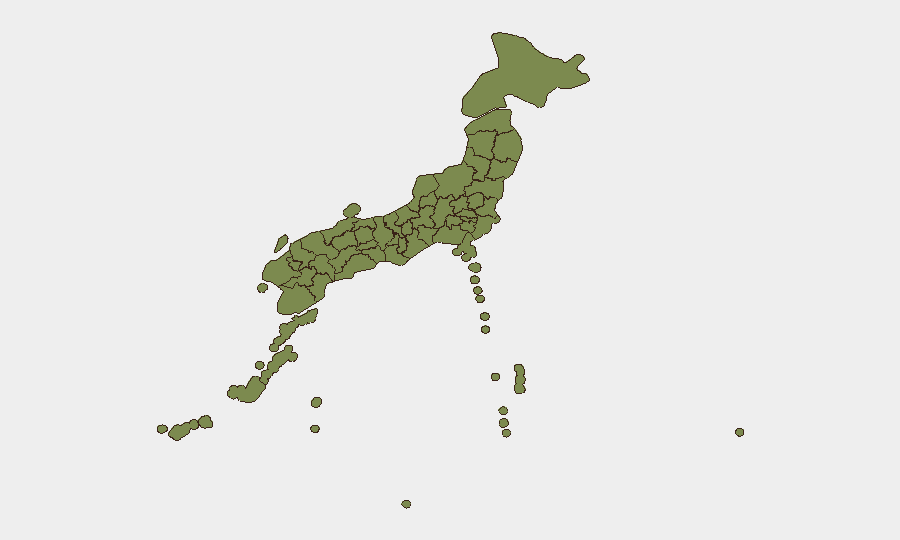
Tokyo dominates the sub-national risk profile (30.4, roughly 3× the next-ranked prefecture), driven by concentration of critical infrastructure, cyber-attack surface, geopolitical monitoring intensity, and heat-stress service strain. Hiroshima Prefecture (9.6) and Fukuoka Prefecture (6.1) show elevated but secondary risk, likely linked to regional industrial assets and proximity to maritime tension zones. Remaining prefectures score below 4.0, reflecting lower operational criticality or event density.
How GeoBit Would Assist
Security teams should deploy Intel Sweep and real-time event feeds to track ongoing ransomware recovery timelines and supply-chain restoration at Nichirei and downstream customers (KFC, retailers). Maritime & Aviation tracking, AOI Monitoring with alerting, and Conflict & Military mapping provide persistent watch on Chinese–Russian fleet positioning and SDF responses in the EEZ, enabling early warning of escalation. Environmental & Health data combined with Network & Actor Analysis would flag heat-stress impact on data centers, emergency services, and critical infrastructure, informing duty-of-care plans for personnel in Tokyo and other high-temperature zones.
7-Day Outlook
Nichirei logistics recovery is expected to normalize by late week, reducing supply-chain disruption severity. Chinese–Russian naval presence in the EEZ will likely persist or recur as part of broader strategic posturing; no immediate military escalation is indicated, but monitoring intensity will remain high. Heat conditions are forecast to ease slightly by early August, reducing emergency-service strain; Typhoon Bavi's impact on island routes will clear within 2–3 days. Overall threat level remains low but operationally fragmented across cyber, geopolitical, and environmental vectors.
Highest-Risk Areas — Ranked
| # | State / Region | Risk |
|---|---|---|
| 1 | Tokyo | 30.4 |
| 2 | Hiroshima Prefecture | 9.6 |
| 3 | Fukuoka Prefecture | 6.1 |
| 4 | Hokkaido Prefecture | 3.9 |
| 5 | Yamagata Prefecture | 2.5 |
| 6 | Ibaraki Prefecture | 1.8 |
| 7 | Kumamoto Prefecture | 1.1 |
| 8 | Hyogo Prefecture | 1.1 |
| 9 | Osaka Prefecture | 1.1 |
| 10 | Niigata Prefecture | 1.1 |
| 11 | Shizuoka Prefecture | 1.1 |
| 12 | Chiba Prefecture | 1.1 |
Sources
Previous Daily Briefs
A new Japan brief is written every day — each with its own risk map and downloadable CSV. Here's the last week; use the calendar to go further back.
📅 Browse every day by calendar →
Highlighted days have a brief. Tap a day for that day's map & analysis, or “csv” for that day's dataset ($5).
Atlas — our AI intelligence desk — emails them this snapshot personally. Nothing else, no list.