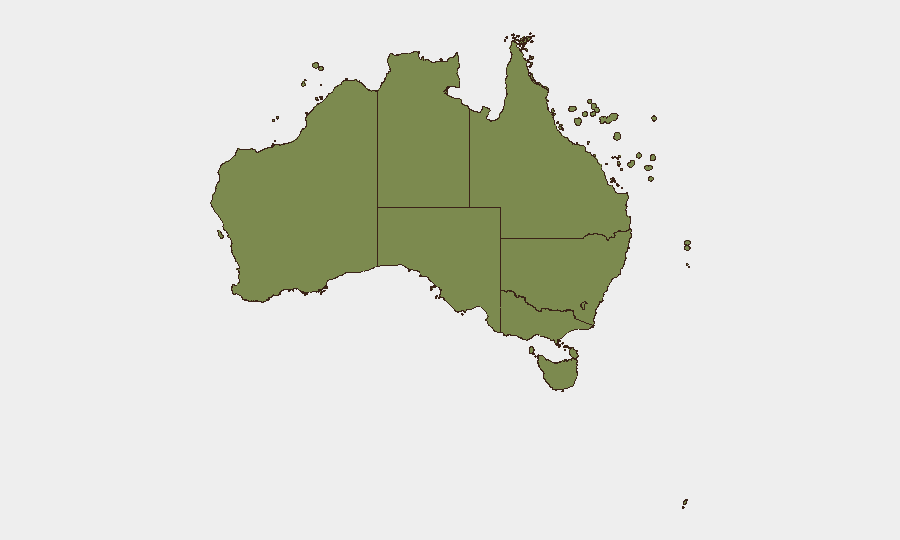
Situation Summary
Australia's composite threat score (19) places it in the mid-range globally, with 326 tracked events under active monitoring. The threat landscape is heavily concentrated in New South Wales—driven by organized-crime activity, data breaches in state government, and cyber-targeting of critical sectors—while secondary concerns cluster in Queensland and Victoria. The past 48 hours have surfaced elevated activity across violent crime, cybersecurity incidents, and insider threats, signaling a period of operational intensity rather than systemic destabilization.
Key Developments
- Sydney outskirts, NSW – 29 July: Australian Federal Police announced the largest cocaine seizure in national history (approximately 3 tons) on a property near Sydney, classified as a major organized-crime operation with ongoing investigation into supply chains and distribution networks.
- Melton South and Caroline Springs, Victoria – 29 July: Multiple drive-by shootings targeted residential properties overnight, with bullets penetrating a family home; no casualties reported but incident indicates escalation in localized firearms violence and potential gang activity.
- NSW Treasury, Sydney – 28–29 July: A state government staff member was arrested and charged following a significant internal data breach involving unauthorized transfer of government data over the weekend; authorities are treating it as a serious integrity and security matter.
- Victorian Department of Education – 29 July: Confirmation of a major data breach exposing personal information of current and former students across all government schools; breach notification underway and authorities have initiated formal investigation.
- Australia-wide (Cyber) – 29 July: The Australian Cyber Security Centre issued an active warning of ongoing ClickFix social-engineering malware campaigns distributing Vidar Stealer, with Australian organizations confirmed as active targets; advisory recommends hardening of email and web defenses.
- Latrobe and Goodwood, Tasmania – 28–29 July: Three men charged with criminal assault (Latrobe, 10:30 pm, victim hospitalized) and one man charged with wounding in a family-violence incident (Goodwood, early Wednesday); both indicate persistent interpersonal violence in regional areas.
- Cambridge, Tasmania – 29 July: Serious motorcycle collision on Richmond Road resulting in hospitalization of 56-year-old rider in serious condition; investigation ongoing into causation.
Highest-Risk Areas
New South Wales dominates the risk ranking (31.1) due to the convergence of large-scale drug seizures, state-government insider threats, and ongoing organized-crime infrastructure. Queensland and Victoria are secondary concern zones (11.4 each), with Victoria's elevation driven by residential firearms incidents and education-sector data compromise. Tasmania's lower composite score (4) masks localized spikes in assault and family violence. Regional concentration of risk in Sydney's outer suburbs and Melbourne's western residential areas suggests organized-crime supply-chain activity and potential territorial disputes requiring localized asset protection.
How GeoBit Would Assist
Security teams should deploy Network & Actor Analysis to map organized-crime distribution nodes correlating with the cocaine seizure and ongoing trafficking patterns. AOI Monitoring & Early Warning on high-risk postcodes (Melton South, Caroline Springs, outer Sydney) provides persistent alerting on firearms incidents and criminal infrastructure. Cyber intelligence and multi-channel OSINT (email/web defense monitoring, darknet tracking) enable early detection of insider-threat signals and social-engineering campaigns targeting government and education sectors.
7-Day Outlook
Organized-crime activity and data-breach incidents are likely to sustain elevated operational tempo in NSW and Victoria over the next week. Expect continued cyber-targeting of critical infrastructure and government systems, with insider-threat risk remaining acute in state agencies. Regional violence (assault, firearms) in Tasmania and Melbourne suburbs will likely continue absent major law-enforcement intervention.
Highest-Risk Areas — Ranked
| # | State / Region | Risk |
|---|---|---|
| 1 | New South Wales | 31.1 |
| 2 | Queensland | 11.4 |
| 3 | Victoria | 11.4 |
| 4 | Western Australia | 5.7 |
| 5 | Tasmania | 4 |
| 6 | South Australia | 3.8 |
| 7 | Australian Capital Territory | 3.7 |
| 8 | Northern Territory | 1.7 |
| 9 | Ashmore and Cartier Islands | 1 |
| 10 | Jervis Bay Territory | 1 |
| 11 | Coral Sea Islands | 1 |
Sources
Previous Daily Briefs
A new Australia brief is written every day — each with its own risk map and downloadable CSV. Here's the last week; use the calendar to go further back.
📅 Browse every day by calendar →
Highlighted days have a brief. Tap a day for that day's map & analysis, or “csv” for that day's dataset ($5).
Atlas — our AI intelligence desk — emails them this snapshot personally. Nothing else, no list.