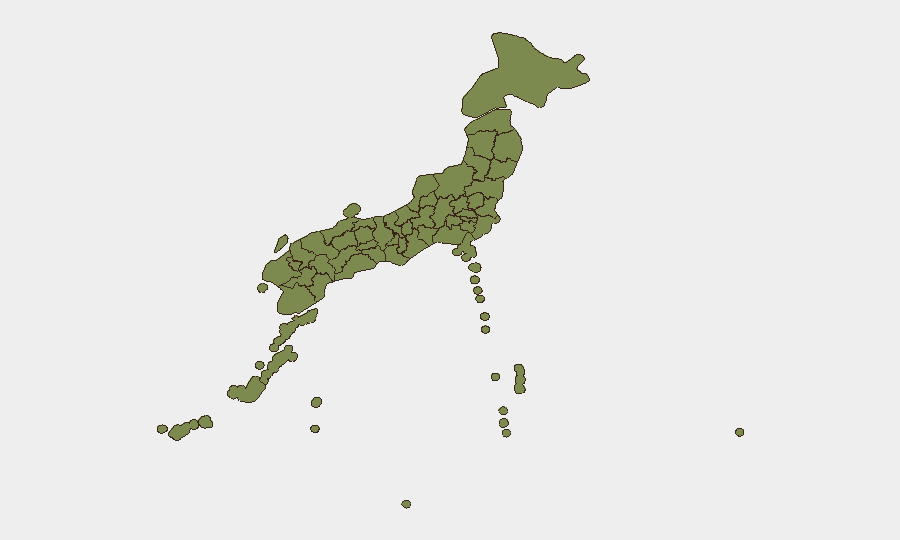
Situation Summary
Japan's overall security environment remains low-risk (composite threat score 25, ranked #null globally), but two mass-casualty incidents in the past 48 hours—a structural collapse at Aeon Mall Kumamoto following a strong earthquake, and a fire at a Tokyo primary school—have elevated operational focus on emergency response and infrastructure safety. Tokyo dominates the national risk profile (31.1 composite score) driven by population density and incident concentration, while a strong central Japan earthquake on the night of July 31–August 1 has exposed vulnerabilities in commercial infrastructure resilience. Cyber and foreign-intelligence policy developments at the national level indicate sustained governmental attention to asymmetric threats, but these do not yet translate to acute operational risk for corporate assets.
Key Developments
- Kumamoto Prefecture, July 31–Aug 1: Aeon Mall Kumamoto experienced a major explosion and partial structural collapse during or shortly after a strong earthquake (shindo 7 intensity reported); 20–30 employees unaccounted for; police conducting large-scale casualty search and forensic investigation. Commercial access and local transport disrupted; structural safety assessments ongoing.
- Central Japan, night of July 31–Aug 1: Strong earthquake reported in Central Japan with no tsunami threat but significant local damage; shindo 7 intensity confirmed in Kumamoto Prefecture. Aftershock risk remains; critical infrastructure and commercial facilities under inspection.
- Tokyo, late July 31–Aug 1: Fire at a Tokyo primary school led to evacuation of approximately 300 children and staff; ~10 people injured; emergency services contained the blaze. Localized traffic and neighborhood disruption in affected ward; emergency response capacity currently elevated.
- National level, July 31: Japanese cabinet formally established a new National Intelligence Bureau and confirmed Self-Defense Forces' first successful test launch of a U.S.-made Tomahawk long-range cruise missile (Pacific Ocean, July 28). Regional political sensitivities likely; no direct operational impact on corporate operations.
- National level, July 31: Government adopted a comprehensive cybersecurity policy for critical infrastructure (energy, transport, logistics, ICT, finance), including mock attack exercises and proactive defense system scheduled for October launch. Signals elevated cyber-threat focus; potential operational changes at key facilities in coming months.
- National level, August 1: Ruling Liberal Democratic Party advancing new legal frameworks against foreign interference and disinformation, with expanded intelligence-gathering powers. Governance-level response to perceived espionage and information-operation risks; not an acute incident.
- Nationwide, last 1–2 days: Police concluded data-sharing agreement with major e-commerce platforms (Mercari, LY, Rakuten) to combat online fraud and financial crime. Crime-prevention measure; indicates active law-enforcement focus on cyber-enabled fraud but no specific ongoing attack.
Highest-Risk Areas
Tokyo (31.1) drives national risk substantially by volume and concentration of incidents; the primary school fire and ongoing police investigations add to an already elevated operational tempo. Kumamoto Prefecture (no entry in top 12, but central to the mall-collapse incident) and affected zones in Central Japan now require immediate attention for infrastructure safety, aftershock risk, and business-continuity impact. Kanagawa Prefecture (9.4) and Kagoshima Prefecture (7.2) follow Tokyo at considerable distance, suggesting the capital's risk profile is outlier-driven rather than part of a distributed pattern.
How GeoBit Would Assist
GeoBit's AOI Monitoring & Early Warning capability would provide persistent watch on Tokyo and Kumamoto commercial/industrial facilities and critical infrastructure for secondary-incident detection post-earthquake. Satellite & Imagery Analysis and GIS & Spatial Analysis can assess damage extent at the Aeon Mall, identify structural risk at comparable facilities, and map aftershock zones for routing and asset-relocation planning. Intel Sweep and multi-language search enable rapid tracking of cybersecurity policy implementation timelines and regional threat-actor messaging that could escalate political or infrastructure tensions.
7-Day Outlook
Aftershock activity, structural safety assessments, and emergency-response operations are expected to persist in Kumamoto and surrounding prefectures through early next week. Tokyo's emergency services remain activated; school and workplace safety reviews may expand citywide. No imminent escalation of political or cyber incidents is signaled, but the convergence of earthquake-induced infrastructure stress and heightened cyber-policy focus warrants continued monitoring of critical facilities and transportation nodes.
Highest-Risk Areas — Ranked
| # | State / Region | Risk |
|---|---|---|
| 1 | Tokyo | 31.1 |
| 2 | Kanagawa Prefecture | 9.4 |
| 3 | Kagoshima Prefecture | 7.2 |
| 4 | Fukushima Prefecture | 3.9 |
| 5 | Fukuoka Prefecture | 2.7 |
| 6 | Hiroshima Prefecture | 2.7 |
| 7 | Hokkaido Prefecture | 2.3 |
| 8 | Osaka Prefecture | 2.3 |
| 9 | Mie Prefecture | 2.3 |
| 10 | Kumamoto Prefecture | 1.9 |
| 11 | Kyoto Prefecture | 1.5 |
| 12 | Akita Prefecture | 1.5 |
Sources
Previous Daily Briefs
A new Japan brief is written every day — each with its own risk map and downloadable CSV. Here's the last week; use the calendar to go further back.
📅 Browse every day by calendar →
Highlighted days have a brief. Tap a day for that day's map & analysis, or “csv” for that day's dataset ($5).
Atlas — our AI intelligence desk — emails them this snapshot personally. Nothing else, no list.