Situation Summary
Japan's composite threat score of 20 places it outside the global top-risk tier, but significant localized hazards are reshaping the current risk landscape. The Kumamoto earthquake of July 28–29 and subsequent Aeon Mall explosion remain the dominant drivers of infrastructure disruption, casualty management, and supply-chain impact across southwestern Kyushu; ongoing rescue operations and structural assessments continue through early August. Concurrently, a newly established National Intelligence Bureau (July 31) signals Japan's expanded security posture, while event signals flagging police investigations, public statements, and population rejection suggest underlying civil or diplomatic friction that warrant close monitoring. The trajectory points toward sustained regional infrastructure risk in Kumamoto balanced against emerging political or social tensions in Tokyo.
Key Developments
- Kumamoto Prefecture (Kyushu) – July 28–29, 2026 – Major earthquake and mall explosion. A 4:30 p.m. local earthquake triggered structural collapse at Aeon Mall Kumamoto and ruptures along Route 3, a critical north–south highway. Police and media reported 18–25+ deaths, missing persons, and extensive damage to transport and industrial facilities. Toyota suspended three Kyushu plants from July 29–31 due to supply-chain and facility impact.
- Kumamoto Prefecture – July 29–31, 2026 – Ongoing casualty rise and rescue operations. Death toll climbed to 25–34 as of July 31, with rescue teams conducting search-and-recovery in extreme heat. Collapsed structures and damaged transport links remain active hazard zones; no confirmed August 1–2 updates available.
- National (Tokyo/Kasumigaseki) – July 31, 2026 – National Intelligence Bureau launch. Japan's government formally established a new national-level intelligence agency, signaling enhanced state intelligence-gathering and supporting expanded security and military capability. Defense Ministry concurrently highlighted a July 28 Tomahawk cruise missile test launch in the Pacific.
- Event signals (police investigations, public statements, population rejection; Tokyo elevated) – July 31–August 2, 2026. Multiple police public statements, investigations, and signals of "unconventional violence" in Tokyo on August 1, combined with population rejection and mayoral disapproval, suggest underlying civil friction or public order incidents. Specific details not yet available in open sources; high-risk signal warrants real-time monitoring.
- Data caveat: Reliably time-stamped security, crime, civil unrest, or infrastructure events dated to August 1–2, 2026 are not presently available in open web/social media searched. All other developments fall outside the strict 24–48-hour window; risk teams should rely on direct feeds from Japan Police (NPA), Fire and Disaster Management Agency, Kumamoto prefectural government, and Japanese domestic media for current August 1–2 status.
Highest-Risk Areas
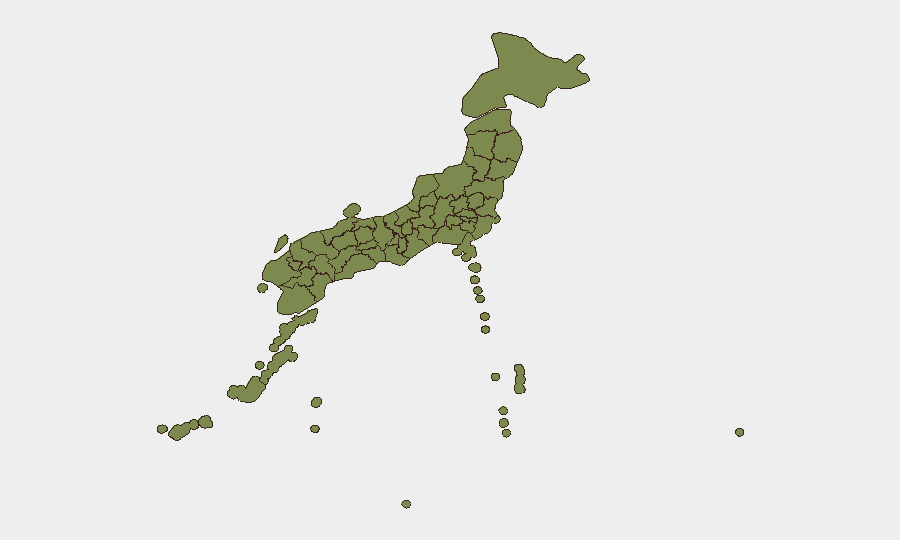
Tokyo dominates the sub-national ranking (risk 30.5), driven primarily by the police investigations and public-order signals noted above; Kanagawa and Kagoshima prefectures follow at 14.3 and 14.0 respectively. Kumamoto Prefecture, currently hosting active disaster response, appears lower in the composite ranking (1.8) because the earthquake is a natural-hazard event rather than conflict, crime, or political instability; however, for duty-of-care purposes, Kumamoto remains a critical operational risk zone for supply chains, logistics, and personnel safety through at least early August. Fukushima, Hiroshima, and Fukuoka follow with minor risk scores; the bulk of tracked events and institutional friction are concentrated in Tokyo.
How GeoBit Would Assist
Corporate and risk teams would employ Intel Sweep and X/Twitter OSINT to track real-time Tokyo police statements, mayoral announcements, and social-media sentiment around the emerging friction signals. AOI Monitoring & Early Warning on Kumamoto and key logistics/manufacturing corridors (Route 3, Toyota facilities) would provide persistent hazard tracking, transport-corridor status, and secondary incident alerting. Routing & Network Analysis would support alternative supply-chain and personnel-movement planning around quake-damaged infrastructure.
7-Day Outlook
Kumamoto earthquake aftershocks, structural damage assessment, and supply-chain recovery will remain primary operational constraints through mid-August. Tokyo-centered civil or diplomatic tensions flagged in event signals may intensify or clarify; direct monitoring of Japanese media and police channels is essential to distinguish signal from noise and support duty-of-care decisions.
Highest-Risk Areas — Ranked
| # | State / Region | Risk |
|---|---|---|
| 1 | Tokyo | 30.5 |
| 2 | Kanagawa Prefecture | 14.3 |
| 3 | Kagoshima Prefecture | 14 |
| 4 | Hiroshima Prefecture | 5.1 |
| 5 | Fukushima Prefecture | 5.1 |
| 6 | Fukuoka Prefecture | 3.1 |
| 7 | Osaka Prefecture | 2.5 |
| 8 | Mie Prefecture | 2.5 |
| 9 | Kumamoto Prefecture | 1.8 |
| 10 | Hokkaido Prefecture | 1.8 |
| 11 | Kyoto Prefecture | 1.8 |
| 12 | Kagawa Prefecture | 1.1 |
Sources
Previous Daily Briefs
A new Japan brief is written every day — each with its own risk map and downloadable CSV. Here's the last week; use the calendar to go further back.
📅 Browse every day by calendar →
Highlighted days have a brief. Tap a day for that day's map & analysis, or “csv” for that day's dataset ($5).
Atlas — our AI intelligence desk — emails them this snapshot personally. Nothing else, no list.