Situation Summary
Australia faces elevated cyber-security and localized violent-crime threats as of early August 2026, with New South Wales significantly outweighing other jurisdictions in composite risk. A sustained campaign of credential-theft attacks, data breaches affecting government and private sector entities, and a spike in armed violence in Melbourne's western suburbs underscore dual exposure to digital and physical harm. The threat environment remains fluid and fragmented rather than coordinated, but the velocity and scope of cyber incidents signal organized capability targeting Australian infrastructure and personal data.
Key Developments
- Sydney, NSW – 1 August 2026: NSW Police announced seizure of approximately 3 tons of cocaine on a property on Sydney's outskirts, marking Australia's largest recorded cocaine seizure and indicating active trafficking networks supplying the eastern market.
- Melbourne (western suburbs), Victoria – night of 1 August 2026: A home was struck by gunfire through the front door with a family of five inside, part of a violent night across western Melbourne suburbs; incident consistent with organized crime or gang activity escalation.
- National (superannuation sector) – weekend preceding 1–2 August 2026: Multiple large Australian superannuation funds were hit by credential-stuffing attacks, resulting in thousands of compromised member accounts and forcing rapid security remediation.
- National – 1–2 August 2026: Australian Cyber Security Centre (ACSC) issued advisory on active ClickFix social-engineering campaign distributing Vidar Stealer malware, targeting Australian organizations for credential and information theft.
- Victoria (education) – within last 48 hours: Victorian Department of Education disclosed breach of student information database, compromising personal data of current and former students.
- Canberra (national government) – within last 48 hours: Australian government banned all Kaspersky Lab products and services from federal systems and devices, citing national-security risk following official analysis.
- National (airport security) – sentencing reported 1–2 August 2026: 44-year-old man sentenced to seven years four months for operating "evil twin" Wi-Fi networks at multiple Australian airports to steal traveler data, highlighting persistent aviation-sector vulnerability.
- Canberra (AHRC) – recent days: Australian Human Rights Commission disclosed data breach in which private documents were leaked online and indexed by search engines, exposing sensitive human-rights materials.
Highest-Risk Areas
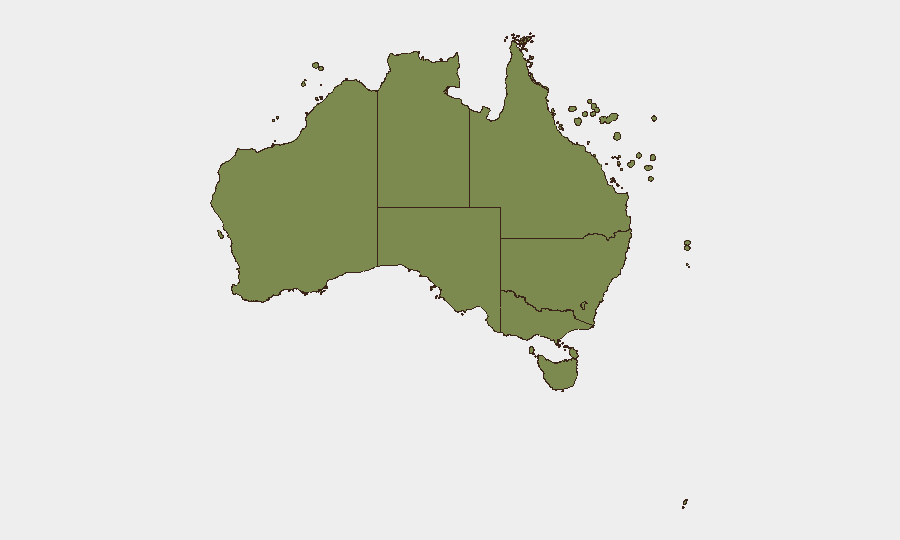
New South Wales dominates the risk landscape with a composite score of 31.3—nearly three times that of Victoria (11.5)—driven primarily by the large-scale cocaine seizure and ongoing organized crime activity in the Sydney region. Victoria ranks second, elevated by the Melbourne western-suburbs shooting incidents and education-sector data breach. Australian Capital Territory (10.3) reflects cyber threats and government-systems exposure, particularly following the Kaspersky ban and AHRC breach. The concentration of risk in NSW and Victoria reflects both trafficking infrastructure (eastern seaboard supply routes) and cybercriminal targeting of major population and administrative centers.
How GeoBit Would Assist
Security and risk teams should deploy OSINT fusion and entity-extraction tools to correlate the credential-stuffing campaigns, ClickFix malware distribution, and data breaches—identifying common threat actors, TTPs, and infrastructure. AOI Monitoring & Early Warning capabilities on high-risk postcodes in western Melbourne and Sydney's outskirts would provide persistent detection of escalating violent-crime signals and trafficking logistics. Cyber threat and network analysis would track the superannuation-fund breach fallout, vendor compromise chains (post-Kaspersky ban), and social-engineering campaign evolution to inform internal defense posture.
7-Day Outlook
Cyber threats are expected to persist at current tempo, with supply-chain and credential-based attacks likely to widen across utilities, financial services, and education. Violent crime in NSW and Victoria may remain elevated as organized-crime enforcement activity intensifies following the cocaine seizure. No imminent systemic escalation is indicated, but the convergence of cyber targeting and physical crime warrants continuous monitoring through 7–10 August.
Highest-Risk Areas — Ranked
| # | State / Region | Risk |
|---|---|---|
| 1 | New South Wales | 31.3 |
| 2 | Victoria | 11.5 |
| 3 | Australian Capital Territory | 10.3 |
| 4 | Western Australia | 9.9 |
| 5 | South Australia | 9.6 |
| 6 | Queensland | 4.5 |
| 7 | Northern Territory | 4.2 |
| 8 | Tasmania | 3.5 |
| 9 | Ashmore and Cartier Islands | 1.3 |
| 10 | Jervis Bay Territory | 1.3 |
| 11 | Coral Sea Islands | 1.3 |
Sources
Previous Daily Briefs
A new Australia brief is written every day — each with its own risk map and downloadable CSV. Here's the last week; use the calendar to go further back.
📅 Browse every day by calendar →
Highlighted days have a brief. Tap a day for that day's map & analysis, or “csv” for that day's dataset ($5).
Atlas — our AI intelligence desk — emails them this snapshot personally. Nothing else, no list.